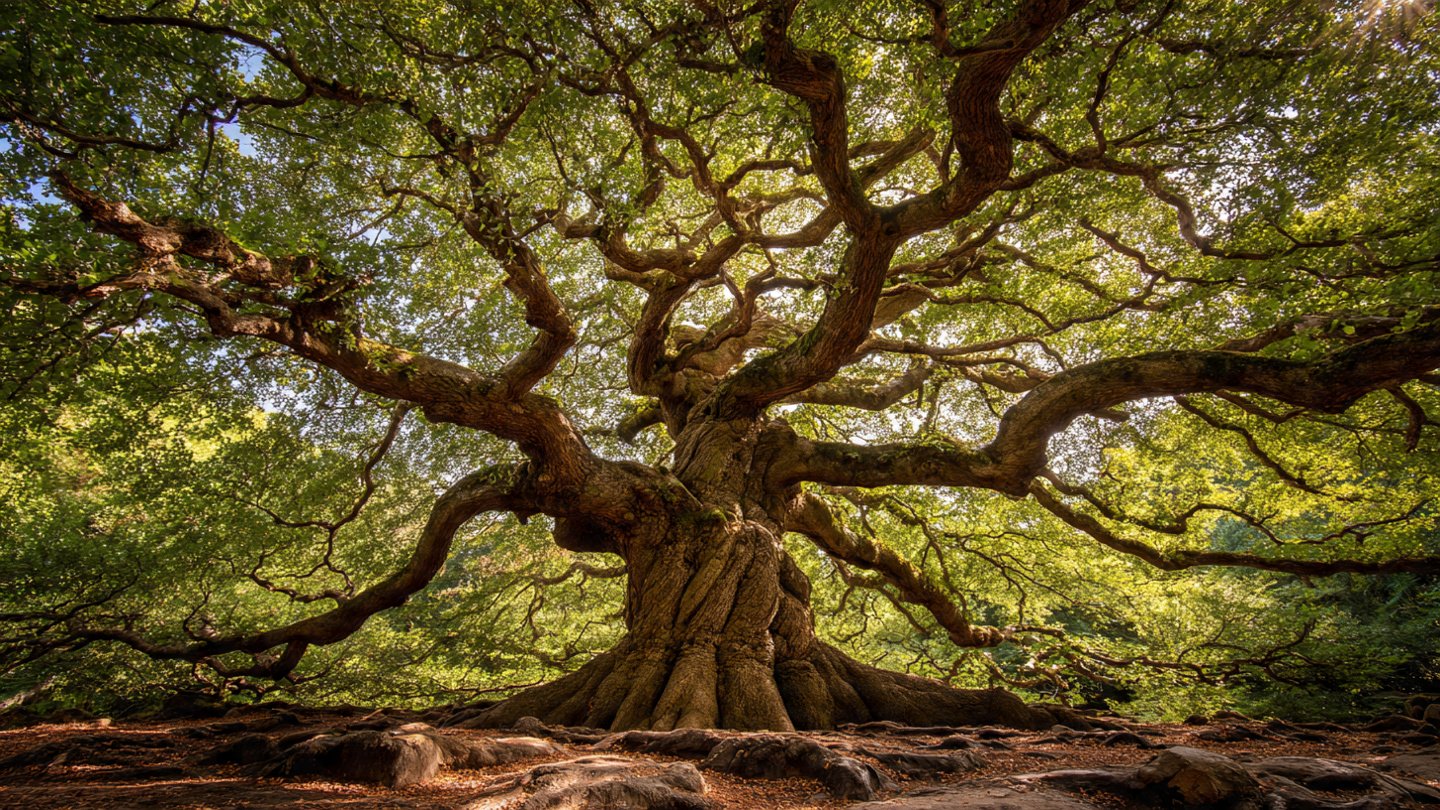
Throughout history, humans have revered certain trees for their longevity, size, and cultural symbolism. Among these, one tree often earns the title “King of Trees” — a name that reflects both its ecological importance and its cultural prominence. That tree is none other than the banyan tree (Ficus benghalensis), a species celebrated across Asia for its sprawling canopy, aerial roots, and remarkable lifespan.
The Banyan Tree: An Introduction
The banyan tree is a type of fig tree native to India and other parts of South Asia. It is well-known for its unique growth habit, where aerial prop roots grow down from branches into the soil, eventually forming additional trunks. This characteristic allows a single tree to cover vast areas and live for centuries.
- Scientific Name: Ficus benghalensis
- Family: Moraceae (fig family)
- Average Lifespan: Several centuries; some specimens are over 500 years old
- Height: Up to 30 meters (98 feet) tall, with a canopy spreading across hundreds of square meters
This tree is not only a natural wonder but also a cultural and spiritual symbol in many regions of the world. (encyclopediaoflife.org)
Why It’s Called the “King of Trees”
The banyan tree earns its regal title for several compelling reasons:
- Size and Spread: The banyan can cover several acres of land. Famous specimens, such as the Great Banyan Tree in Howrah, India, span over 3.5 acres with thousands of roots acting as supporting trunks. This immense size gives it a commanding presence in any landscape.
- Longevity: Some banyan trees have been known to live for hundreds of years, making them symbols of endurance and stability.
- Ecological Significance: Its dense canopy provides shade, supports diverse wildlife, and helps prevent soil erosion. Many birds, insects, and small mammals depend on banyan trees for habitat.
- Cultural Reverence: In Hinduism and Buddhism, the banyan is a sacred tree, symbolizing eternal life, shelter, and the interconnectedness of all living things. (britannica.com)
Unique Growth Habit
One of the most fascinating aspects of the banyan tree is its prop root system. Unlike most trees, which have a single trunk, the banyan grows aerial roots from its branches. These roots descend into the soil and develop into additional trunks, essentially allowing the tree to expand laterally over time.
This growth pattern gives the banyan several advantages:
- Structural Stability: The multiple trunks support the expansive canopy.
- Longevity: Even if the original trunk dies, the tree can continue growing through its supporting roots.
- Microhabitat Creation: The dense canopy and network of roots create niches for birds, monkeys, and insects.
In some cases, what appears to be a “forest” of individual trees is actually one interconnected banyan, showcasing its remarkable adaptability and resilience.
Cultural and Spiritual Significance
The banyan tree is more than just a botanical marvel; it has deep cultural and spiritual meaning:
- Hinduism: Considered sacred, banyan trees are often planted near temples. The tree represents immortality because it seemingly lives forever through its spreading trunks. Lord Krishna and other deities are sometimes associated with banyans.
- Buddhism: The banyan is linked with enlightenment. The Buddha is said to have meditated under a sacred fig tree (Ficus religiosa), a relative of the banyan.
- Community Spaces: Historically, the banyan tree served as a gathering place for villages. Its vast canopy provided shade for meetings, markets, and social events. (asiaticsociety.org)
These aspects underscore why humans regard the banyan as a “king” — it dominates not just landscapes, but also minds and hearts.
Ecological Importance
The banyan tree plays a vital role in maintaining ecological balance:
- Supports Wildlife: Fruit-bearing banyans attract birds, bats, and monkeys, which in turn help disperse seeds.
- Prevents Soil Erosion: The extensive root system stabilizes soil in monsoon-heavy regions.
- Microclimate Regulation: The large canopy moderates temperature and reduces evaporation, benefiting surrounding plants.
- Air Quality: As a large evergreen, it contributes to carbon sequestration and oxygen production. (worldwildlife.org)
In short, banyan trees are keystone species in their ecosystems, supporting biodiversity and environmental health.
Famous Banyan Trees Around the World
Several iconic banyans have earned global recognition:
- Great Banyan Tree, Howrah, India: Over 250 years old, with a canopy covering 3.5 acres — the largest in terms of crown spread.
- Thimmamma Marrimanu, Andhra Pradesh, India: A sacred tree with an extensive canopy, associated with local legends and annual pilgrimages.
- Kalpavriksha Legend Trees: Various ancient banyans in India and Southeast Asia are considered “wish-fulfilling” trees.
These trees demonstrate the banyan’s ability to dominate landscapes, cementing its title as the king of trees.
Medicinal and Practical Uses
The banyan tree is not just ecologically and culturally important; it has practical applications:
- Medicinal Uses: The bark, leaves, and aerial roots are used in traditional medicine for treating diabetes, inflammation, and skin conditions.
- Shade and Shelter: Its wide canopy is ideal for shading crops, livestock, and community areas.
- Timber and Fiber: Though not a primary timber source, the bark and roots can be used for rope and minor construction purposes.
These functional uses reinforce why people historically planted and protected banyans across South Asia.
Challenges in Banyan Tree Conservation
Despite their significance, banyans face challenges:
- Urbanization: Expanding cities often cut down large trees to make way for roads or buildings.
- Pollution: Air and soil pollution affect tree health, particularly in dense urban areas.
- Neglect: Young aerial roots may be removed to maintain aesthetics, weakening the tree over time.
Conservation efforts focus on protecting old trees, encouraging planting in community spaces, and raising awareness of their ecological and cultural importance.
Conclusion
The banyan tree, with its sprawling canopy, aerial roots, and centuries-long lifespan, rightly earns the title “King of Trees.” Its dominance is not just physical but also ecological, cultural, and spiritual. By providing shelter for wildlife, stabilizing soil, offering shade for communities, and symbolizing longevity and immortality, the banyan tree is a living testament to the power and majesty of nature.
For gardeners, urban planners, and nature enthusiasts, planting and protecting banyan trees ensures that this “king” continues to reign for generations — reminding us that some trees are far more than mere vegetation; they are pillars of life and culture.