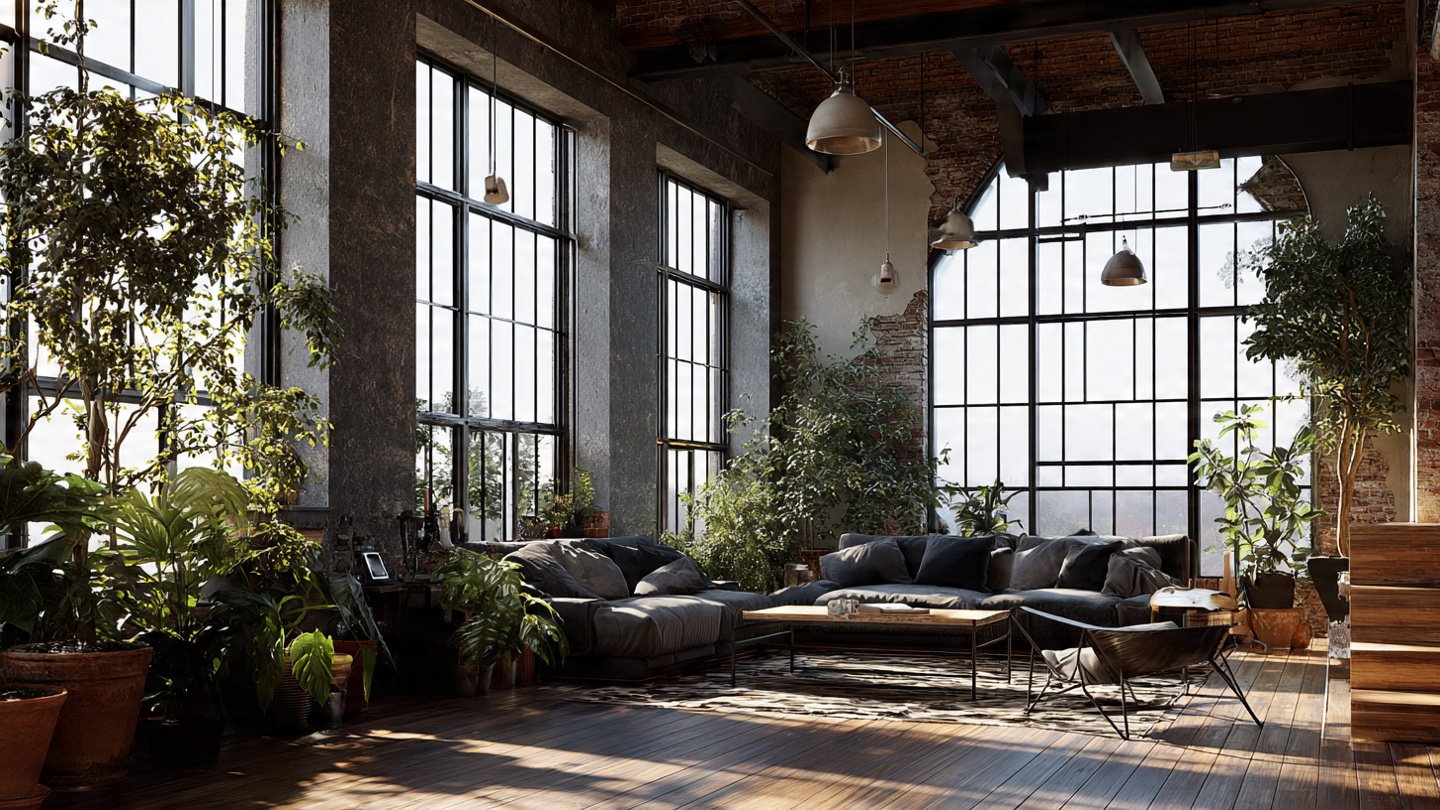
Industrial-style lofts are celebrated for their open spaces, exposed brick, concrete floors, and soaring ceilings. High windows flood the interiors with natural light, creating a dramatic and airy atmosphere. Yet, despite these striking architectural elements, industrial spaces can sometimes feel cold, stark, or impersonal. Enter plants: carefully chosen greenery can soften hard surfaces, add life and color, and transform an industrial loft into a vibrant, inviting home. But which plants thrive in these unique conditions, and how can they complement the loft’s edgy aesthetic?
High windows, large open areas, and abundant light present both opportunities and challenges. The right plants can embrace the loft’s industrial charm while creating warmth and personality.
Why Plants Work in Industrial Lofts
Industrial design emphasizes raw materials—metal, concrete, and brick—which can feel heavy or monochromatic. Plants introduce natural textures, organic shapes, and calming colors, creating balance in the space. Their verticality and sculptural qualities can fill empty corners and draw the eye upward, making high ceilings feel intentional rather than overwhelming.
Additionally, plants improve indoor air quality, promote a sense of well-being, and provide a subtle contrast to minimalist furnishings. By selecting varieties that complement industrial materials, loft owners can merge urban chic with natural elegance.
Key Considerations for Choosing Plants
Before selecting greenery for an industrial loft, consider the following:
- Light Requirements: High windows often provide bright, indirect light, which is perfect for many indoor plants. South-facing windows may produce direct sunlight, while north-facing windows offer softer illumination.
- Scale and Proportion: Loft ceilings are high, so consider large, bold plants that match the space. Miniature houseplants can get lost in open areas, while floor-to-ceiling greenery or tall trees create a dramatic impact.
- Maintenance Level: Industrial lofts attract busy urban dwellers who may prefer low-maintenance plants that thrive indoors without constant care.
- Aesthetic Fit: Look for plants with sculptural shapes, bold foliage, or trailing habits that complement metal, wood, and brick elements.
Top Plants for Industrial Loft Spaces
1. Fiddle Leaf Fig (Ficus lyrata)
The fiddle leaf fig has become an interior design icon, and for good reason. Its broad, glossy leaves provide strong visual interest, making it perfect for high-ceiling lofts. Placed near large windows, it can grow into a stunning focal point. Its sculptural form and vibrant green color soften industrial materials like concrete and steel, while adding life to minimal furniture arrangements.
2. Monstera Deliciosa
Monstera, with its iconic split leaves, is ideal for creating a tropical yet modern vibe. It thrives in bright, indirect light and can reach impressive heights if given space. The dramatic foliage adds texture against exposed brick walls, and its trailing vines can cascade from shelves or elevated planters, breaking up harsh lines and complementing industrial shelving units.
3. Snake Plant (Sansevieria trifasciata)
The upright, architectural shape of the snake plant echoes the clean lines of industrial lofts. Extremely low-maintenance, it tolerates bright and moderate light, making it ideal for loft windows. Its sculptural leaves can anchor corners, balance furniture arrangements, and contribute to a modern, minimalist aesthetic while purifying the air.
4. Rubber Plant (Ficus elastica)
Rubber plants thrive in bright light and can grow into impressive indoor trees. Their deep green, glossy leaves provide contrast to neutral tones and metallic accents typical of industrial interiors. Large pots near windows or in open spaces create an elegant, commanding presence that complements the loft’s height and open layout.
5. Bird of Paradise (Strelitzia reginae)
For lofts with abundant sunlight, the Bird of Paradise delivers both height and drama. Its broad, paddle-shaped leaves can reach several feet tall, creating a tropical statement that balances the industrial edge. It’s ideal for corners or near windows, where it can catch light and act as a natural focal point.
6. Pothos (Epipremnum aureum)
Trailing plants like pothos add softness and vertical interest without taking up much floor space. Perfect for hanging planters, shelves, or high window sills, pothos vines can cascade freely, breaking up geometric lines and adding lush greenery to the loft’s structure. Its easy-care nature makes it ideal for urban environments.
7. Kentia Palm (Howea forsteriana)
Kentia palms thrive in bright, indirect light and grow tall, making them perfect for lofts with high ceilings. Their feathery fronds bring movement and texture to stark industrial interiors, and their architectural form complements minimalist furniture and open layouts.
8. ZZ Plant (Zamioculcas zamiifolia)
ZZ plants are known for their resilience and glossy, dark green leaves. They thrive in low to bright light and require minimal maintenance, making them suitable for lofts where sunlight may be uneven. Their bold, sculptural leaves provide contrast against concrete, steel, and exposed brick surfaces.
Styling Plants in Industrial Lofts
- Use Vertical Space: Tall plants, like fiddle leaf figs or palms, can draw attention to ceilings and fill open areas. Hanging planters or wall-mounted shelves can also elevate trailing plants.
- Combine Textures: Mix large-leafed tropical plants with spiky or upright varieties for contrast. Grouping plants in odd numbers creates a visually appealing balance.
- Select Industrial-Style Planters: Metal, concrete, or matte ceramic pots complement industrial aesthetics. Minimalist or geometric designs maintain a clean, cohesive look.
- Create Plant Corners: Anchor a corner with several plants of varying heights and textures to create a lush, inviting nook without overwhelming the space.
- Integrate with Furniture: Place plants near seating areas, shelving, or consoles to soften hard lines and add warmth. Plants can also act as natural room dividers in open loft layouts.
Benefits Beyond Aesthetics
Adding plants to a loft isn’t just about style. They also provide:
- Improved Air Quality: Many houseplants filter pollutants, creating a healthier indoor environment.
- Reduced Stress: Greenery has been shown to improve mood and reduce stress.
- Noise Reduction: Large-leafed plants can absorb sound, helping to soften echo-prone industrial spaces.
- Connection to Nature: Indoor greenery fosters a sense of calm and well-being, especially important in urban lofts where outdoor space may be limited.
Final Thoughts
Industrial lofts offer dramatic architecture, abundant light, and open layouts—but without greenery, they can feel cold or impersonal. By introducing the right plants, loft owners can soften hard edges, bring movement and color, and create an inviting, life-filled space. From towering fiddle leaf figs to trailing pothos and sculptural snake plants, greenery complements industrial materials and highlights the loft’s strengths.
Plants don’t just decorate industrial lofts—they transform them. They provide warmth, texture, and vitality, creating a sanctuary that balances the boldness of concrete, brick, and steel with the calming presence of nature. For urban dwellers seeking beauty, serenity, and a connection to the natural world, the right greenery is the ultimate design tool.