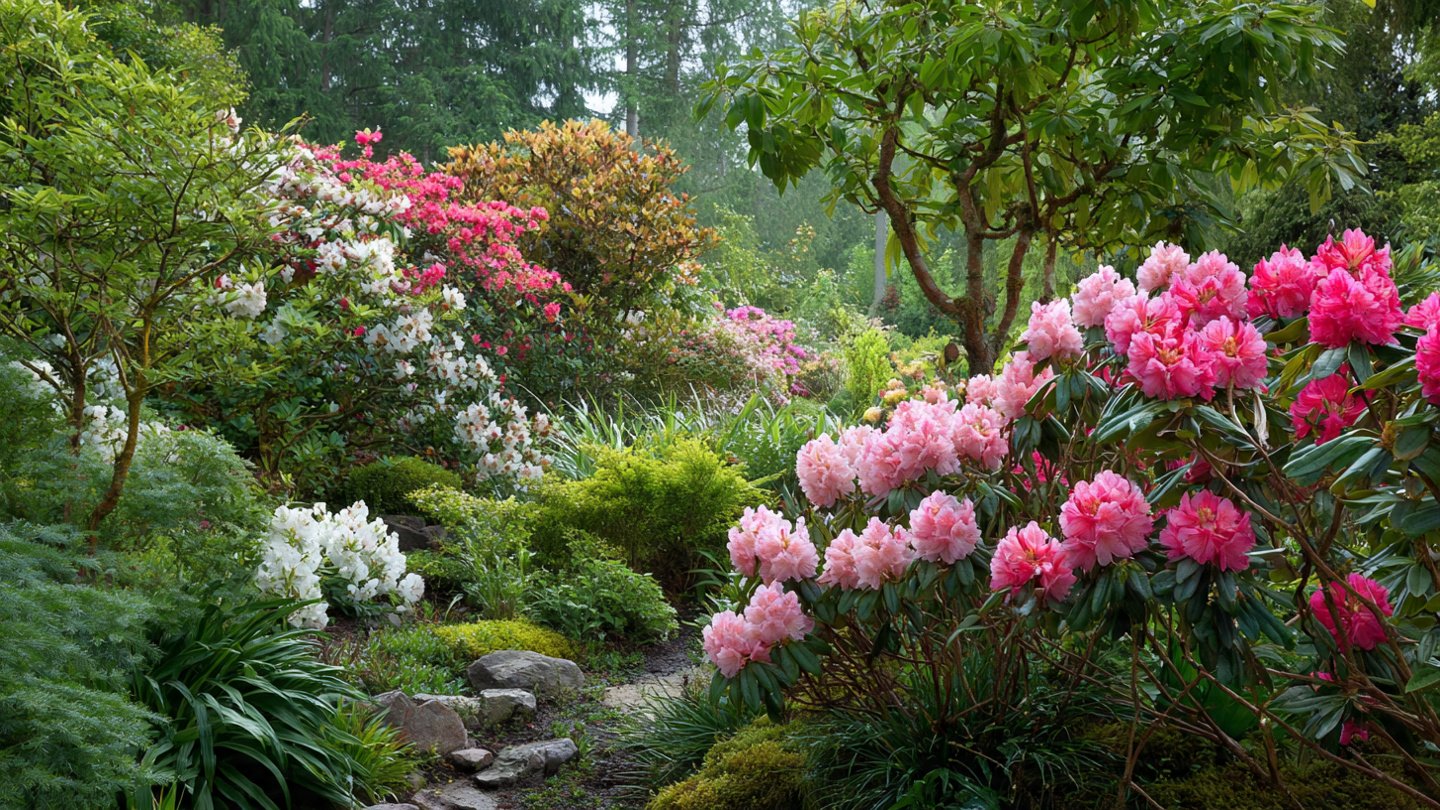
A vibrant, well-designed garden doesn’t rely solely on seasonal bursts of color. The secret to a stunning garden is combining plants that not only bloom beautifully but also contribute consistent foliage and structure throughout the year. Year-round interest comes from thoughtful layering, combining evergreens with perennials, and selecting flowering plants that also provide attractive leaves, textures, and form.
For gardeners who want a lively, textured garden no matter the season, here’s a guide to some of the top flowers and flowering plants that enhance foliage year-round.
1. Camellias (Camellia japonica and Camellia sasanqua)
Camellias are evergreen shrubs admired for their glossy, dark green foliage and striking blooms. They bloom in autumn, winter, and early spring, depending on the variety, making them a reliable source of color in cooler months.
- Foliage Benefits: Dense, shiny leaves create a structured backdrop for other plants.
- Flower Colors: Shades of red, pink, white, and variegated varieties add brightness to winter gardens.
- Care Tips: Partial shade, well-drained acidic soil, and consistent moisture keep camellias thriving.
2. Hellebores (Helleborus species)
Also known as “Christmas roses,” hellebores are early bloomers that flower in winter and early spring. Their evergreen or semi-evergreen foliage adds texture even when flowers fade.
- Foliage Benefits: Large, leathery leaves form dense clumps, providing ground coverage and contrast.
- Flower Colors: White, pink, green, purple, and even speckled blooms.
- Care Tips: Shade-tolerant, prefers humus-rich soil, and low maintenance once established.
3. Heucheras (Coral Bells)
Heucheras are primarily grown for their ornamental foliage, which remains attractive throughout the year. Many varieties also produce delicate flower spikes in late spring or summer.
- Foliage Benefits: Dramatic leaves in shades of burgundy, silver, lime, or purple.
- Flower Colors: Small bell-shaped blooms in pink, red, or white.
- Care Tips: Partial shade to full sun, well-draining soil, and occasional deadheading encourage vigor.
4. Boxwood (Buxus species)
Boxwoods are evergreen shrubs that provide structure, density, and year-round greenery. While their flowers are inconspicuous, they are excellent companions for seasonal flowering plants.
- Foliage Benefits: Dense, small leaves create hedges, borders, or topiary shapes.
- Flower Colors: Small greenish-white blooms, mostly ornamental for foliage contrast.
- Care Tips: Full sun to partial shade, regular pruning maintains desired shapes.
5. Japanese Pieris (Pieris japonica)
Pieris japonica is an evergreen shrub that blooms in early spring with clusters of bell-shaped flowers. Its leaves emerge bronze or reddish, transitioning to deep green, adding seasonal color before and after blooms.
- Foliage Benefits: Glossy leaves provide year-round texture.
- Flower Colors: White, pink, or red drooping clusters in early spring.
- Care Tips: Acidic, well-drained soil and partial shade.
6. Viburnum
Viburnums are versatile shrubs that combine attractive foliage, flowers, and berries. Many varieties are evergreen or semi-evergreen, providing greenery even in winter.
- Foliage Benefits: Dense growth with deep green leaves, often turning red or purple in autumn.
- Flower Colors: Clusters of white or pink blooms in spring or summer.
- Care Tips: Full sun to partial shade, moderately moist soil. Some viburnums also attract birds with their berries.
7. Campsis (Trumpet Vine)
Trumpet vine is a vigorous, deciduous climber with bold foliage that pairs beautifully with other year-round greenery. While deciduous, it produces dramatic summer blooms, attracting hummingbirds and pollinators.
- Foliage Benefits: Large, compound leaves create lush summer coverage.
- Flower Colors: Bright orange, red, or yellow trumpet-shaped flowers.
- Care Tips: Full sun, well-drained soil, and regular pruning to prevent overgrowth.
8. Evergreen Perennials with Flowers
Certain evergreen perennials provide both foliage structure and seasonal blooms. Examples include:
- Lavender (Lavandula) – aromatic gray-green foliage with purple summer flowers.
- Rhododendron – broad evergreen leaves with spring blossoms in varied shades.
- Azaleas – evergreen shrubs offering colorful spring flowers and dense foliage.
These plants combine visual appeal, texture, and continuous greenery, making them excellent choices for layered, year-round gardens.
9. Ornamental Grasses
While not technically flowers, ornamental grasses like Miscanthus, Pennisetum, and Carex provide year-round movement, structure, and visual interest.
- Foliage Benefits: Evergreen or semi-evergreen blades, swaying in the wind, adding texture and height.
- Flower Colors: Some produce feathery plumes in late summer or fall, adding soft color.
- Care Tips: Most grasses require full sun, good drainage, and minimal maintenance.
10. Clematis
Clematis vines offer a long season of blooms while contributing lush greenery. Evergreen varieties exist and provide constant foliage along trellises or fences.
- Foliage Benefits: Dense leaf coverage for walls, trellises, or pergolas.
- Flower Colors: A wide range, including purple, blue, pink, red, and white.
- Care Tips: Sun on the flowers, shaded roots, and support structures help them thrive.
Strategies to Maximize Year-Round Foliage
To ensure your garden looks vibrant all year, consider these design strategies:
1. Layering Plant Heights
Combine groundcovers, medium shrubs, and tall trees or climbers. Layering provides depth and ensures some greenery is visible even if certain flowers are off-season.
2. Mix Evergreen and Deciduous Plants
Evergreens maintain structure, while deciduous plants contribute seasonal blooms. This mix keeps the garden dynamic and visually appealing throughout the year.
3. Repeat Colors and Textures
Repeating flower colors or foliage shapes in different areas creates harmony and makes the garden feel cohesive, even when some plants are dormant.
4. Incorporate Seasonal Flowers
Even in a foliage-focused garden, seasonal annuals or bulbs like tulips, daffodils, and marigolds add short bursts of color while evergreen perennials hold the background.
5. Consider Foliage Shapes and Colors
Some foliage changes with the season, providing subtle color shifts from bronze to deep green, or burgundy to lime. Examples include heuchera, pieris, and certain viburnums.
Benefits of Foliage-Focused Flowering Plants
Focusing on both flowers and foliage offers several advantages:
- Visual interest in off-peak seasons: Plants maintain beauty even when not in bloom.
- Garden structure: Dense foliage provides texture and form, supporting a layered garden design.
- Wildlife habitat: Evergreen plants offer shelter and food for birds and pollinators year-round.
- Low maintenance: Foliage plants often require less pruning and care than purely seasonal flowers.
Conclusion
A truly captivating garden thrives not just on blooms but on the lasting appeal of foliage, form, and layered textures. Plants like camellias, hellebores, viburnums, and heucheras provide seasonal flowers and year-round greenery, ensuring the garden looks alive throughout the year. By combining evergreens, flowering shrubs, perennials, and ornamental grasses, gardeners can create landscapes that remain visually interesting, structurally rich, and ecologically supportive in every season.
Whether your goal is a low-maintenance garden, a pollinator-friendly yard, or a dynamic home landscape, focusing on plants that enhance both flowers and foliage is key to achieving a vibrant, year-round garden.