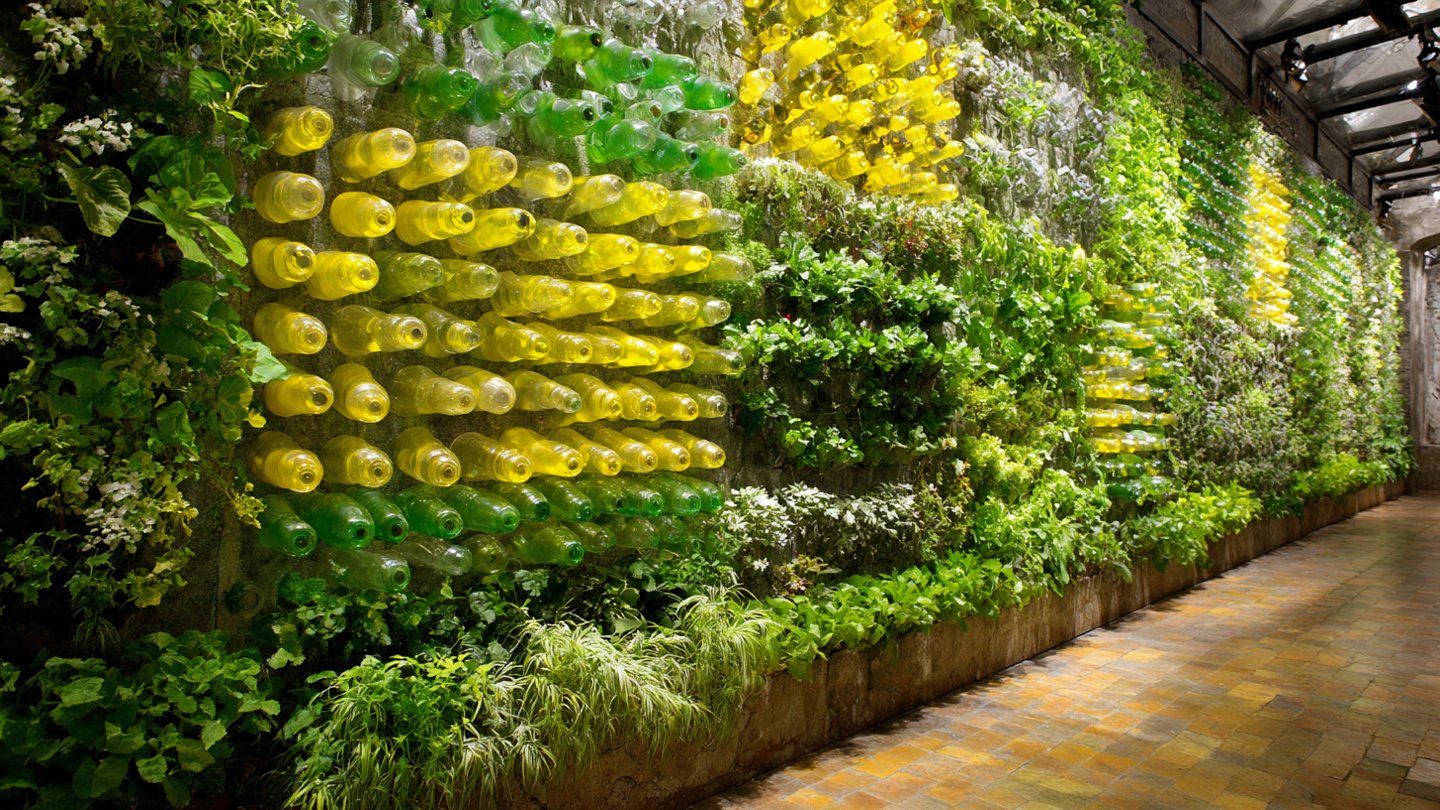
Vertical gardening is transforming how people grow food in small spaces. Imagine a vibrant, productive vegetable wall that not only saves space but also reuses plastic bottles that would otherwise pollute the environment. This clever, eco-friendly solution allows you to grow fresh vegetables while creating a living, green piece of art on your balcony, terrace, or backyard wall.
With a few simple steps, recycled plastic bottles, and a little creativity, you can build a vegetable wall that is both visually striking and highly productive. Here’s how you can turn ordinary plastic bottles into a thriving vertical garden.
Why a Vegetable Wall Is Perfect for Urban Spaces
Urban gardeners often struggle with limited space for planting. Traditional garden beds or pots take up valuable floor area, making it hard to grow enough food. A vertical vegetable wall solves this problem by using vertical space—walls, fences, or railings—transforming them into productive gardens.
Advantages include:
- Space efficiency: Grow many vegetables in a small footprint.
- Ease of maintenance: Vertical gardens reduce bending and crouching.
- Better sunlight exposure: Plants at different heights get more uniform sunlight.
- Aesthetic appeal: Creates a living green wall that is visually striking.
Using recycled plastic bottles makes the project inexpensive and environmentally friendly, giving new life to a material that usually ends up in landfills.
Materials Needed for Your Recycled Vegetable Wall
You don’t need fancy tools to get started. Here’s what you’ll need:
- Plastic bottles (2-liter soda bottles work best, but any bottle can be adapted)
- Strong string, rope, or wire for hanging
- Drill or a sharp knife to make drainage holes
- Potting soil or a homemade compost mix
- Seeds or seedlings of your choice (lettuce, herbs, spinach, cherry tomatoes, radishes, and small peppers work great)
- Optional: Hooks or a wooden/plastic frame to attach the bottles to the wall
The beauty of this method is that it’s flexible. You can build a small wall on a balcony railing or a large vertical garden covering an entire fence.
Preparing the Plastic Bottles
- Clean the bottles thoroughly to remove any residue.
- Cut a planting opening in the side of the bottle—about a quarter of the bottle size—to plant seeds or seedlings.
- Make drainage holes at the bottom of each bottle to prevent waterlogging.
- Optionally, paint or decorate the bottles for a visually pleasing display. Light-colored paint can reflect sunlight, reducing soil overheating.
Once prepared, your bottles are ready to hold soil and plants.
Filling and Planting Your Bottles
Use a lightweight, nutrient-rich potting mix for best results. A mix of garden soil, compost, and coco peat works perfectly, holding moisture without compacting.
For planting:
- Fill the bottle about two-thirds full with soil.
- Place your seeds or seedlings inside the planting opening.
- Gently pack soil around the roots or seeds.
- Water lightly to settle the soil.
Small leafy vegetables and herbs are ideal for the top rows, while sturdier crops like cherry tomatoes or peppers can go in lower bottles for stability.
Assembling the Vertical Garden
There are several ways to hang your bottles:
- String method: Drill two holes at the top and bottom of the bottle, thread rope or string, and tie securely. Hang multiple bottles vertically along a wall or railing.
- Frame method: Attach the bottles to a wooden or metal frame with hooks or wire. Stack them closely for a full, lush look.
- Direct wall mounting: Secure bottles with brackets or hooks directly on a wall for a minimalist vertical garden.
Ensure bottles are secure and can support the weight of soil and water. Vertical alignment allows water from top bottles to drain slightly into lower bottles, making efficient use of moisture.
Watering and Maintenance
Vertical vegetable walls are surprisingly low-maintenance, but proper care ensures healthy growth:
- Watering: Water from the top, allowing excess water to trickle down. Early morning is ideal to reduce evaporation and prevent fungal issues.
- Fertilizing: Use slow-release organic fertilizers or compost tea every few weeks. Liquid feeding can be applied carefully to avoid over-saturation.
- Pruning: Harvest leaves regularly to promote new growth. Trim herbs and leafy greens often for continuous production.
Mulching the soil inside bottles can reduce evaporation and maintain moisture for longer periods, making this system highly water-efficient.
Best Plants for a Plastic Bottle Vegetable Wall
Vertical gardens thrive with small, compact, or trailing vegetables. Ideal choices include:
- Leafy greens: Lettuce, spinach, kale, and arugula
- Herbs: Basil, mint, coriander, parsley, thyme
- Small fruits: Cherry tomatoes, small peppers
- Root vegetables: Radishes and baby carrots (choose shallow-rooted varieties)
- Trailing plants: Strawberries or small beans
Mixing different types of plants can increase diversity and visual appeal, while also maximizing your yield.
Eco-Friendly and Cost-Effective Gardening Benefits
Using recycled bottles is sustainable. Every bottle repurposed reduces plastic waste while creating a productive garden. This approach is ideal for environmentally conscious gardeners and families who want to teach kids about sustainability and food growing.
Additional benefits include:
- Reducing grocery bills with homegrown produce
- Improving air quality around the house with living plants
- Creating a lush, green aesthetic without expensive landscaping
Harvesting and Year-Round Growth
With proper care, a recycled bottle vegetable wall can produce year-round:
- Leafy vegetables can be harvested continuously by picking outer leaves.
- Herbs grow quickly and respond well to frequent trimming.
- Tomatoes and peppers produce multiple harvest cycles in warm climates.
Rotation planting can also keep the wall productive through all seasons. Replace old plants with fresh seedlings to maintain continuous growth.
Final Thoughts
Recycled plastic bottle vegetable walls are an innovative, eco-friendly solution for small-space gardening. They combine sustainability, productivity, and beauty, transforming ordinary plastic waste into a thriving vertical garden.
Whether you’re an urban gardener, a balcony grower, or just someone passionate about sustainability, this approach allows you to enjoy fresh, homegrown vegetables all year. Minimal space, low cost, and environmental benefits make this the vertical garden everyone is talking about.