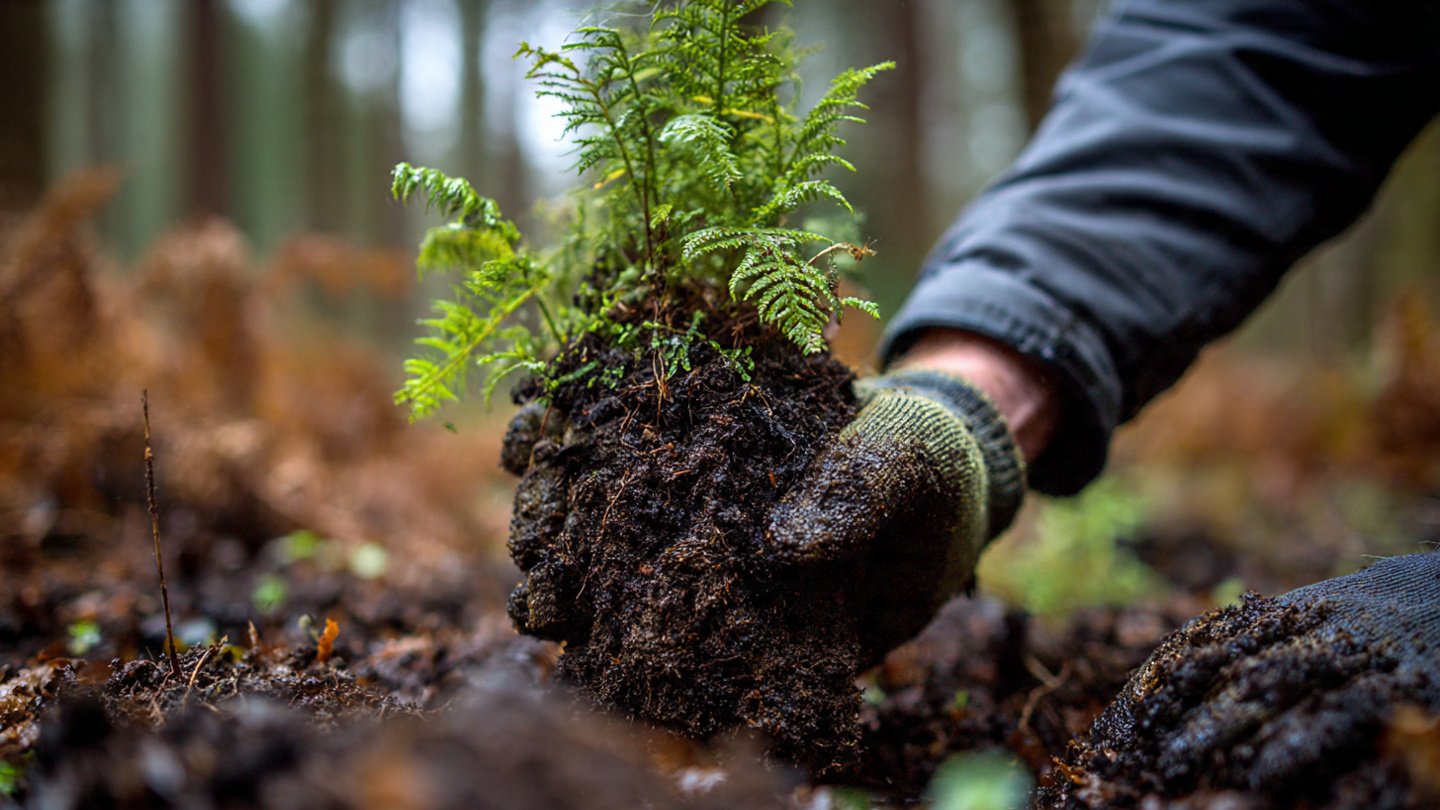
Reforesting degraded landscapes is one of the most urgent environmental challenges of our time. Forests not only provide habitat for countless species but also act as carbon sinks, regulate water cycles, and prevent soil erosion. While planting trees is essential, scientists have discovered that the key to doubling forest regrowth doesn’t just lie in the seedlings — it lies beneath the soil. This “soil secret” could revolutionize reforestation efforts worldwide.
In this article, we explore the groundbreaking research, explain how soil properties influence forest recovery, and provide insights into how this discovery could accelerate global ecosystem restoration.
The Challenge of Forest Regrowth
Despite decades of conservation efforts, many forests struggle to regenerate naturally. Factors that slow forest recovery include:
- Soil degradation: Over-farming, erosion, and deforestation reduce soil fertility and structure.
- Loss of microbial communities: Healthy soil contains bacteria, fungi, and other microorganisms critical for nutrient cycling.
- Invasive species: Non-native plants can outcompete native tree seedlings.
- Climate stressors: Extreme temperatures, droughts, or flooding hinder young tree establishment.
Conservationists have traditionally focused on planting trees and controlling invasive species. While these methods help, the regrowth rate often remains slow. That’s where the soil comes in.
The Soil Secret Revealed
Recent studies by ecologists and soil scientists have revealed that enhancing certain soil properties can dramatically accelerate forest regrowth. The secret lies in bioactive soil amendments — natural compounds and microbes that improve soil fertility and stimulate seedling growth.
Key elements of this soil secret include:
- Mycorrhizal Fungi
These symbiotic fungi form networks connecting tree roots. They increase nutrient and water uptake, improve drought resistance, and even help seedlings communicate chemical signals. - Nitrogen-Fixing Microbes
Certain bacteria in the soil convert atmospheric nitrogen into forms plants can use. This natural fertilization is crucial in degraded soils lacking essential nutrients. - Soil Structure Restoration
Adding organic matter such as compost or mulch improves soil aeration and moisture retention, creating a more hospitable environment for young trees. - Soil pH Balancing
Healthy soil pH ensures that essential minerals are available to plants. Acidic or alkaline soils can hinder seedling establishment.
According to recent experiments, applying a combination of these soil improvements can double the speed of natural forest regrowth compared to untreated areas.
How Scientists Tested the Soil Secret
Researchers conducted field trials in several degraded forest areas across different continents. Their methodology included:
- Control plots: Areas left untreated, relying on natural regrowth.
- Soil-amended plots: Areas treated with microbial inoculants, organic matter, and nutrient-balancing techniques.
- Observation over multiple years: Tracking seedling survival, growth rate, and canopy development.
The results were striking. Treated plots showed:
- Twice the seedling density: More trees established per square meter.
- Faster canopy closure: New growth shaded the soil more quickly, reducing weed competition.
- Higher species diversity: Soil microbes facilitated the return of multiple tree species rather than a single dominant type.
These findings suggest that restoring the biological health of soil is just as important as planting trees for forest regeneration.
Why Soil Microbes Are Game-Changers
For decades, forest restoration focused on physical soil properties and tree planting. But microbes are now recognized as the engineers of ecosystem recovery.
- Mycorrhizal fungi connect roots from different tree species, forming an underground “internet” that shares water, nutrients, and chemical signals.
- Nitrogen-fixing bacteria reduce the need for artificial fertilizers, which can harm sensitive forest ecosystems.
- Decomposer communities break down leaf litter and woody debris, recycling nutrients that support new growth.
By fostering these microbial networks, scientists can create conditions where forests essentially regrow themselves more efficiently.
Practical Applications for Reforestation
Understanding this soil secret opens new possibilities for large-scale forest restoration projects:
- Eco-Friendly Soil Amendments
Adding compost, biochar, or microbial inoculants can turn barren soil into a fertile bed for seedlings. - Targeted Microbial Restoration
Introducing specific fungi or bacteria suited to local tree species ensures faster and healthier growth. - Integrated Planting Techniques
Combining soil restoration with careful selection of native tree species enhances long-term ecosystem stability. - Monitoring Soil Health
Tools to measure microbial diversity, nutrient content, and moisture levels can guide reforestation projects for maximum impact.
By focusing on the soil as much as the trees, restoration efforts can become more cost-effective and resilient.
Success Stories Around the World
Several restoration projects have already implemented soil-focused strategies:
- Amazon Basin: Scientists used microbial inoculants and organic mulch to accelerate regrowth in deforested areas, achieving double the seedling survival rates.
- Sub-Saharan Africa: Reintroducing nitrogen-fixing plants alongside soil amendments improved soil fertility and boosted tree growth in degraded savannas.
- Southeast Asia: Restoration plots treated with mycorrhizal fungi showed faster canopy closure and higher biodiversity compared to untreated areas.
These examples demonstrate that the soil secret is not just theoretical — it’s a practical tool for real-world ecosystem recovery.
Challenges and Considerations
While the soil secret holds promise, implementing it at scale requires careful planning:
- Cost and logistics: Large-scale microbial inoculation and compost application can be expensive and labor-intensive.
- Local adaptation: Microbial communities must be suited to local climates and soil types.
- Monitoring and maintenance: Soil health requires ongoing assessment to ensure long-term forest success.
Despite these challenges, the potential payoff — faster, more resilient forests — makes the investment worthwhile.
The Bigger Picture
Forest regrowth is critical for mitigating climate change, preserving biodiversity, and supporting human communities. The discovery that healthy soil can double regrowth rates shifts the paradigm of reforestation:
- From tree-centric planting to ecosystem-centric restoration
- From short-term planting goals to long-term sustainability
- From manual fertilization to leveraging natural microbial networks
This approach aligns with the global push for nature-based solutions to climate and environmental challenges.
Final Thoughts
The soil beneath our feet is far more than dirt — it’s a living system that determines the success of forests and ecosystems. By embracing this soil secret, scientists and conservationists have found a way to accelerate forest recovery, enhance biodiversity, and restore degraded landscapes more efficiently.
As global reforestation efforts expand, incorporating microbial health, organic matter, and nutrient balancing into restoration projects could double the pace at which we rebuild forests, offering hope for a greener, more sustainable future.