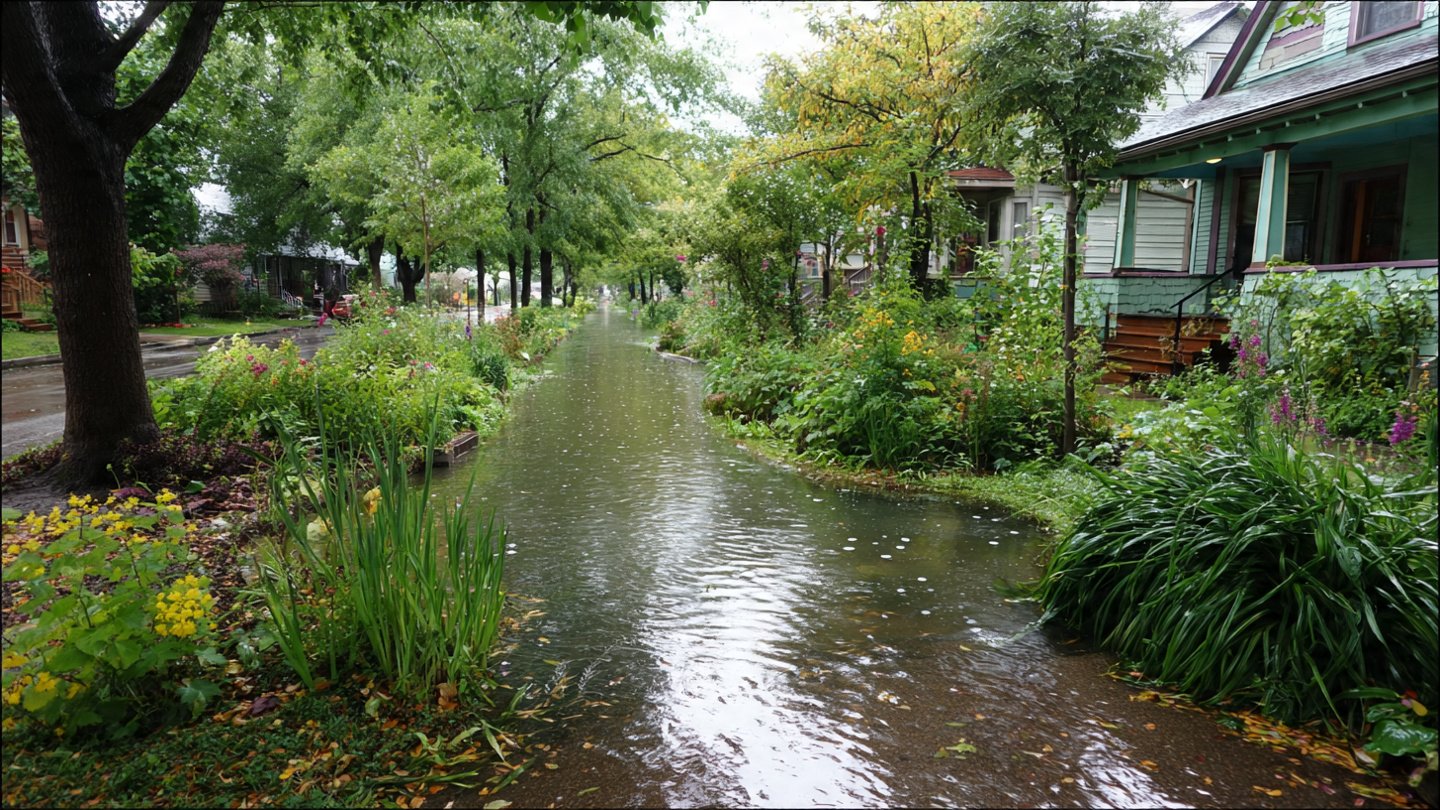
As cities around the world grow denser and climate change intensifies rainfall patterns, urban flooding has become one of the most pressing challenges of modern life. Streets turn into rivers, basements fill with water, infrastructure deteriorates, and natural ecosystems are pushed aside by concrete and asphalt. Yet a quiet, green solution is spreading across flood-prone cities—rain gardens. With more than 8 million rain gardens now installed, these unassuming landscapes are reshaping how cities manage water, protect communities, and restore nature.
What Is a Rain Garden?
A rain garden is a shallow, planted depression designed to collect and absorb rainwater runoff from roofs, roads, sidewalks, and parking lots. Instead of sending stormwater directly into drains and sewers, rain gardens slow it down, filter it through soil, and allow it to soak naturally into the ground.
They are typically planted with deep-rooted native plants, grasses, and shrubs that tolerate both wet and dry conditions. Though small in scale, their impact adds up when adopted across neighborhoods, commercial zones, and entire cities.
Why Flood-Prone Cities Need Rain Gardens
Urban environments are dominated by impermeable surfaces—concrete, asphalt, and rooftops—that prevent rainwater from soaking into the ground. During heavy storms, this water rushes into drainage systems that are often outdated or overwhelmed, leading to flash flooding and sewer overflows.
Rain gardens address this problem at its source by:
- Capturing runoff before it reaches storm drains
- Reducing peak water flow during storms
- Allowing water to infiltrate slowly into soil
When millions of rain gardens are distributed across a city, they function as a decentralized water management system, dramatically reducing flood risk.
Absorbing Water Where It Falls
One of the greatest strengths of rain gardens is their ability to absorb large volumes of water in a short time. A properly designed rain garden can absorb 30–40% more water than a conventional lawn.
During intense rainfall:
- Water pools briefly in the garden
- Soil and plant roots slow infiltration
- Excess water drains safely without erosion
This process prevents sudden surges of runoff that overwhelm storm drains and cause street flooding.
Preventing Costly Flood Damage
Urban flooding causes billions in damage every year, affecting homes, businesses, roads, and public utilities. Rain gardens help reduce these costs by limiting how much water reaches vulnerable infrastructure.
Their benefits include:
- Reduced basement flooding
- Less erosion around buildings and roads
- Lower pressure on aging sewer systems
- Decreased need for expensive drainage upgrades
In many cities, rain gardens have proven far more cost-effective than large underground stormwater projects.
Restoring Urban Ecosystems
Beyond flood prevention, rain gardens play a critical role in restoring damaged urban ecosystems. Stormwater runoff often carries pollutants such as oil, heavy metals, fertilizers, and trash into rivers and lakes. Rain gardens act as natural filters.
As water passes through soil and plant roots:
- Sediments settle out
- Pollutants are broken down by microbes
- Nutrients are absorbed by plants
This improves water quality and protects downstream ecosystems.
Creating Habitat for Wildlife
Despite their urban setting, rain gardens provide valuable habitat for birds, pollinators, and beneficial insects. Native plants attract bees, butterflies, and other species struggling to survive in concrete-dominated landscapes.
Over millions of installations, rain gardens form green corridors that:
- Support biodiversity
- Improve pollination
- Strengthen urban food webs
These small patches of green collectively make cities more resilient and alive.
Cooling Cities and Improving Air Quality
Rain gardens also help combat the urban heat island effect. Plants release moisture into the air through transpiration, lowering surrounding temperatures. Shaded soil and vegetation absorb less heat than pavement, helping cool neighborhoods during extreme heat events.
Additionally, plants capture airborne pollutants and dust, contributing to cleaner air and healthier communities.
Community-Driven Climate Solutions
One reason rain gardens have scaled so rapidly is their adaptability. They can be installed:
- In residential yards
- Along sidewalks and roads
- In school grounds and parks
- At commercial and industrial sites
Homeowners, businesses, and local governments all play a role. Many cities now offer incentives, grants, or design assistance to encourage residents to build rain gardens on private property.
This grassroots approach empowers communities to participate directly in climate resilience.
Designing Rain Gardens for Success
Effective rain gardens share a few key features:
- Proper sizing to match runoff volume
- Well-draining soil mixes
- Native or climate-adapted plants
- Strategic placement near runoff sources
When designed correctly, rain gardens require minimal maintenance once established and continue functioning for decades.
A Scalable Solution for a Changing Climate
The fact that over 8 million rain gardens already exist demonstrates how scalable this solution is. Unlike massive infrastructure projects, rain gardens:
- Can be built incrementally
- Require less investment
- Adapt easily to local conditions
As storms become more intense and unpredictable, cities need flexible solutions that grow alongside development. Rain gardens meet this need beautifully.
The Future of Urban Water Management
Rain gardens represent a shift in thinking—from fighting water to working with it. Instead of rushing rain away, cities are learning to slow it down, absorb it, and let nature do the work.
With continued investment and public awareness, rain gardens will play an even larger role in:
- Flood prevention
- Climate adaptation
- Urban greening
- Community resilience
Final Thoughts
Over 8 million rain gardens now stand as proof that small, nature-based solutions can deliver massive results. By absorbing water, preventing flood damage, and restoring urban ecosystems, rain gardens are quietly transforming flood-prone cities into greener, safer, and more resilient places to live.
As climate challenges grow, rain gardens remind us that sometimes the smartest solutions aren’t hidden underground—they’re blooming right in front of us.