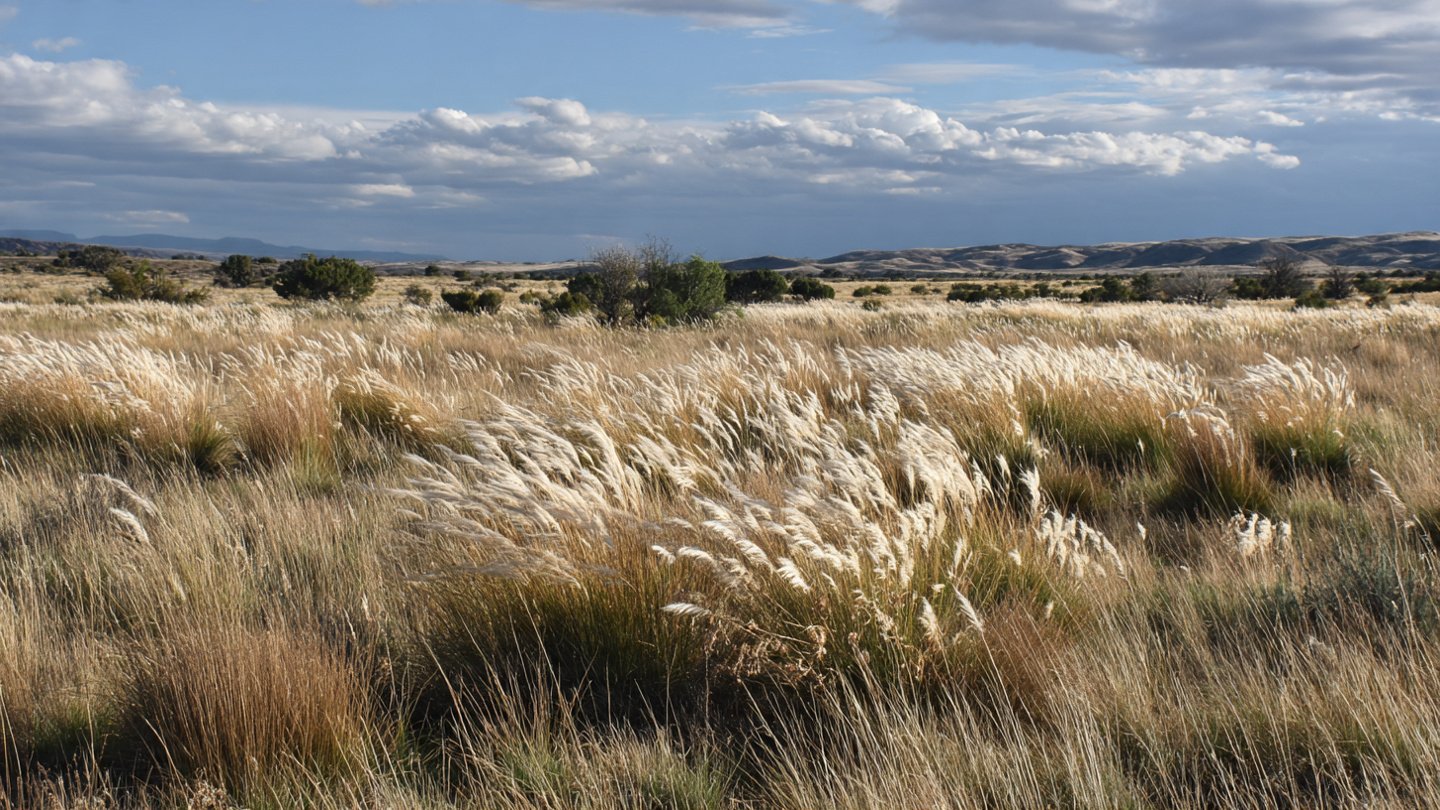
Across the world’s dry and damaged landscapes, a quiet transformation is taking place. More than one million native grasses have been reintroduced to degraded plains, and the results are profound. What once appeared barren, eroded, and on the verge of becoming desert is now stabilizing, retaining water, and supporting life again. This large-scale restoration effort shows how working with nature—rather than against it—can reverse environmental decline and rebuild resilient ecosystems.
The Hidden Importance of Grasslands
Grasslands are often overlooked in conservation efforts, yet they are among the most important ecosystems on Earth. Unlike forests, their true strength lies underground. Native grasses develop deep, fibrous root systems that anchor soil, store carbon, and interact with microorganisms essential for soil health.
When grasslands are degraded through overgrazing, intensive farming, or climate stress, the damage isn’t just visible on the surface. Soil structure collapses, water runs off instead of soaking in, and fertile land slowly turns to dust. Reintroducing native grasses restores these underground networks, rebuilding the foundation of the ecosystem from the roots up.
How Degraded Plains Slip Toward Desertification
Desertification doesn’t happen overnight. It begins with subtle changes: fewer plants, compacted soil, reduced organic matter, and declining water retention. Once vegetation cover is lost, wind and rain carry away topsoil, stripping the land of nutrients and leaving it vulnerable to extreme temperatures.
Without intervention, this process accelerates. Rainfall becomes less effective, groundwater recharge slows, and plant regeneration becomes increasingly difficult. Restoring native grasses interrupts this cycle by reestablishing living ground cover that protects and regenerates the land.
Why Native Grasses Make the Difference
Not all grasses are equal. Native grasses evolved over thousands of years to survive local climates, soil types, and seasonal extremes. Their roots often extend several feet below the surface, far deeper than non-native or cultivated grasses.
These deep roots act like natural infrastructure. They bind soil particles together, preventing erosion during heavy rains and strong winds. At the same time, they create channels that allow water to penetrate deep into the soil, replenishing moisture reserves instead of allowing runoff to wash it away.
Holding Soil Where It Belongs
One of the most immediate benefits of reintroducing native grasses is soil stabilization. As roots spread and intertwine, they form a living net that holds the ground in place. This is especially critical in open plains, where wind erosion can remove tons of topsoil in a single season.
With grass cover restored, soil loss slows dramatically. Nutrients remain where plants can access them, microbial life returns, and the land begins to regain its fertility. What was once exposed and fragile becomes stable and productive again.
Retaining Water in a Changing Climate
Water retention is another key advantage of native grass restoration. Healthy grasslands act like sponges, absorbing rainfall and releasing it slowly over time. This reduces flooding during heavy storms and provides moisture during dry periods.
As climate change increases rainfall variability, this buffering effect becomes essential. Native grasses help landscapes adapt by maximizing every drop of water that falls, making plains more resilient to droughts and extreme weather.
Preventing the Spread of Deserts
Desertification is often described as a one-way process, but grass restoration proves that recovery is possible. By restoring vegetation cover, native grasses lower ground temperatures, reduce evaporation, and improve soil structure—all factors that slow or reverse desert expansion.
As grasses establish themselves, they create conditions that allow other plants to return. Shrubs, wildflowers, insects, and grazing animals gradually follow, rebuilding a functioning ecosystem that resists further degradation.
Supporting Wildlife and Biodiversity
Reintroduced native grasses don’t just benefit soil and water—they support entire food webs. Grasslands provide habitat for insects, birds, small mammals, and grazing animals. Many species rely on specific native grasses for nesting, feeding, or protection from predators.
As biodiversity increases, ecosystems become more stable and self-sustaining. Predators return, pest populations balance out, and natural cycles resume. The plains transition from degraded land to living landscape.
Benefits for Local Communities
Grassland restoration also brings tangible benefits to people. Healthier soils improve agricultural productivity, supporting grazing and sustainable farming. Improved water retention helps maintain wells and reduces the risk of water shortages.
In many regions, restored plains reduce dust storms, improve air quality, and protect infrastructure from erosion. These improvements directly enhance livelihoods, making environmental restoration an investment in long-term community resilience.
A Cost-Effective Restoration Strategy
Compared to large-scale engineering projects, reintroducing native grasses is relatively low-cost and scalable. Once established, grasses require minimal maintenance and continue improving the land year after year.
Seeds can be locally sourced, restoration can involve local labor, and the results compound over time. This makes grass restoration one of the most efficient tools available for combating land degradation on a large scale.
Long-Term Climate Benefits
Native grasslands store significant amounts of carbon underground. As roots grow and die back seasonally, they deposit organic matter deep into the soil, locking carbon away for decades or longer.
By restoring one million native grasses, these projects contribute not only to local land recovery but also to global climate mitigation efforts. Healthy soils become carbon sinks rather than sources of emissions.
A Model for Future Restoration
The success of reintroducing native grasses on degraded plains offers a powerful model for land restoration worldwide. It demonstrates that ecological healing doesn’t always require complex technology—sometimes it begins with restoring what was already there.
By understanding natural processes and supporting them at scale, degraded landscapes can recover faster and more sustainably than previously thought.
Conclusion
The reintroduction of over one million native grasses is more than a restoration milestone—it’s proof that degraded plains can be revived. By holding soil in place, retaining water, and preventing desertification, these grasses are rebuilding ecosystems from the ground up.
In a world facing accelerating land degradation and climate uncertainty, native grasses offer a simple yet powerful solution. Rooted in resilience and shaped by evolution, they remind us that the path forward often begins by restoring the past.