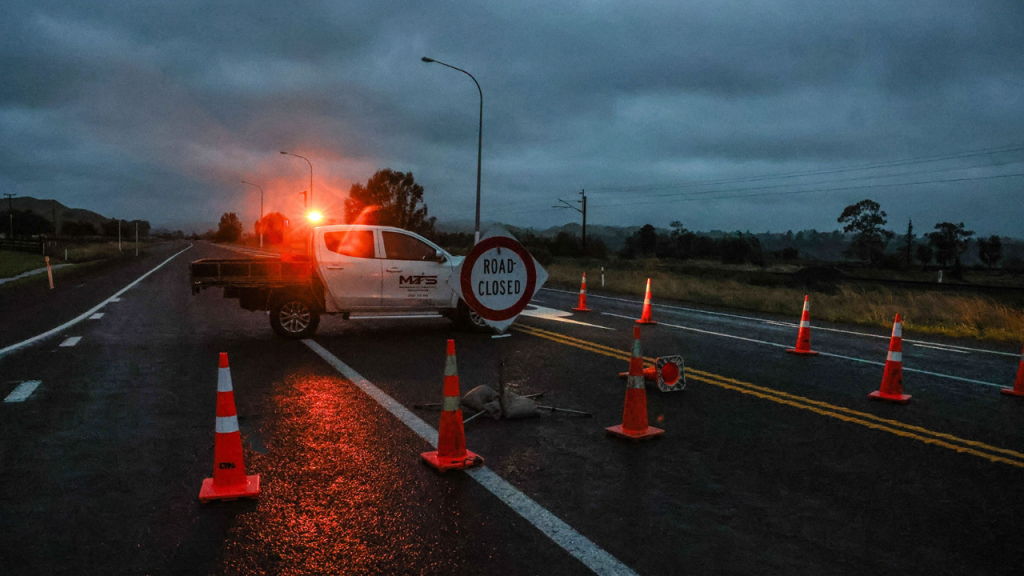
Motorists travelling along New Zealand’s busiest transport corridor faced a long and unsettling night after fallen trees blocked State Highway 1 near the rural settlement of Ōhingaiti. The incident left dozens of drivers stranded overnight, highlighting the vulnerability of key infrastructure during severe weather events and the challenges faced by emergency responders in remote areas.
What began as a routine journey for many quickly turned into an unexpected test of patience, resilience, and community cooperation as conditions deteriorated and access routes were cut off.
Sudden Closure on a Critical Route
State Highway 1 is New Zealand’s main north–south artery, carrying freight, commuters, tourists, and emergency traffic across the country. Near Ōhingaiti, the highway runs through forested and hilly terrain, making it particularly susceptible to weather-related hazards.
During the evening, strong winds and heavy rain caused multiple large trees to fall across the road, completely blocking both lanes. With darkness setting in and weather conditions continuing to worsen, authorities were forced to close the highway in both directions.
For motorists already on the stretch of road, there was little warning and no immediate detour available.
Motorists Forced to Spend the Night
As the hours passed, it became clear that the road would not reopen quickly. Crews faced dangerous conditions, including unstable trees, waterlogged ground, and ongoing wind gusts that made clearing operations unsafe.
Cars, trucks, and campervans were left stationary along the highway, with some drivers trapped between closures and unable to turn back. Many motorists prepared to spend the night in their vehicles, improvising with blankets, spare clothing, and limited food supplies.
For some, the experience was uncomfortable but manageable. For others—particularly families with children, elderly passengers, or those with medical needs—the situation was far more stressful.
Emergency Services Respond
Local emergency services were alerted shortly after the road was blocked. Police units arrived to manage traffic, check on stranded motorists, and provide reassurance. Civil defence and local authorities coordinated efforts to assess the scale of the blockage and plan a safe response.
However, the remote location and ongoing weather conditions limited what could be done immediately. Safety was the priority, and crews could not risk further injuries by working under falling branches or unstable trees.
Authorities advised motorists to remain in their vehicles, conserve fuel where possible, and follow instructions from emergency personnel.
Community Support in a Rural Area
One of the most notable aspects of the incident was the response from the local community. Residents from nearby farms and properties offered assistance where possible, including warm drinks, blankets, and information about the situation.
In rural New Zealand, such community responses are common during emergencies, reflecting a culture of looking after one another when infrastructure fails. For stranded motorists, these small acts of kindness made a significant difference during a long and uncertain night.
Weather Conditions Behind the Incident
The fallen trees were the result of a severe weather system moving through the lower North Island, bringing strong winds and saturated soil conditions. When ground becomes waterlogged, tree roots lose their grip, making even healthy trees vulnerable to toppling.
Forestry and roadside vegetation near highways are often carefully managed, but extreme weather can overwhelm preventative measures. Climate experts have increasingly warned that such events may become more frequent and intense due to changing weather patterns.
Freight and Economic Disruption
The overnight closure of State Highway 1 also had significant implications for freight and commercial transport. Truck drivers carrying perishable goods, livestock, or time-sensitive deliveries faced delays that rippled through supply chains.
Logistics companies were forced to reroute vehicles once alternative routes reopened, adding time and cost to journeys. For small businesses relying on just-in-time deliveries, even a short closure can have outsized impacts.
The incident served as a reminder of how dependent the national economy is on a small number of critical transport corridors.
Clearing the Route and Reopening
By early morning, weather conditions improved enough for crews to begin safely clearing the fallen trees. Heavy machinery was brought in to remove large trunks and debris, while arborists assessed nearby trees for further risk.
The process was slow and methodical, prioritizing safety over speed. Once the road was cleared and inspected, authorities reopened State Highway 1 under caution, with traffic controls still in place.
Drivers who had been stranded overnight were among the first to move through, many expressing relief after hours of uncertainty.
Calls for Infrastructure Resilience
Following the incident, questions were raised about the resilience of major transport routes. While fallen trees are a known risk, repeated closures on key highways have prompted calls for increased investment in vegetation management, early-warning systems, and alternative routes.
Transport experts note that while it is impossible to eliminate all risk, better monitoring of weather conditions and roadside hazards could reduce the likelihood of motorists being trapped without warning.
The Human Experience of Being Stranded
Beyond logistics and infrastructure, the incident underscored the human side of road closures. For many motorists, the experience was unsettling—particularly for those travelling alone or unfamiliar with the area.
Spending the night in a vehicle, uncertain when help will arrive, can be mentally and physically exhausting. Authorities have since emphasized the importance of preparedness, encouraging drivers to carry emergency supplies, especially when travelling through rural areas during unstable weather.
Conclusion
The overnight stranding of motorists on State Highway 1 near Ōhingaiti was a stark reminder of how quickly everyday travel can turn into an emergency. Fallen trees, severe weather, and a remote location combined to disrupt one of the country’s most important routes, leaving dozens of people waiting through the night.
While emergency services and local communities responded with professionalism and compassion, the incident highlights broader challenges around infrastructure resilience and climate-driven risks. As extreme weather becomes more common, ensuring the safety and reliability of key transport corridors will remain a critical priority.
For the motorists who spent the night on the roadside, the experience will not soon be forgotten—a powerful lesson in patience, preparedness, and the value of community in times of disruption.