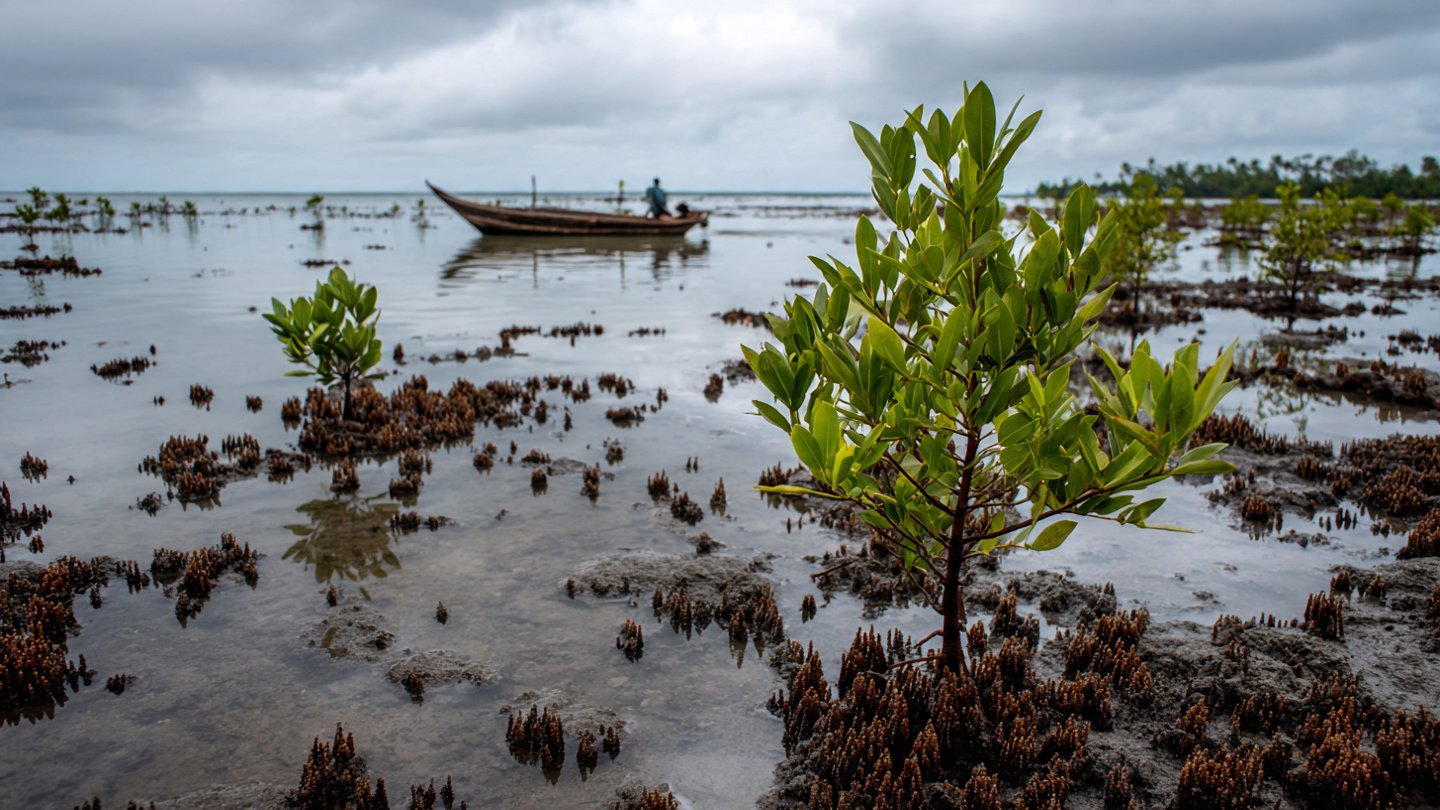
Across coastlines around the world, a quiet but powerful restoration effort is underway. More than 500,000 mangrove trees have been replanted globally, creating living barriers that absorb carbon, defend shores from erosion, and breathe life back into damaged coastal ecosystems. While these efforts may seem small compared to the scale of climate change, their impact is profound and far-reaching.
Mangroves are among the most valuable ecosystems on Earth. Once heavily cleared for development, aquaculture, and timber, they are now being recognized as essential allies in the fight against climate change and coastal degradation. Their return is not just about planting trees—it is about restoring balance between land, sea, and human communities.
Why Mangroves Matter More Than We Once Realized
Mangrove forests grow where land meets sea, thriving in salty, shifting environments that few plants can tolerate. Their tangled roots stabilize shorelines, trap sediment, and form nurseries for countless marine species. Fish, crabs, shrimp, and birds depend on mangroves for shelter and breeding grounds.
Beyond biodiversity, mangroves are climate powerhouses. They store carbon at rates far higher than most terrestrial forests. Their dense root systems lock carbon deep into coastal soils, keeping it out of the atmosphere for centuries. This makes mangroves one of the most efficient natural tools for reducing greenhouse gases.
For decades, this value was overlooked. As coastlines were developed, mangrove forests were cleared, leaving communities exposed to storms and rising seas. The loss triggered erosion, declining fisheries, and increased vulnerability to extreme weather.
The Global Push to Replant Mangroves
The replanting of more than 500,000 mangrove trees represents a shift in how the world views coastal ecosystems. Governments, conservation groups, scientists, and local communities are now working together to reverse decades of damage.
Unlike traditional tree-planting efforts, mangrove restoration requires careful planning. Successful projects consider tidal patterns, soil salinity, water flow, and native species. When done correctly, young mangroves establish quickly and begin delivering benefits within a few years.
Community involvement plays a major role. In many regions, local fishers and residents are trained to grow and plant mangrove seedlings. This not only improves success rates but also provides livelihoods and strengthens stewardship of restored areas.
Carbon Absorption: A Natural Climate Solution
One of the most powerful outcomes of mangrove replanting is carbon capture. Mangroves absorb carbon dioxide from the atmosphere and store it in their biomass and surrounding soil. Unlike many land forests, which release carbon when disturbed, mangrove soils can hold carbon for extremely long periods.
Replanting half a million mangrove trees translates into significant long-term carbon storage. As these forests mature, their carbon-absorbing capacity increases, making them an increasingly effective climate solution over time.
Importantly, mangrove restoration does not rely on new technology or complex infrastructure. It works with natural systems, offering a cost-effective and resilient response to climate change.
Protecting Shores From Storms and Erosion
Coastal communities are on the front lines of climate impacts. Rising sea levels, stronger storms, and coastal erosion threaten homes, infrastructure, and livelihoods. Mangroves act as natural shields against these forces.
Their roots slow wave energy, reduce storm surge heights, and prevent shoreline erosion. Studies have shown that coastlines protected by healthy mangrove forests suffer far less damage during storms than areas without them.
By replanting mangroves, communities gain a living defense system that grows stronger over time. Unlike concrete seawalls, mangroves adapt to changing conditions, repair themselves, and provide additional ecological benefits.
Rebuilding Coastal Life and Fisheries
The return of mangroves brings immediate benefits to marine life. Their root systems create complex underwater habitats where young fish and crustaceans can hide from predators. This leads to healthier fish populations and more stable fisheries.
As mangrove forests recover, nearby coral reefs and seagrass beds also benefit. Mangroves filter pollutants and trap sediments before they reach the ocean, improving water quality and protecting sensitive marine ecosystems.
For coastal communities that depend on fishing, mangrove restoration can mean increased catches, more reliable income, and improved food security.
Social and Economic Benefits for Communities
Mangrove replanting is not only an environmental success story—it is a social one. Many restoration projects provide employment, training, and education for local residents. Communities gain skills in nursery management, planting techniques, and long-term ecosystem monitoring.
Healthy mangrove forests also support eco-tourism, offering opportunities for guided tours, wildlife observation, and educational programs. These activities generate income while encouraging conservation rather than exploitation.
In regions vulnerable to climate displacement, mangrove restoration helps communities remain rooted by strengthening natural defenses and sustaining local economies.
Challenges and Lessons Learned
While replanting efforts are promising, they are not without challenges. Poorly planned projects—such as planting the wrong species or ignoring tidal patterns—can fail. Successful mangrove restoration depends on science-based planning and long-term commitment.
Protecting newly planted mangroves is just as important as planting them. Without legal protection and community support, restored areas may be cleared again. Education and policy play crucial roles in ensuring these forests survive and thrive.
The success of projects involving over 500,000 replanted mangroves demonstrates that when restoration is done thoughtfully, nature responds quickly and powerfully.
A Blueprint for Future Climate Action
Mangrove replanting offers a blueprint for how climate solutions can work in harmony with nature. It shows that restoring ecosystems can address multiple challenges at once—carbon reduction, biodiversity loss, coastal protection, and community resilience.
As awareness grows, mangroves are increasingly seen as essential infrastructure rather than expendable land. Their value extends far beyond the coastline, contributing to global climate stability and ecological health.
Scaling up mangrove restoration could have an outsized impact, especially in tropical and subtropical regions where coastlines are most vulnerable.
Conclusion
The replanting of more than 500,000 mangrove trees worldwide is more than a conservation milestone—it is a sign of hope. These forests are absorbing carbon, protecting shores, reviving marine life, and strengthening communities that depend on healthy coastlines.
Mangroves remind us that some of the most powerful solutions to modern challenges already exist in nature. By restoring what was once lost, we are not only repairing ecosystems but also redefining our relationship with the natural world.
As these young mangrove forests grow, their roots will hold more than soil—they will hold the future of resilient coastlines, thriving marine life, and a more balanced planet.