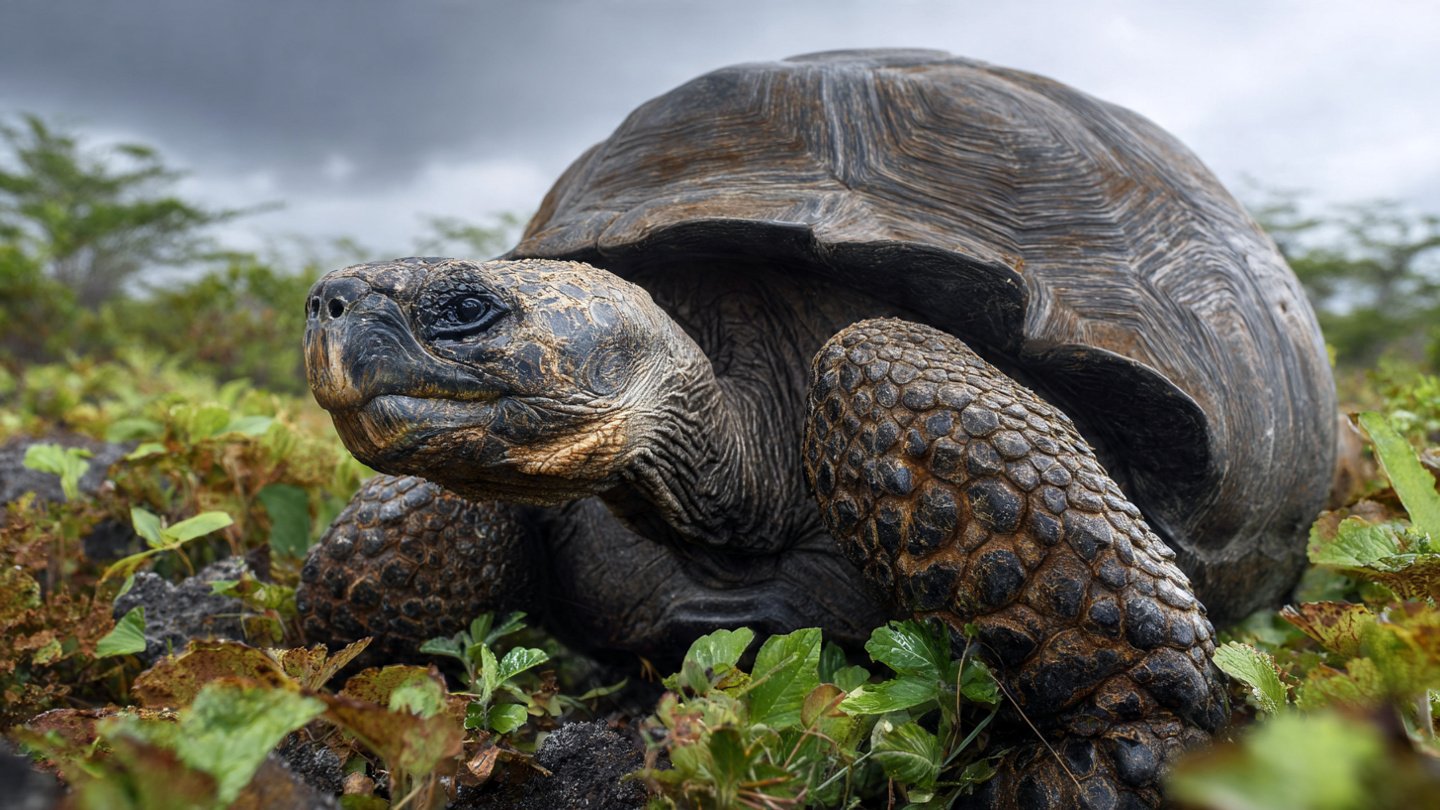
For decades, conservationists have searched for ways to heal ecosystems damaged by human activity and invasive species. In a remarkable success story, the return of more than 1,500 giant tortoises to the Galápagos Islands has done just that—by reviving natural processes that had been missing for generations. These ancient reptiles are not merely surviving; they are actively reshaping landscapes, dispersing seeds, and restoring ecological balance in ways no machine or human-led intervention could replicate.
The Disappearance That Changed an Ecosystem
Giant tortoises once roamed the Galápagos in enormous numbers, shaping the islands through their movement, feeding habits, and sheer size. Over centuries, however, human exploitation and the introduction of invasive animals caused dramatic population declines. Goats, pigs, and rats destroyed vegetation and nests, while tortoises were hunted to near extinction on several islands.
When the tortoises vanished, the ecosystem didn’t simply pause—it changed. Shrubs grew dense and unchecked, native plants lost their main seed dispersers, and open grasslands slowly disappeared. Ecological processes that had evolved over thousands of years quietly broke down.
Why Giant Tortoises Matter So Much
Giant tortoises are considered “ecosystem engineers,” meaning their everyday behaviors physically shape the environment. As they move across landscapes, they trample shrubs, create open pathways, and prevent woody plants from overtaking grasslands. This constant disturbance is not destructive—it’s essential.
Without tortoises, shrubs grow too thick, blocking sunlight and crowding out native plants. With them, vegetation stays balanced. Their slow, deliberate feeding habits maintain a mosaic of habitats that supports birds, insects, and smaller animals.
Shrub Destruction as Ecological Restoration
At first glance, seeing tortoises tearing down shrubs might appear harmful. In reality, it’s a form of natural pruning. The tortoises break branches, strip leaves, and flatten dense growth, reopening landscapes that had become overgrown.
This physical disturbance allows sunlight to reach the soil again, encouraging dormant seeds to germinate. Native grasses and low-growing plants begin to reappear, restoring the structure of ecosystems that had been lost for decades. What looks like destruction is actually regeneration in motion.
Nature’s Most Effective Seed Dispersers
One of the most powerful roles giant tortoises play is seed dispersal. They consume fruits and plants whole, carrying seeds across vast distances in their digestive systems. When seeds are deposited, they come wrapped in natural fertilizer—ideal conditions for germination.
Some native plants in the Galápagos evolved specifically to rely on tortoises for dispersal. Without them, seeds fell close to parent plants, limiting genetic diversity and range expansion. The tortoises’ return has restarted this ancient partnership, allowing plants to reclaim territory they hadn’t occupied in generations.
Restarting Long-Broken Ecological Processes
Ecological processes are like gears in a machine—when one stops turning, others soon follow. The absence of giant tortoises disrupted grazing patterns, nutrient cycling, seed movement, and habitat formation. Reintroducing them didn’t just fix one problem; it restarted an entire system.
As tortoises move, feed, and defecate, nutrients are redistributed across the landscape. Soil health improves, microbial activity increases, and plant communities diversify. These changes cascade outward, benefiting insects, reptiles, birds, and even coastal ecosystems downstream.
A Rare Conservation Success Story
Unlike many conservation efforts that require constant human management, the tortoise restoration project is largely self-sustaining. Once released, the animals do what they have always done—no training required.
This success demonstrates the power of rewilding: restoring ecosystems by bringing back the species that once shaped them. Instead of relying solely on mechanical clearing or chemical controls, conservationists allowed nature to heal itself using its original architects.
Lessons for Global Conservation
The Galápagos tortoise story offers valuable lessons for ecosystems worldwide. It shows that large, slow-moving animals—often overlooked in conservation planning—can play outsized roles in environmental recovery.
Many degraded ecosystems suffer not because of what has been added, but because of what has been removed. Reintroducing key species can revive processes that no amount of human intervention can fully replace.
Climate Resilience Through Restoration
Healthy ecosystems are more resilient to climate change, and giant tortoises contribute directly to that resilience. By maintaining open landscapes and diverse plant communities, they reduce the risk of erosion, improve water retention, and stabilize soils.
Their role in supporting native vegetation also helps ecosystems adapt to changing conditions. Diverse plant communities are better equipped to withstand droughts, storms, and temperature extremes—making the tortoises quiet allies in climate adaptation.
A Future Shaped by Ancient Giants
Watching giant tortoises reshape landscapes is a reminder that conservation doesn’t always mean freezing nature in time. Sometimes, it means restoring movement, disturbance, and change. These animals are not relics of the past—they are active agents of the future.
As populations continue to recover, their impact will grow stronger, reinforcing ecological processes that once defined the islands. Each slow step, each crushed shrub, and each dispersed seed pushes the ecosystem closer to balance.
Conclusion
The return of more than 1,500 giant tortoises to the Galápagos has done more than save a species—it has revived entire ecosystems. By tearing down shrubs, spreading seeds, and restoring natural processes, these ancient animals are proving that nature often knows how to heal itself when given the chance.
Their story is one of patience, persistence, and profound ecological wisdom. In a world searching for solutions to environmental collapse, the giant tortoises remind us that sometimes the most powerful restorers move slowly—and leave lasting change in their wake.