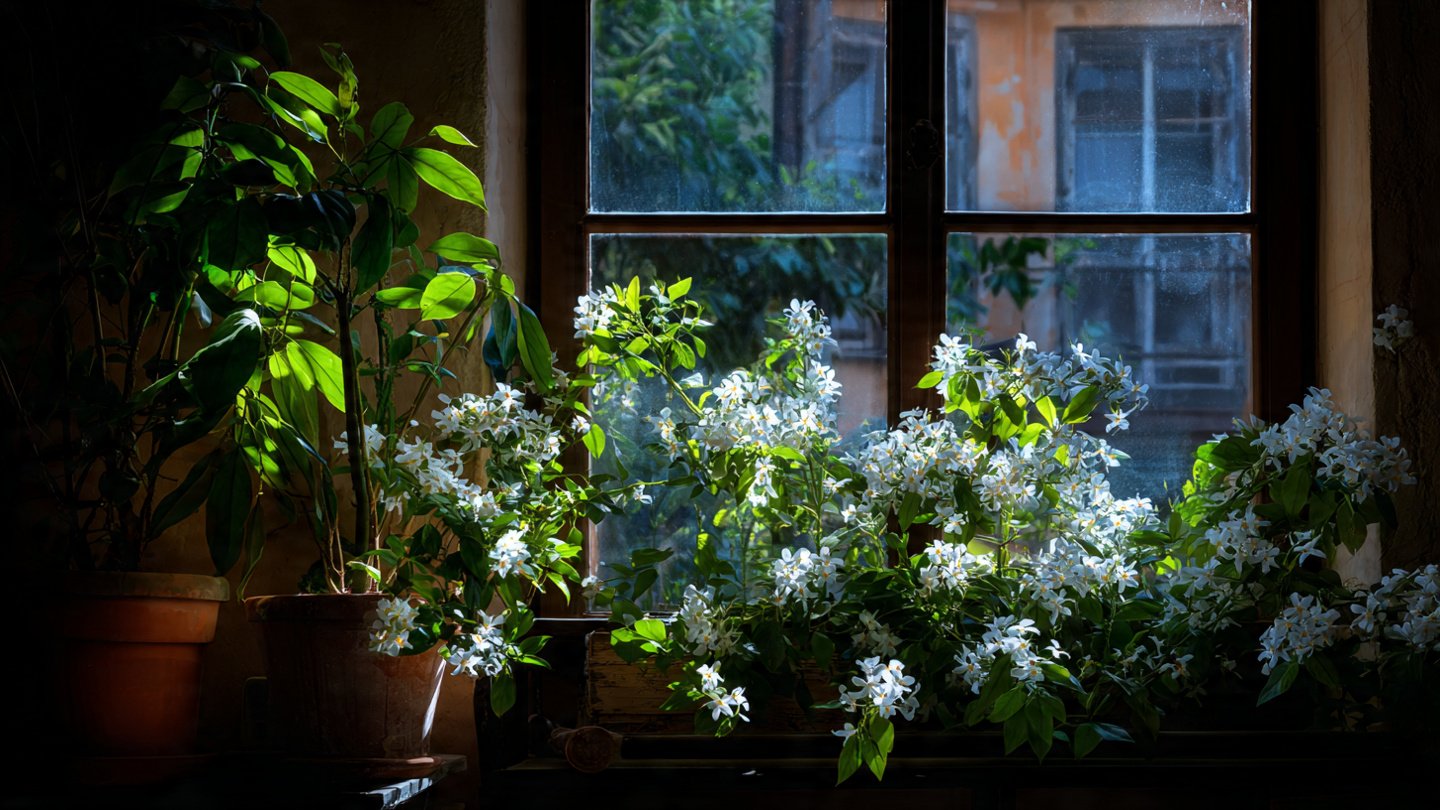
Imagine walking into your home after a long day and being greeted by a gentle, sweet fragrance wafting through the air. The aroma lifts your spirits, calms your mind, and makes your living space feel instantly more inviting. One surprisingly effective way to achieve this is by planting night-blooming jasmine near your windows. Beyond its beauty, this fragrant plant can enhance your home’s atmosphere, promote relaxation, and even improve your connection to nature—right from your windowsill or garden.
In this guide, we’ll explore why night-blooming jasmine is such a remarkable plant for homes, how to grow it near windows, and how it contributes to a more serene and soothing environment.
What Is Night-Blooming Jasmine?
Night-blooming jasmine (Cestrum nocturnum) is a tropical or subtropical shrub prized for its fragrant white or greenish flowers that open in the evening. Unlike daytime-flowering plants, its blooms release their sweet scent predominantly at night, creating a natural “evening perfume” for your home or garden.
Key features of night-blooming jasmine include:
- Intense fragrance at night
- Lush, dark green foliage
- Climbing or bushy growth habit depending on pruning
- Attraction to pollinators like moths
The plant’s unique nighttime scent can be a simple yet effective way to improve your home’s ambiance.
The Science Behind Fragrance and Relaxation
Aromatherapy studies suggest that certain floral scents can reduce stress, enhance mood, and promote relaxation. Night-blooming jasmine, with its sweet, exotic fragrance, has several potential benefits:
- Stress Reduction: Inhaling the scent of jasmine can help lower cortisol levels and induce calmness.
- Improved Sleep Quality: The subtle aroma released at night may create a soothing environment conducive to sleep.
- Mood Enhancement: Floral fragrances stimulate the limbic system in the brain, which controls emotions, making your home feel more pleasant and welcoming.
Planting jasmine near windows ensures that these fragrances naturally drift indoors, subtly enhancing your daily living experience.
Choosing the Right Window Location
The effectiveness of night-blooming jasmine in creating a relaxing home atmosphere depends on proper placement. Consider the following factors:
- Sunlight: Jasmine thrives in full to partial sun. South-facing windows usually provide sufficient light, while east or west windows can also work.
- Air Circulation: A window that allows gentle air flow ensures that the fragrance spreads naturally indoors.
- Accessibility: Choose a window where you can easily tend to watering, pruning, and occasional repotting if using containers.
Placement is critical: too little light will reduce flowering and fragrance, while overcrowding or poor airflow can lead to disease.
Growing Night-Blooming Jasmine Near Windows
Night-blooming jasmine can be grown in both ground soil and containers, making it suitable for apartments, balconies, and small gardens.
Planting in Containers
- Choose a Large Pot: A 12–16 inch container with drainage holes works well for mature plants.
- Soil Requirements: Use well-draining, fertile potting soil enriched with compost.
- Watering: Keep the soil consistently moist but not soggy. Overwatering can cause root rot.
- Fertilization: Apply a balanced, slow-release fertilizer every 4–6 weeks during the growing season.
Container planting allows mobility—you can move the plant closer to windows or into sunlight as needed.
Planting in Ground Soil
- Location: Plant near the window but ensure at least 12–18 inches of spacing for airflow and growth.
- Support: Use a trellis if the jasmine is a climbing variety. This helps the plant grow upward and frame the window elegantly.
- Pruning: Regular pruning encourages bushier growth, more flowers, and stronger fragrance.
Caring for Your Jasmine Plant
Maintaining a healthy night-blooming jasmine ensures a consistent fragrance:
- Pruning: Remove dead or yellowing leaves and trim leggy branches.
- Pest Management: Watch for aphids, spider mites, or whiteflies. Neem oil or mild insecticidal soap can help.
- Mulching: Helps retain moisture and moderate soil temperature.
- Winter Care: In colder climates, bring container-grown plants indoors or protect them from frost.
Healthy plants produce more blooms, meaning a stronger fragrance and a more relaxing atmosphere.
Maximizing the Relaxing Effect Indoors
The plant’s natural fragrance can enhance your home environment in several ways:
- Nighttime Aroma: Keep windows slightly open in the evening to allow the fragrance to drift inside.
- Mindful Placement: Position the plant near frequently used areas such as living rooms, bedrooms, or reading nooks.
- Complementary Plants: Combine jasmine with other fragrant herbs or flowers, such as lavender or mint, to create a layered, calming scent profile.
- Minimal Disturbance: Avoid overcrowding near the window to ensure airflow and prevent mustiness.
The combination of visual greenery and fragrant blooms creates a multi-sensory relaxation experience.
Psychological and Lifestyle Benefits
Having night-blooming jasmine near windows does more than just smell nice:
- Connection to Nature: Bringing plant life closer to your living space improves overall wellbeing.
- Routine Mindfulness: Daily watering, pruning, and observation foster a sense of care and presence.
- Natural Decor: Jasmine adds aesthetic value, softening window frames and providing natural beauty.
- Air Quality: While primarily an ornamental plant, its leaves can help improve indoor air quality by adding oxygen and moderating humidity.
The overall effect is a home environment that feels calmer, more vibrant, and more inviting.
Potential Challenges
Like any plant, night-blooming jasmine has considerations:
- Allergic Reactions: Some people may be sensitive to its strong fragrance.
- Invasiveness: In some climates, jasmine can spread aggressively if planted in ground soil. Regular pruning helps control growth.
- Evening Scent Only: The aroma is strongest at night, so daytime enjoyment is minimal.
- Maintenance Needs: Regular watering, fertilization, and pruning are required for optimal blooms.
Understanding these factors helps gardeners enjoy the plant without unexpected problems.
Enhancing Your Home Atmosphere Further
To fully embrace a relaxing home atmosphere:
- Combine jasmine with soft lighting and natural materials like wood or wicker near the window.
- Place comfortable seating nearby to encourage reading, meditation, or quiet reflection.
- Use complementary fragrant plants indoors to maintain a pleasant scent throughout the day.
By integrating the plant thoughtfully, jasmine becomes more than decoration—it becomes part of your home’s wellness routine.
Final Thoughts
Planting night-blooming jasmine near your windows is a simple, natural way to cultivate a relaxing home atmosphere. Beyond its visual appeal, the plant’s sweet, evening fragrance has psychological and emotional benefits, from stress reduction to improved sleep quality. With proper placement, sunlight, and care, this resilient, fragrant shrub can transform your living space into a haven of calm and natural beauty.
For anyone seeking a combination of gardening joy and home comfort, night-blooming jasmine offers a multi-sensory experience that enriches both body and mind.