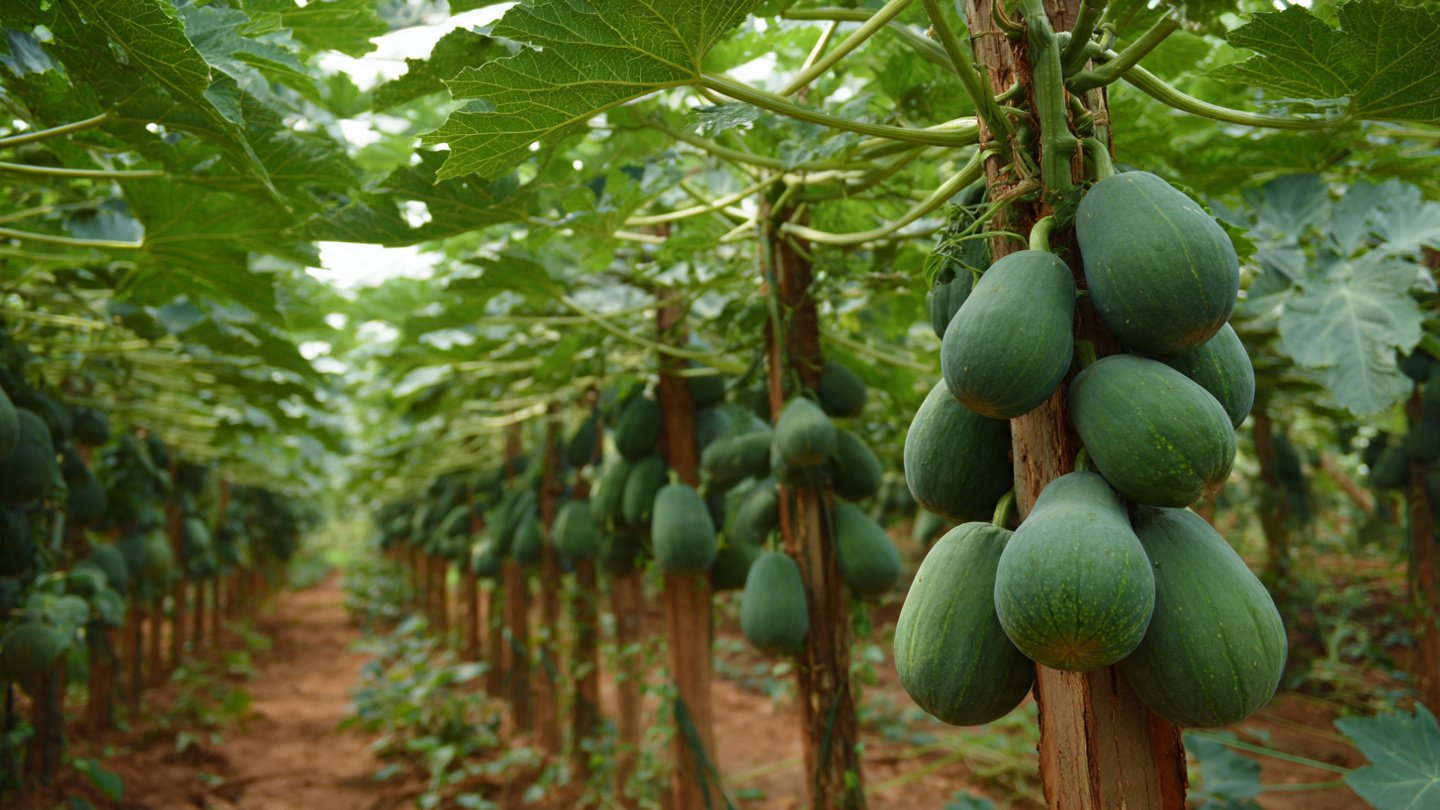
Intercropping, the practice of growing two or more crops together in the same field, has been embraced by farmers worldwide as a way to maximize land use, improve soil health, and enhance overall farm productivity. One particularly effective method is planting pumpkins in papaya fields. Papaya trees, which grow upright with moderate spacing requirements, provide an ideal environment for trailing crops like pumpkin. By combining these crops, farmers can achieve better space utilization, increased yields, and sustainable soil management.
This guide will walk you through the benefits, planning, and step-by-step process of planting pumpkin in papaya fields to maximize productivity and soil efficiency.
Understanding the Benefits of Intercropping Pumpkins with Papaya
Before diving into the planting process, it is important to understand why this intercropping method works well:
- Efficient Use of Space: Papaya trees are usually spaced several meters apart, leaving ample ground area beneath them. Pumpkins, being trailing plants, can occupy this space without interfering with papaya growth.
- Improved Soil Health: Pumpkins are heavy feeders with broad leaves that provide natural mulch as they grow, protecting soil from erosion and moisture loss. Meanwhile, papayas benefit from shared nutrients and reduced weed pressure.
- Diversified Income: Growing two crops simultaneously reduces economic risk. If one crop underperforms due to pests or weather, the other may still provide a harvest.
- Pest and Disease Management: Intercropping can disrupt pest cycles and reduce disease spread. Diverse plantings often create a microclimate less favorable to pests that specialize in a single crop.
By understanding these benefits, farmers can make informed decisions on how to structure their papaya-pumpkin system for optimal results.
Choosing the Right Varieties
The success of intercropping depends largely on selecting compatible varieties of both papaya and pumpkin:
- Papaya Varieties: Choose medium to tall varieties with an upright growth habit. These provide enough space for pumpkins to spread without overcrowding. Common varieties include ‘Red Lady,’ ‘Solo,’ and ‘Sunrise.’
- Pumpkin Varieties: Opt for fast-growing, trailing pumpkin varieties that can tolerate partial shade. Varieties such as ‘Butternut,’ ‘Connecticut Field,’ or local hybrids perform well in mixed cropping systems.
- Maturity Timing: Select crops with complementary maturity periods. Early-maturing pumpkins planted under young papaya trees allow both crops to thrive without competition for light or nutrients.
Choosing the right combination is crucial for minimizing competition and maximizing yields.
Preparing the Field
Proper field preparation ensures strong establishment of both crops:
- Clear Weeds and Debris: Remove existing weeds and plant residues to reduce competition and pest habitats.
- Soil Testing: Conduct a soil test to determine pH and nutrient status. Papayas prefer slightly acidic to neutral soil (pH 6.0–7.0). Pumpkins are more adaptable but benefit from fertile soil.
- Fertilization: Before planting, apply well-rotted compost or organic manure to enrich the soil. This improves fertility for both papayas and pumpkins.
- Spacing Considerations: Maintain recommended spacing for papayas (typically 2–3 meters between trees) and allow sufficient room for pumpkin vines to spread along the ground without shading the trees excessively.
A well-prepared field sets the stage for successful intercropping and reduces potential competition between crops.
Planting Pumpkins in Papaya Fields
When planting pumpkins under papaya trees, timing and technique are critical:
- Timing: Plant pumpkin seeds when papaya trees are well-established but still young. This ensures they do not compete heavily for nutrients and light. Planting during the early rainy season also supports fast germination.
- Planting Method: Dig small pits (about 30 cm in diameter) near the base of each papaya tree but leave at least 50–70 cm from the trunk to prevent root interference.
- Seed Sowing: Place 2–3 seeds per pit at a depth of 2–3 cm. Thin to one healthy seedling per pit after emergence.
- Mulching: Apply organic mulch around the seedlings to retain moisture, suppress weeds, and provide nutrients as it decomposes.
Proper planting ensures that pumpkin vines grow around the papaya trees without harming them, promoting healthy development for both crops.
Watering and Fertilization
Both pumpkins and papayas have significant water and nutrient requirements:
- Watering: Ensure consistent watering, particularly during the early growth stage. Drip irrigation or careful furrow watering is recommended to avoid waterlogging, which can damage papaya roots.
- Fertilization: Pumpkins are heavy feeders. Side-dress with organic manure or compost every 3–4 weeks. Avoid over-fertilizing near the papaya trunk to prevent nutrient imbalance.
- Nutrient Management: Monitor both crops for signs of nutrient deficiency, such as yellowing leaves in pumpkins or poor growth in papayas, and adjust fertilization accordingly.
Balanced water and nutrient management ensure both crops grow harmoniously without compromising each other.
Managing Competition and Growth
Intercropped plants can compete for light, nutrients, and water. Effective management minimizes these conflicts:
- Pruning Papaya Trees: Trim lower branches if necessary to allow sunlight to reach pumpkin leaves. Avoid excessive pruning, as papaya leaves are essential for photosynthesis.
- Training Pumpkin Vines: Guide pumpkin vines to grow along open ground, away from papaya trunks. Trellising can also be used for smaller pumpkin varieties to reduce space competition.
- Monitoring Growth: Regularly check both crops for signs of stress, such as wilting, stunted growth, or leaf discoloration. Early intervention prevents long-term yield losses.
By actively managing plant growth, farmers can maximize space utilization and maintain healthy crops.
Pest and Disease Management
Intercropping can reduce pest problems, but vigilance is still required:
- Common Pumpkin Pests: Aphids, squash bugs, and beetles can attack leaves and fruits. Use organic pesticides, neem oil, or insect traps as needed.
- Papaya Pests: Papaya mealybugs, fruit flies, and nematodes are common threats. Regular inspection and timely intervention are essential.
- Disease Management: Proper spacing and pruning enhance airflow, reducing fungal infections like powdery mildew or anthracnose. Crop rotation and organic fungicides help control outbreaks.
Integrated pest management practices help protect both crops while minimizing chemical use.
Harvesting Strategies
Proper harvesting ensures maximum yield and minimal damage to the intercropped system:
- Pumpkins: Harvest when fruits are fully mature, indicated by hard skin and deep coloration. Cut fruits carefully without damaging vines or nearby papaya trees.
- Papayas: Harvest mature papaya fruits at the first sign of yellowing. Regular harvesting prevents fruit drop and encourages continuous production.
- Staggered Harvesting: Plan harvesting schedules to avoid overburdening labor and ensure each crop is collected at optimal maturity.
Efficient harvesting maximizes productivity and maintains the health of both crops.
Soil and Space Benefits
Intercropping pumpkins with papayas offers long-term benefits for soil and land use:
- Soil Cover: Pumpkin vines act as a natural mulch, reducing soil erosion, conserving moisture, and suppressing weeds.
- Nutrient Recycling: Decaying pumpkin leaves contribute organic matter, enhancing soil fertility.
- Space Utilization: Trailing pumpkins use horizontal space efficiently, while papayas utilize vertical space, optimizing overall field productivity.
- Microclimate Improvement: Dense foliage moderates soil temperature and humidity, benefiting both crops.
These benefits make intercropping a sustainable practice that enhances long-term farm health.
Tips for Success
To ensure successful intercropping of pumpkins in papaya fields:
- Start with healthy, disease-free seedlings.
- Monitor soil moisture and nutrient levels regularly.
- Provide trellising for vining pumpkins if space is limited.
- Rotate pumpkin planting locations to prevent soil-borne diseases.
- Combine organic and minimal chemical inputs for sustainable pest control.
Following these tips increases the likelihood of a productive and low-maintenance intercropped system.
Conclusion
Planting pumpkins in papaya fields is an excellent example of smart intercropping that maximizes land use, improves soil health, and increases farm income. By carefully selecting compatible varieties, preparing the soil, planting properly, and managing growth, farmers can achieve a harmonious system where both crops thrive.
This method not only boosts yields but also contributes to sustainable agriculture by reducing soil erosion, minimizing chemical inputs, and enhancing biodiversity. Whether you are a smallholder farmer or an agricultural enthusiast, adopting pumpkin-papaya intercropping can transform your fields into productive, resilient, and profitable systems.
With careful planning, consistent care, and attention to detail, you can enjoy the dual benefits of bountiful pumpkin harvests and healthy, fruit-bearing papaya trees—all from the same plot of land. Smart intercropping is not just a farming technique; it is a strategy for maximizing resources, reducing risk, and embracing sustainable practices for long-term success.