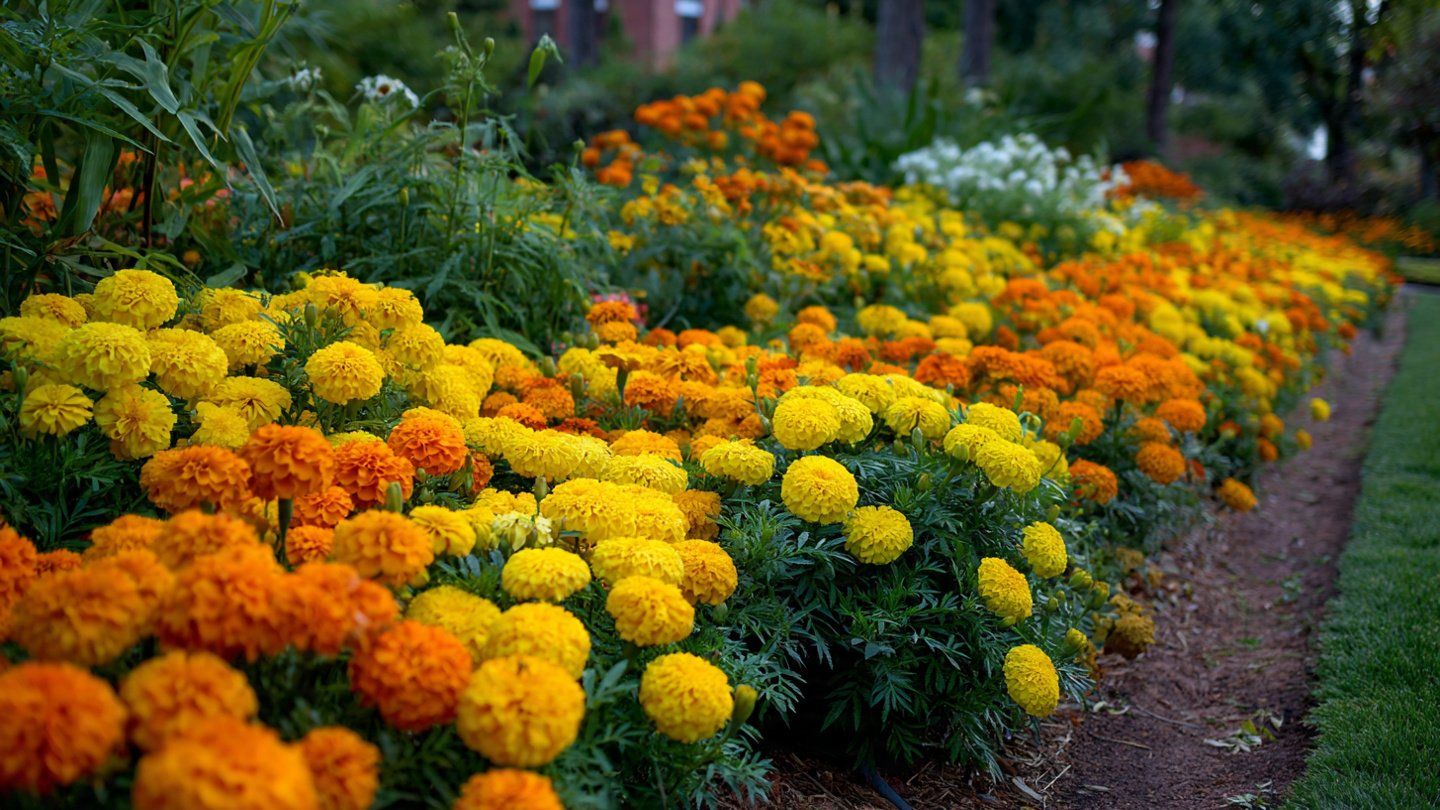
Marigolds are among the most popular flowering plants for gardeners of all skill levels. Known for their cheerful colors, long blooming season, and low maintenance needs, marigolds are especially effective when used as border plants. Lining garden paths, vegetable beds, or flower borders with marigolds instantly adds structure, color, and charm while also offering natural pest protection.
In this complete guide, you’ll learn how to grow marigold border plants successfully—from selecting the right varieties to planting, care, and maintenance—so your garden stays vibrant and healthy throughout the season.
Why Choose Marigolds for Garden Borders?
Marigolds are ideal border plants because they grow evenly, bloom continuously, and adapt well to various conditions. Their compact growth habit creates clean edges that define garden spaces beautifully.
Key benefits of using marigolds as border plants include:
- Bright, long-lasting blooms in yellow, orange, and red shades
- Easy to grow from seeds or seedlings
- Natural pest-repelling properties
- Low maintenance and drought tolerance
- Suitable for gardens, pots, and pathways
Their versatility makes them perfect for both ornamental and functional garden designs.
Best Marigold Varieties for Borders
Not all marigolds grow the same way, so choosing the right type is important for a neat border display.
French Marigolds
These are the most popular choice for borders. They are compact, bushy, and flower profusely. Their small to medium-sized blooms create a uniform and colorful edge.
African Marigolds
African marigolds grow taller and are better suited for background planting. However, dwarf varieties can still work well in wider borders.
Signet Marigolds
These have delicate foliage and smaller flowers, making them perfect for soft, decorative borders and edging vegetable gardens.
For the best visual effect, choose one variety and plant it consistently along the border.
Choosing the Right Location
Marigolds thrive in sunny conditions and perform best when they receive plenty of light.
Sunlight Requirements
Marigolds need at least 5–6 hours of direct sunlight daily. Full sun encourages compact growth and abundant flowering. While they can tolerate partial shade, too little light may result in fewer blooms and leggy plants.
Soil Conditions
Well-draining soil is essential. Marigolds are adaptable but grow best in loose, fertile soil. Heavy clay or waterlogged soil can lead to root problems.
Before planting, loosen the soil and remove weeds to give your marigolds a healthy start.
Growing Marigolds from Seeds
Growing marigolds from seeds is simple and cost-effective.
When to Sow Seeds
Sow seeds directly in the garden after the last frost when temperatures are warm. In warmer climates, marigolds can be sown almost year-round.
How to Sow
- Prepare the border soil by loosening it
- Sow seeds about 1–2 cm deep
- Space seeds evenly along the border
- Lightly cover with soil and water gently
Seeds usually germinate within 5–7 days.
Transplanting Seedlings for Borders
If using nursery-bought seedlings, transplant them carefully to avoid disturbing roots.
Proper Spacing
Spacing is crucial for a tidy border. Plant seedlings about 20–25 cm apart, depending on the variety. Proper spacing ensures good airflow and uniform growth.
Water immediately after planting to help seedlings settle in.
Watering and Moisture Management
Marigolds are fairly drought-tolerant once established, but consistent watering helps maintain vibrant blooms.
- Water deeply 2–3 times a week
- Allow the topsoil to dry slightly between watering
- Avoid overwatering, as soggy soil can cause root rot
Water at the base of the plant to keep foliage dry and reduce disease risk.
Feeding for Healthy Growth
Marigolds do not require heavy feeding, which makes them ideal for low-maintenance gardens.
- Mix compost into the soil before planting
- Apply a balanced fertilizer once every 4–6 weeks
- Avoid excess nitrogen, which encourages leaf growth at the expense of flowers
Light feeding is enough to support continuous blooming.
Pruning and Deadheading
Regular maintenance keeps marigold borders looking fresh and full.
Deadheading
Remove spent flowers regularly to encourage new blooms. This simple step can significantly extend the flowering season.
Light Pruning
If plants become leggy, pinch back the tips to promote bushier growth. This is especially helpful for maintaining neat borders.
Pest and Disease Control
Marigolds are known for repelling pests, but they can still face minor issues.
Common Problems
- Aphids
- Spider mites
- Fungal diseases due to excess moisture
Simple Solutions
- Spray plants with water to remove pests
- Use neem oil or mild soap solutions
- Ensure proper spacing and airflow
Healthy marigolds rarely suffer from serious problems.
Using Marigolds in Garden Design
Marigold borders are highly versatile and complement many garden styles.
You can use them to:
- Line vegetable beds for pest control
- Frame walkways and garden paths
- Separate lawn areas from flower beds
- Create colorful edges around raised beds
Combining marigolds with green foliage plants or herbs enhances contrast and visual appeal.
Seasonal Care and Longevity
Marigolds bloom continuously for several months with proper care. In warmer climates, they can flower almost year-round.
Remove old plants at the end of the season and compost them. You can also collect seeds from dried flowers for the next planting season, making marigolds an economical choice year after year.
Benefits Beyond Beauty
In addition to their visual impact, marigolds offer practical benefits:
- Repel nematodes and harmful insects
- Attract beneficial pollinators
- Improve soil health when composted
- Enhance biodiversity in the garden
Their usefulness goes far beyond decoration.
Final Thoughts
Growing marigold border plants is one of the easiest and most rewarding ways to enhance your garden’s appearance. With minimal care, these cheerful flowers create defined edges, vibrant color, and natural protection for nearby plants. Whether you’re designing a formal garden or a relaxed home landscape, marigold borders bring life, warmth, and structure to any outdoor space.
By following simple planting techniques, providing sunlight and well-drained soil, and maintaining basic care, you can enjoy a stunning marigold border that stays colorful and healthy throughout the growing season.