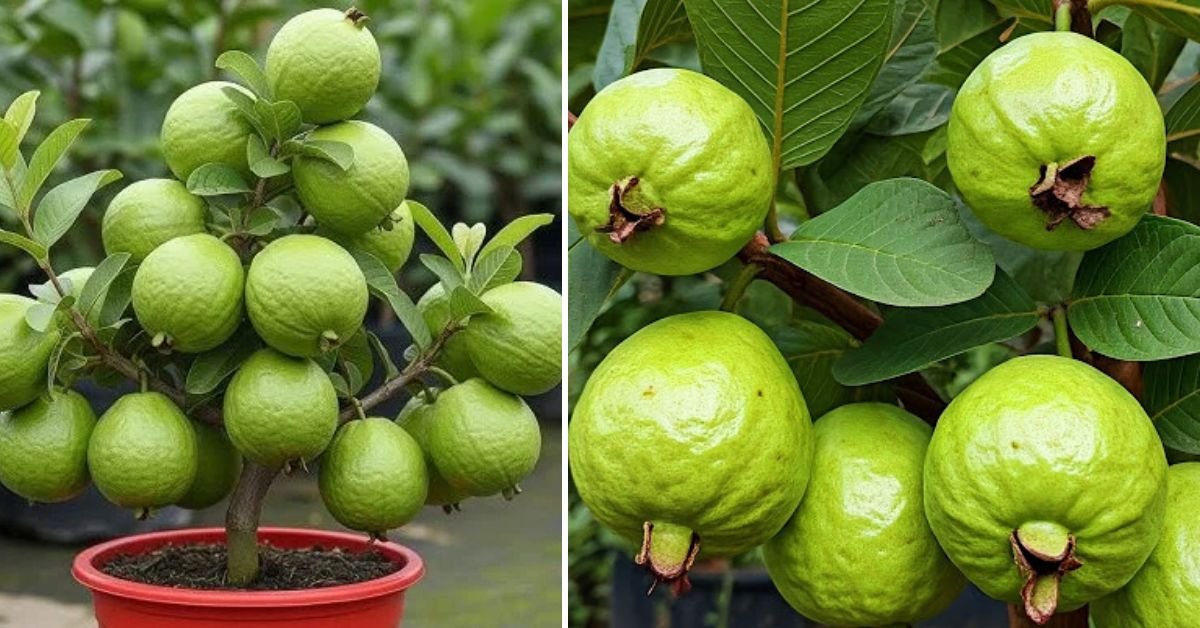
Growing a guava tree at home is one of the most rewarding experiences for any gardener. Guava trees are hardy, adaptable, and generous fruit producers, making them ideal for backyards, terraces, and even large pots. With the right care, a guava tree can start fruiting quickly and provide baskets of sweet, aromatic fruits year after year. This comprehensive guide walks you through every step—from choosing the right planting material to encouraging fast growth and heavy fruiting.
Why Grow a Guava Tree at Home?
Guava is a tropical and subtropical fruit that thrives in warm climates. It is packed with vitamin C, fiber, and antioxidants, making it both delicious and nutritious. Homegrown guavas taste fresher and sweeter than store-bought ones, and you have complete control over how they are grown—without harmful chemicals.
Key benefits include:
- Easy maintenance compared to many fruit trees
- Early fruiting, often within 2–3 years
- Suitable for both ground planting and containers
- High yield even from a small tree
Choosing the Right Guava Variety
Selecting the right variety is the foundation for success. Some guava trees are better suited for home gardens because they remain compact and fruit heavily.
When choosing a variety, consider:
- Climate compatibility: Tropical and subtropical varieties perform best in warm regions
- Fruit size and taste: Sweet, aromatic varieties are ideal for home use
- Growth habit: Semi-dwarf or dwarf types are easier to manage
If possible, choose grafted or air-layered plants instead of seed-grown ones. They grow faster and fruit earlier.
Growing Guava from Seed vs. Plant
Growing from Seed
Guava seeds can be used, but this method requires patience. Seed-grown plants may take longer to fruit and may not produce the same quality fruit as the parent plant.
Steps:
- Clean seeds from ripe guava fruit
- Soak them in water for 24 hours
- Sow in seed trays or small pots with light soil
- Keep moist and warm until germination
Growing from Grafted or Air-Layered Plants
This is the best option for fast growth and heavy fruiting. These plants:
- Begin fruiting earlier
- Produce consistent fruit quality
- Grow more predictably
Selecting the Perfect Location
Guava trees love sunlight. For strong growth and high fruit production, they need at least 6–8 hours of direct sunlight daily.
Ideal locations include:
- Open backyards
- Sunny terraces or rooftops
- Balconies with full sun exposure
Good air circulation is also important to prevent fungal diseases.
Soil Preparation for Healthy Roots
Guava trees are adaptable but perform best in fertile, well-draining soil.
Ideal soil characteristics:
- Loamy texture
- Slightly acidic to neutral pH
- Rich in organic matter
Soil mix for pots:
- Garden soil
- Compost or well-rotted manure
- Sand or coco peat for drainage
Avoid heavy clay soil that retains too much water.
Planting the Guava Tree
Ground Planting
- Dig a pit about 2 feet wide and deep
- Mix compost into the removed soil
- Place the plant so the root ball sits at ground level
- Fill the pit and press gently
- Water thoroughly
Pot Planting
- Use a large pot (at least 18–24 inches wide)
- Ensure multiple drainage holes
- Place the pot in a sunny area
Watering for Fast Growth
Watering is crucial, especially during the first year.
General guidelines:
- Water deeply 2–3 times a week in summer
- Reduce watering in cooler months
- Avoid waterlogging, which can cause root rot
Young trees need more frequent watering, while established trees are more drought-tolerant.
Feeding and Fertilization Schedule
Guava trees are heavy feeders, especially when grown in containers.
For vegetative growth:
- Use nitrogen-rich organic fertilizer
- Apply compost or vermicompost every 30–40 days
For flowering and fruiting:
- Use fertilizer rich in phosphorus and potassium
- Apply before flowering and during fruit development
Organic liquid feeds like compost tea or fermented plant extracts also promote fast growth.
Pruning for Shape and Heavy Fruiting
Pruning is essential for controlling size and increasing yield.
Pruning tips:
- Remove dead, weak, or crossing branches
- Maintain an open center for better air circulation
- Prune lightly after harvesting
Guava fruits grow on new shoots, so proper pruning encourages more fruit-bearing branches.
Encouraging Flowering and Fruit Set
To boost flowering:
- Ensure adequate sunlight
- Avoid excessive nitrogen during flowering season
- Maintain consistent watering
If flowering is poor, a slight reduction in watering for a short period can sometimes stimulate bloom formation.
Pest and Disease Management
Common pests include fruit flies, aphids, and mealybugs. Diseases may include leaf spot or fungal infections.
Preventive measures:
- Spray neem oil every 10–15 days
- Keep the area clean and weed-free
- Remove infected leaves promptly
Healthy trees are naturally more resistant to pests.
Growing Guava in Containers
Guava trees adapt well to pot culture, making them perfect for urban homes.
Container tips:
- Use large, sturdy pots
- Prune regularly to control size
- Repot every 2–3 years with fresh soil
Container-grown guavas may produce slightly smaller fruits, but the yield is still impressive.
Harvesting Your Guavas
Guava fruits are ready to harvest when:
- Skin color changes from dark green to light green or yellow
- Fruits emit a sweet aroma
- Slight softness is felt when pressed
Harvest carefully to avoid bruising. Regular harvesting encourages continuous fruiting.
Final Thoughts
Growing a guava tree at home is both practical and deeply satisfying. With minimal care, the tree rewards you with lush greenery, fragrant flowers, and an abundance of nutritious fruits. Whether planted in the ground or grown in a container, guava trees adapt beautifully to home environments. By following these step-by-step methods, you can enjoy fast growth, heavy fruiting, and the joy of harvesting fresh guavas straight from your own garden.