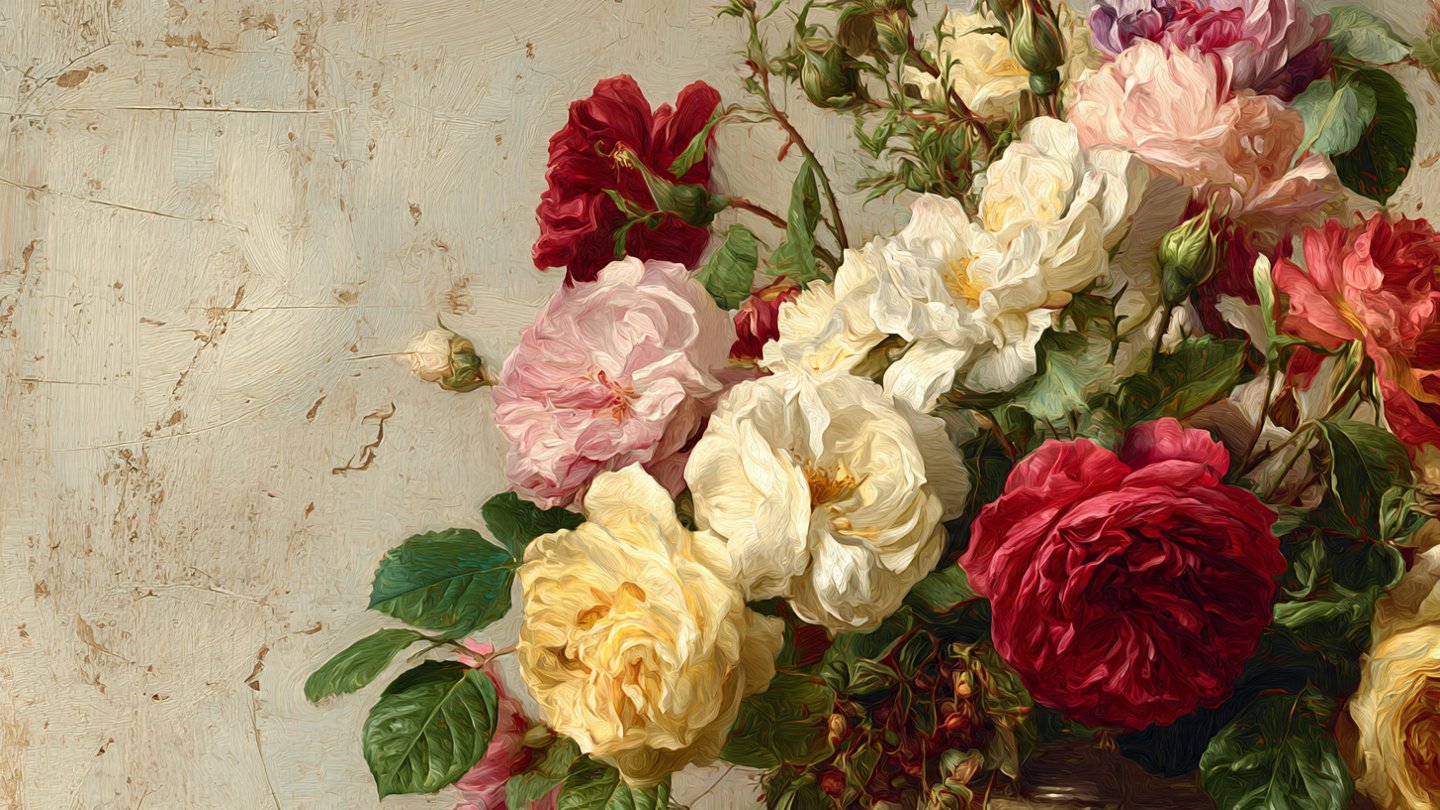
Throughout human history, flowers have been more than mere objects of beauty. They have served as powerful symbols, carrying meanings across cultures, societies, and eras. From sacred rituals to literary works, political movements, and personal expressions, flowers have silently influenced the way we perceive and record history. By examining their symbolic significance, we gain a unique lens through which to understand human civilization, values, and emotions.
The Language of Flowers: A Historical Overview
The use of flowers as symbols is ancient. In many early civilizations, flowers held spiritual and ceremonial significance. For example, in ancient Egypt, the lotus flower represented creation, rebirth, and the sun, reflecting the society’s focus on life cycles and immortality. Similarly, the Greeks and Romans associated flowers with gods, myths, and rituals. The laurel, for instance, symbolized victory and honor, often awarded to triumphant warriors and poets, while the rose was connected to Aphrodite, the goddess of love.
By the Victorian era, flower symbolism reached unprecedented sophistication through the practice of floriography, or the “language of flowers.” In a time when social etiquette restricted open emotional expression, flowers became a nuanced way to communicate feelings. A single bloom could convey love, secrecy, friendship, or mourning. For example, a red rose signified deep love, while a yellow carnation implied disappointment. This careful codification of floral meanings shows how societies have historically used flowers to navigate complex social and emotional landscapes.
Flowers in Political and Cultural Movements
Beyond personal communication, flowers have played roles in political and cultural history. Consider the tulip mania of 17th-century Netherlands, often cited as the first recorded speculative bubble. Tulips became symbols of wealth and status, influencing economic behavior and shaping the Dutch cultural landscape. Similarly, in Japan, cherry blossoms, or sakura, have symbolized both the transient beauty of life and national identity. The annual sakura festivals, still celebrated today, connect citizens with their heritage and the philosophical idea of impermanence, known as mono no aware.
In more recent history, flowers have become icons of peace and protest. The “flower power” movement of the 1960s in the United States epitomized the counterculture’s rejection of war and violence. Protesters handed out flowers to soldiers and displayed them at rallies, symbolizing peace, love, and nonviolent resistance. This demonstrates that flowers can transcend aesthetics to become potent symbols of social and political ideology.
Literature and Art: Flowers as Symbols of Emotion and Thought
Art and literature are rich with examples of how flowers have influenced historical understanding. In literature, poets and writers have long used floral imagery to convey complex emotions and social commentary. William Blake, in his poem “The Sick Rose,” used the rose as a metaphor for innocence corrupted by experience. Similarly, Shakespeare often employed flowers to represent themes of love, mortality, and beauty, allowing readers to interpret societal values through symbolic flora.
Visual arts also reveal the symbolic depth of flowers. Dutch still-life paintings of the 16th and 17th centuries, for instance, were not merely decorative. They reflected wealth, mortality, and the transient nature of life, often including wilting blooms or insects to remind viewers of vanitas, the inevitability of death. Through these artistic choices, flowers offer historians clues about societal values, beliefs, and even economic conditions of the time.
Religious and Spiritual Symbolism
Flowers are central to many religious traditions, reinforcing moral and spiritual narratives. In Hinduism, the lotus is a sacred flower representing purity, enlightenment, and divine beauty. It is often associated with deities like Lakshmi and Brahma, symbolizing the unfolding of spiritual consciousness. In Christianity, flowers such as lilies symbolize purity, resurrection, and the Virgin Mary, linking floral imagery to theological concepts and ritual practices.
The consistent use of flowers in religious contexts illustrates their enduring symbolic power. By tracing these representations, historians can better understand the spiritual and cultural priorities of societies, as well as how these values were communicated through ritual and art.
Flowers in Memory and Commemoration
Flowers also shape history through acts of memory and commemoration. Cemeteries, memorials, and public monuments often incorporate flowers to symbolize grief, remembrance, and respect. For instance, the red poppy has become an international emblem of remembrance for soldiers who died in World War I, rooted in the famous poem “In Flanders Fields.” By choosing a flower as a symbol, societies create a tangible, living connection to the past, allowing generations to engage with history on an emotional level.
The Psychological and Cultural Impact of Floral Symbolism
Understanding the symbolic history of flowers also provides insight into human psychology and cultural development. Humans have long associated floral aesthetics with emotions, spirituality, and social status. By decoding these associations, historians can uncover unspoken cultural norms and social dynamics. For example, the selection of flowers in diplomatic gifts, ceremonial occasions, or royal events often carries coded messages about alliance, respect, and hierarchy. Even today, wedding bouquets and national emblems reflect centuries of floral symbolism embedded in social consciousness.
Conclusion: Flowers as a Bridge Between Past and Present
From sacred rituals and literary metaphors to political movements and commemorative practices, flowers have shaped our understanding of history through symbolism. They act as living artifacts, carrying emotional, spiritual, and cultural meanings across generations. By studying the symbolic use of flowers, historians and scholars gain unique insights into societal values, human behavior, and the evolution of cultural communication. Far from being mere decoration, flowers are profound historical witnesses—silent yet expressive participants in the human story.
Ultimately, flowers remind us that history is not just about wars and treaties but also about the subtleties of emotion, identity, and culture. They offer a lens through which we can better understand who we are and how we have chosen to express our innermost thoughts across time.