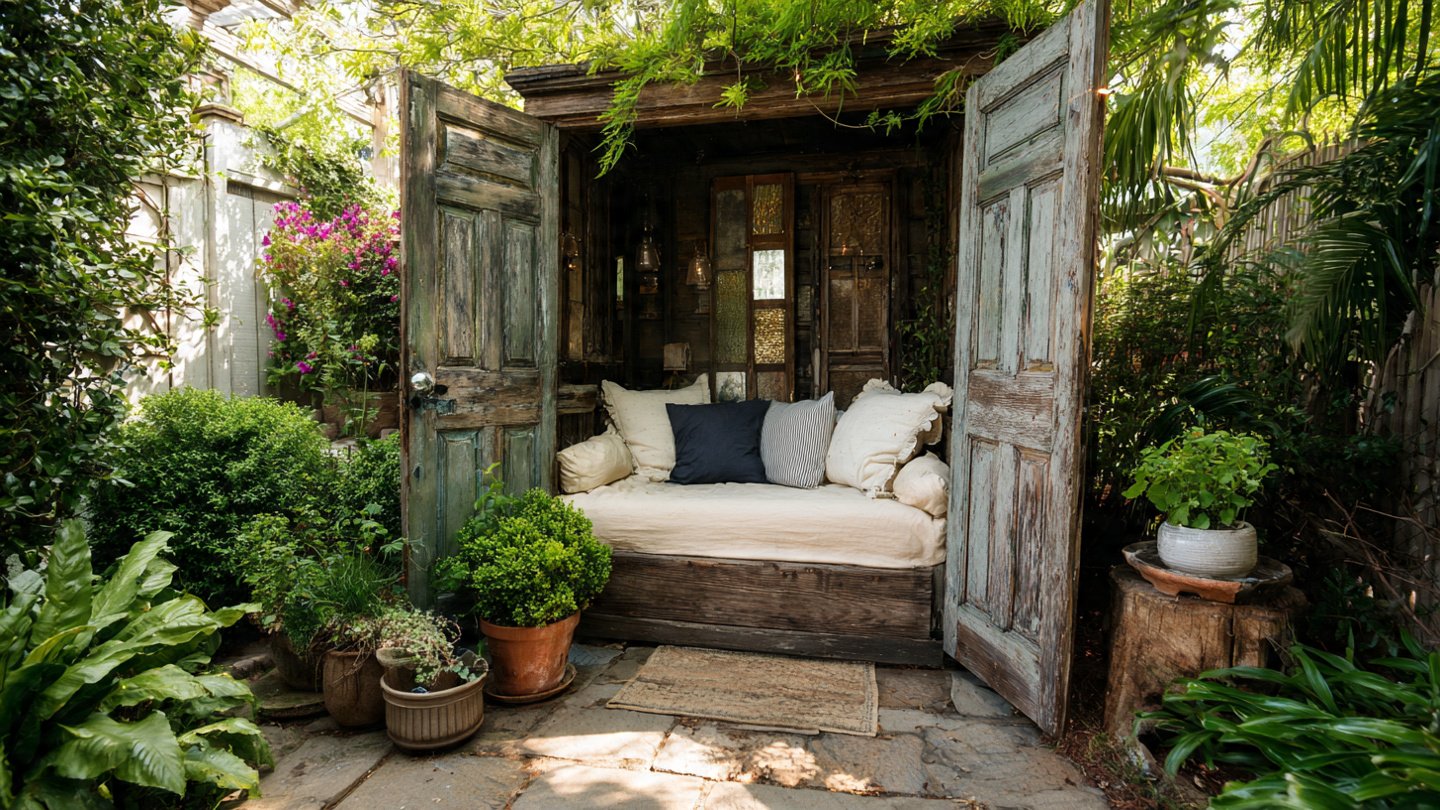
Repurposing old items into functional and charming decor has become one of the most creative trends in modern home design. Among these upcycled treasures, old doors stand out as a surprisingly versatile element. With a bit of imagination and effort, an old door can become the centerpiece of a cozy outdoor nook, offering privacy, charm, and character. Whether you have a rustic backyard, a small balcony, or a city terrace, transforming old doors into a private retreat is a sustainable and rewarding project. In this article, we’ll explore practical ways to turn old doors into a beautiful outdoor oasis.
Why Use Old Doors for Outdoor Spaces?
Old doors have a unique aesthetic that combines character, texture, and history. Unlike mass-produced modern panels, weathered wood and vintage designs bring warmth and personality. Beyond aesthetics, doors are functional—they can serve as partitions, screens, or even walls, creating privacy without the need for permanent construction. Repurposing old doors is also eco-friendly, giving discarded items a second life and reducing waste.
Choosing the Right Doors
The first step is selecting doors suitable for outdoor use. Consider these factors:
- Material – Solid wood doors work best for durability and stability, while metal or composite doors may require less maintenance.
- Size and Shape – Measure your outdoor area to ensure doors fit well as partitions or walls. Taller doors provide more privacy, while shorter ones work well as decorative panels.
- Style – Vintage, rustic, or paneled doors add visual interest, while simple, plain doors can serve as neutral backdrops for plants and decor.
It’s important to inspect doors for damage such as rot or rust. Minor imperfections can enhance the rustic charm, but structural weakness may require reinforcement.
Preparing Doors for Outdoor Use
Before installing your old doors outdoors, preparation is essential to ensure durability:
- Cleaning – Remove dirt, dust, and peeling paint. A gentle scrub with mild soap and water works well.
- Sanding – Smooth rough edges and surfaces to avoid splinters and give a clean, polished look.
- Sealing – Apply a weatherproof sealant or outdoor-grade varnish to protect against rain, sun, and temperature fluctuations.
- Painting – Optional, but a fresh coat of paint can revive the door’s appearance and match your outdoor color scheme. Choose exterior-grade paint for longevity.
Creating a Private Nook with Doors
Old doors can be arranged in multiple ways to create privacy and a sense of enclosure:
- Freestanding Screen – Place several doors side by side as a folding screen. Hinges or brackets can connect them for flexibility. This allows you to adjust the arrangement based on sunlight, wind, or desired privacy.
- Garden Wall – Mount doors vertically along a fence or create a standalone wall. This method creates a solid barrier for seclusion and can double as a decorative backdrop.
- Pergola or Canopy Accent – Use doors as side panels for a pergola or canopy, creating a partially enclosed outdoor room with a whimsical, artistic touch.
- Corner Nook – Position doors in an L-shape or U-shape to form a secluded corner. Add seating, cushions, and a small table for an inviting retreat.
Adding Comfort and Coziness
To truly transform a door nook into a cozy sanctuary, consider these additions:
- Seating – Include a small bench, outdoor chair, or even a swing. Layer cushions and throws for comfort.
- Greenery – Incorporate potted plants, climbing vines, or hanging planters around the doors. Greenery softens the wood, adds privacy, and enhances the outdoor ambiance.
- Lighting – String lights, lanterns, or solar-powered lamps create warmth and allow use of the nook during evenings.
- Rugs and Textiles – Outdoor rugs define the space, while weather-resistant textiles make the area inviting and colorful.
- Decor – Add personal touches such as wall art, mirrors, or wind chimes. Vintage doors often feature intricate panels or glass sections that can serve as unique decorative features.
Functional Ideas for Old Doors
Old doors can serve more than just a visual or privacy purpose:
- Planter Integration – Attach small shelves or boxes to doors for herbs, flowers, or succulents.
- Storage – Hang hooks or baskets on doors to hold gardening tools, lanterns, or cushions.
- Artwork Display – Mount old doors as frames to showcase outdoor artwork or photographs.
- Chalkboard or Memo Space – Paint a section with chalkboard paint for notes, quotes, or doodles in your garden retreat.
Maintaining Your Outdoor Door Nook
Since doors are exposed to the elements, maintenance ensures longevity:
- Inspect Regularly – Check for cracks, loose hinges, or water damage. Address issues promptly.
- Reapply Sealant – Every 1-2 years, recoat wood with weatherproof sealant to maintain protection.
- Clean – Remove dirt, leaves, and debris regularly. Light scrubbing and repainting if necessary will keep doors looking fresh.
- Adjust for Movement – Wood can warp or expand outdoors; make minor adjustments to hinges or brackets to keep doors aligned.
Inspiring Design Ideas
- Rustic Farmhouse Nook – Weathered wooden doors paired with wicker seating, plaid cushions, and hanging lanterns.
- Vintage Bohemian Retreat – Colorful painted doors, patterned rugs, macramé plant hangers, and lantern string lights.
- Minimalist Zen Corner – Smooth, simple doors with clean lines, low seating, and a few well-placed potted bamboo plants.
- Garden Paradise – Doors framed by climbing roses or ivy, paired with a small water feature and stone pathway.
Benefits of Upcycling Doors for Outdoor Spaces
Using old doors creatively offers several advantages:
- Eco-Friendly – Repurposing old doors reduces waste and reliance on new materials.
- Cost-Effective – Often cheaper than building permanent structures or buying pre-made screens.
- Customizable – You can tailor the design to any size, shape, or aesthetic.
- Unique Style – Each door has its own history and character, giving your nook a one-of-a-kind look.
- Flexible Layouts – Doors can be moved or reconfigured as needed, adapting to changing seasons or garden designs.
Conclusion
Transforming old doors into a cozy private outdoor nook is a creative, sustainable, and rewarding project. By selecting suitable doors, preparing them for outdoor use, and arranging them thoughtfully, you can create a charming retreat that offers both privacy and beauty. Adding comfortable seating, greenery, and decorative touches completes the space, turning ordinary doors into a sanctuary for relaxation, reading, or entertaining. Whether your style is rustic, bohemian, minimalist, or garden-inspired, repurposed doors provide endless possibilities to design a unique and inviting outdoor haven. Embrace upcycling, and watch your old doors breathe new life into your outdoor space.