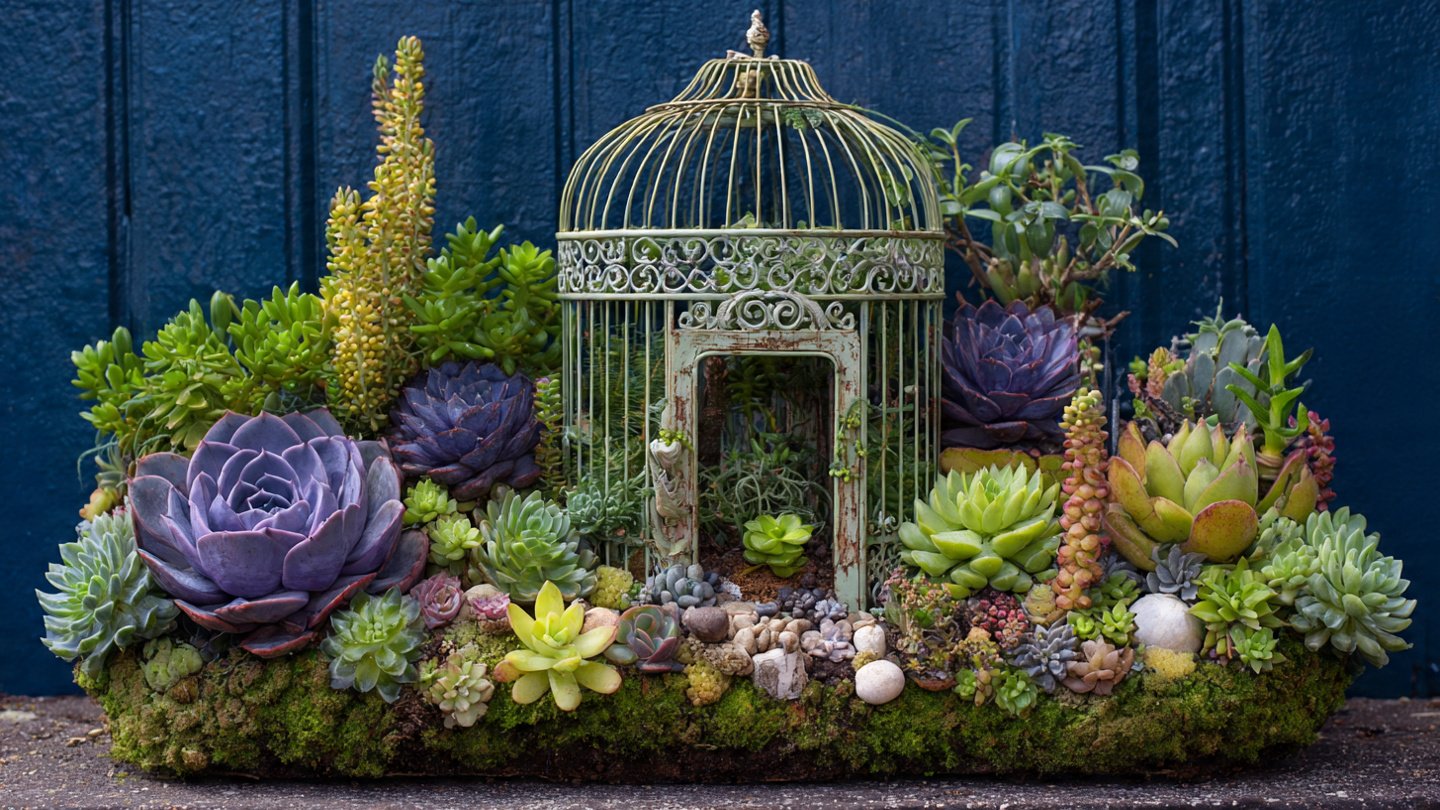
Succulents have captured the hearts of gardeners and home decorators alike due to their low-maintenance care, unique textures, and vibrant colors. But what if you could elevate them from simple pots to an eye-catching centerpiece? One of the most creative ways to display succulents is by transforming a birdcage into a living garden. This approach combines rustic charm with modern greenery, making it a perfect addition to patios, balconies, or indoor spaces.
In this guide, we’ll explore step-by-step techniques, creative ideas, and essential tips for turning an ordinary birdcage into a stunning succulent garden that draws attention and adds life to any space.
Why Choose a Birdcage for Succulent Gardens?
Birdcages are versatile and visually appealing, offering several advantages for succulent displays:
- Aesthetic appeal: Their intricate metalwork adds vintage charm and elegance.
- Space-saving: Ideal for small patios, balconies, or indoor areas.
- Good drainage: Open cages prevent waterlogging, which succulents dislike.
- Versatility: Can be hung, placed on a table, or set as a floor display.
- Creative freedom: Allows layering, hanging, and combining different succulent varieties.
The combination of a birdcage and succulents creates a living piece of art, merging natural beauty with home décor.
Choosing the Right Birdcage
Not all birdcages are suitable for succulent gardens. Consider these factors:
- Size: Larger cages allow more variety and layering; smaller ones are ideal for compact displays.
- Material: Metal cages are preferred as they provide stability and durability. Avoid wood cages unless they’re treated to resist moisture.
- Design: Openwork designs ensure proper air circulation and light penetration.
- Accessibility: Make sure the cage has doors or openings for easy planting and maintenance.
Selecting the right cage sets the foundation for a thriving, attractive garden.
Selecting Succulent Varieties
When planning your birdcage garden, consider succulents that thrive in compact spaces and complement each other visually:
- Echeveria: Rosette-shaped, colorful, and compact.
- Sedum: Low-growing, trailing varieties that cascade beautifully over edges.
- Haworthia: Hardy and textured, ideal for contrasting shapes.
- Crassula: Sturdy and upright; adds height to layered arrangements.
- String-of-Pearls (Senecio rowleyanus): Trailing variety that creates a cascading effect.
Mixing shapes, colors, and textures creates depth and visual interest in your cage garden.
Preparing the Birdcage
Before planting, your cage needs a few modifications to support plant growth:
- Line the base: Use moss, coconut coir, or landscape fabric to prevent soil from falling through gaps.
- Create drainage layers: Add small stones or gravel at the bottom to prevent water accumulation.
- Choose a suitable potting mix: Use well-draining succulent or cactus soil. Avoid garden soil, which retains too much moisture.
- Positioning: Decide whether your birdcage will be indoors or outdoors. Outdoor cages may require extra protection from heavy rain.
Proper preparation ensures the health of your succulents and reduces maintenance challenges.
Planting Techniques for Birdcage Succulent Gardens
Follow these steps for a visually stunning arrangement:
- Layer the soil: Add a few inches of succulent soil over the drainage layer.
- Place taller plants first: Position upright or taller succulents in the center or back.
- Add trailing plants: Plant Sedum or String-of-Pearls along edges so they cascade naturally.
- Fill gaps: Use smaller succulents like Echeveria or Haworthia to fill empty spaces.
- Top layer: Add decorative pebbles or sand to keep soil in place and enhance appearance.
Take your time arranging plants to achieve a balanced, harmonious look.
Creative Design Ideas
Transforming a birdcage into a succulent garden allows endless creativity:
- Hanging garden: Suspend the cage from a hook for a floating, vertical display.
- Layered terrarium effect: Use moss and colored stones to create miniature landscapes inside the cage.
- Mixed textures: Combine soft, smooth succulents with spiky varieties for visual contrast.
- Seasonal accents: Add small decorative items like fairy lights, miniature figurines, or shells for a themed look.
- Trailing cascades: Allow trailing succulents to spill over the edges for a natural, flowing effect.
Experimenting with different arrangements ensures a personalized and eye-catching design.
Light and Placement Considerations
Succulents thrive on bright, indirect sunlight, and placement is key to their health:
- Indoors: Place near a south or west-facing window for adequate light.
- Outdoors: Position the cage in a sunny spot with some protection from scorching midday sun.
- Rotating the cage: Turn the cage periodically to ensure even sunlight exposure for all plants.
Proper light exposure keeps your succulents vibrant and healthy.
Watering Tips for Birdcage Gardens
Watering is critical for succulents in confined spaces like birdcages:
- Frequency: Water only when the soil is completely dry.
- Method: Use a small watering can or spray bottle to avoid overwatering.
- Avoid dripping: Ensure water doesn’t collect in the bottom; good drainage prevents root rot.
- Humidity: Indoor cages may need slightly more frequent watering, especially during dry seasons.
Succulents prefer dry conditions, so err on the side of underwatering rather than overwatering.
Maintenance and Longevity
A succulent birdcage garden requires minimal maintenance but benefits from regular attention:
- Pruning: Remove dead or dried leaves to maintain aesthetic appeal.
- Fertilizing: Use a diluted cactus fertilizer once during the growing season.
- Pest control: Watch for aphids or mealybugs; treat promptly with neem oil if needed.
- Rearranging: Rotate plants occasionally to prevent overcrowding and maintain a balanced look.
Consistent care ensures your birdcage remains a stunning centerpiece year-round.
Seasonal Care
Succulents are hardy but may need extra care during extreme weather:
- Winter: Protect outdoor cages from frost by bringing them indoors or covering with frost cloth.
- Summer: Ensure outdoor cages don’t overheat; shade if sunlight is intense.
- Rain: Move cages indoors or under a covered area to prevent waterlogging.
Adapting care according to the season preserves plant health and longevity.
Final Thoughts
Turning a birdcage into a succulent garden is a simple yet transformative way to display greenery. It combines rustic charm, creativity, and the beauty of succulents in one visually captivating arrangement. By choosing the right cage, selecting complementary succulents, ensuring proper soil and drainage, and practicing mindful watering and maintenance, you can create a miniature garden that is both functional and artistic.
Whether used as a hanging centerpiece, table decoration, or patio accent, a succulent birdcage garden brings life, texture, and a touch of whimsy to any space. It’s perfect for beginners who want a low-maintenance project with high visual impact.
With patience, creativity, and attention to detail, your birdcage succulent garden can become a conversation piece, a natural decor element, and a refreshing green sanctuary in your home or outdoor space.