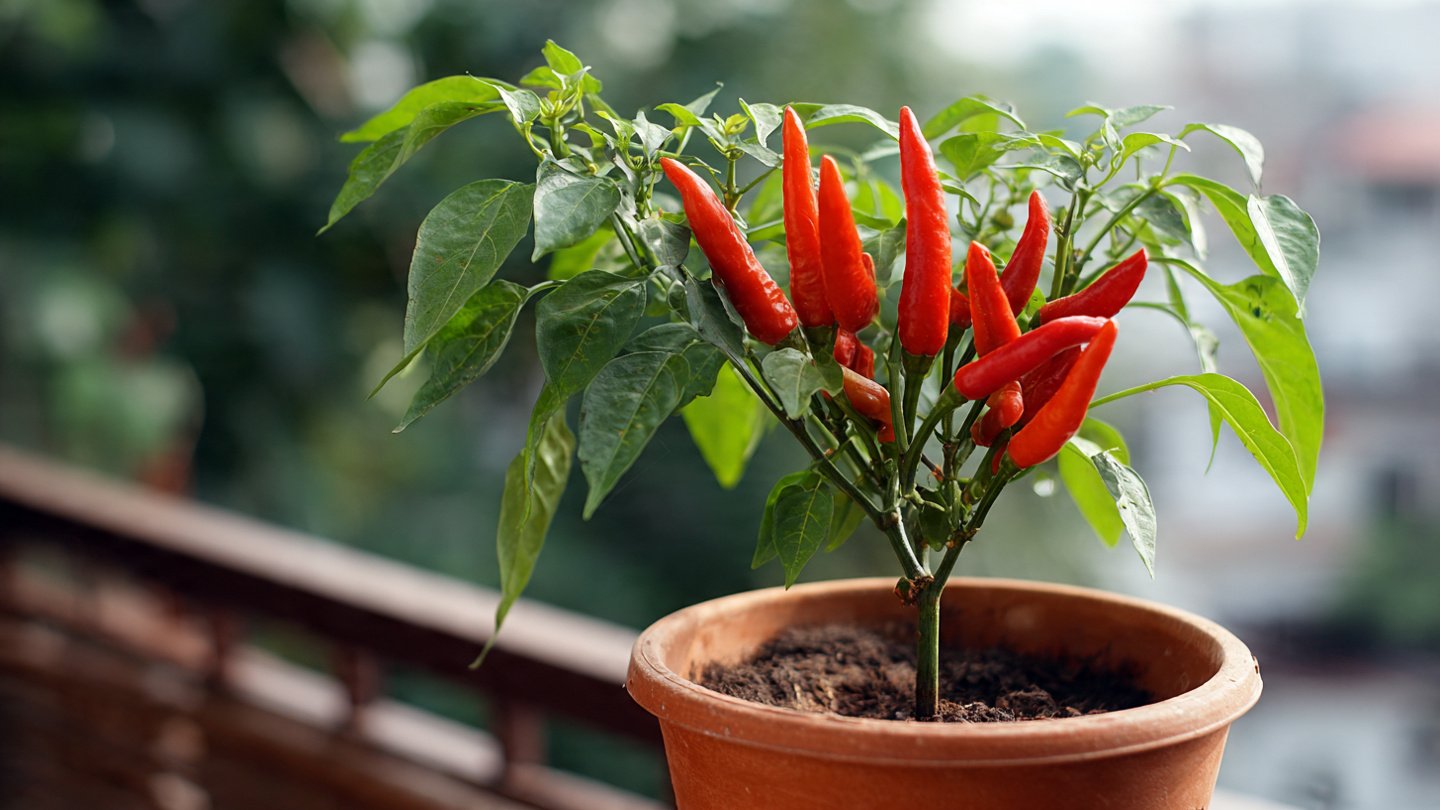
Growing Thai chilies in a small balcony pot may sound challenging, but with the right approach, it is entirely doable. These fiery little peppers not only add flavor and heat to your cooking, but they also thrive in containers, making them ideal for urban gardeners or anyone with limited outdoor space. By understanding their needs for sunlight, soil, water, and nutrients, you can enjoy a bountiful harvest of fresh chilies without a traditional garden.
In this guide, we’ll cover everything you need to know to cultivate Thai chilies successfully in a small balcony pot—from choosing the right variety to harvesting and maintaining your plants.
Why Grow Thai Chilies in Pots?
Container gardening offers several advantages for Thai chilies:
- Space Efficiency: Perfect for small apartments, balconies, or patios
- Mobility: Move pots to follow sunlight or protect plants from harsh weather
- Pest Management: Easier to monitor and control pests than in a garden bed
- Extended Growing Season: Pots can be brought indoors during cooler months
Thai chilies are compact plants, making them ideal for pots while still producing abundant fruit.
Selecting the Right Variety
Not all chili plants are suited for container life. When choosing a variety for balcony pots, consider:
- Compact or dwarf varieties: Look for names like “Thai Hot,” “Bird’s Eye Thai,” or “Dwarf Thai Chili”
- Heat level: Select a variety that matches your culinary preference
- Fruiting habit: Bush-type chilies generally perform better in containers than sprawling types
Starting with healthy seedlings from a nursery is often faster and more reliable than seeds, especially for first-time container gardeners.
Choosing the Perfect Container
Container choice is crucial for chili plant health:
- Size: A 12–14 inch pot is ideal for a single Thai chili plant. Larger containers allow for bigger root systems and more fruit production.
- Material: Terracotta pots are porous and help prevent overwatering, while plastic pots retain moisture longer and are lighter for moving around.
- Drainage: Multiple drainage holes are essential to prevent waterlogged roots, which can lead to rot.
A sturdy saucer under the pot will catch excess water and protect your balcony surface.
Soil and Fertilization
Healthy soil is the foundation of productive chili plants:
- Potting Mix: Use a high-quality, well-draining potting mix enriched with compost or organic matter. Avoid garden soil, which may compact in containers.
- Nutrients: Thai chilies are moderate feeders. Use a balanced fertilizer (N-P-K 10-10-10) during early growth, and switch to a potassium-rich fertilizer when flowering to encourage fruiting.
- pH Level: Chilies prefer slightly acidic to neutral soil (pH 6.0–6.8). Test the soil and adjust if necessary using lime to raise pH or sulfur to lower it.
Regular fertilization ensures strong growth and vibrant fruit production.
Sunlight Requirements
Thai chilies are sun-loving plants:
- Full Sun: Aim for at least 6–8 hours of direct sunlight per day. South-facing balconies are ideal.
- Supplemental Lighting: If your balcony is shaded, consider a small LED grow light to supplement natural light.
- Rotation: Turn the pot every few days to ensure even light exposure and prevent the plant from leaning toward the sun.
Consistent sunlight is key to healthy leaves, flowers, and abundant chili production.
Watering and Humidity
Watering container-grown chilies requires balance:
- Consistent Moisture: Keep the soil evenly moist but never soggy. Overwatering leads to root rot, while under-watering stresses the plant and reduces yield.
- Watering Frequency: During hot summer months, daily watering may be necessary. In cooler months, water every 2–3 days.
- Humidity: Thai chilies prefer moderate humidity. On dry balconies, misting leaves occasionally or placing a shallow water tray nearby can help maintain a favorable microclimate.
Mulching the soil surface helps retain moisture and reduce evaporation.
Pruning and Supporting Your Chili Plant
Proper pruning encourages stronger growth and better fruiting:
- Pinch Early Growth: Pinching off the tips of young plants encourages bushier growth.
- Remove Yellow or Dead Leaves: This improves airflow and reduces the risk of disease.
- Support Stems: Use a small stake or cage to support the plant, especially when it starts producing heavy clusters of chilies.
Pruning and staking ensure healthy, upright plants with maximum fruit production.
Flowering and Pollination
Thai chilies require pollination to produce fruit:
- Natural Pollination: Bees, butterflies, and other insects will assist if your balcony attracts pollinators.
- Hand Pollination: Indoors or in areas with few insects, gently tap flowers or use a small brush to transfer pollen.
- Flower Care: Remove any flower clusters that appear before the plant is mature to redirect energy into stronger foliage and root development.
Healthy flowers lead to more peppers and a more abundant harvest.
Harvesting Thai Chilies
Chilies can be harvested at different stages, depending on your culinary preference:
- Green Chilies: Pick when they reach full size but before color changes. They are slightly milder and crunchy.
- Red Chilies: Leave them to ripen fully for maximum sweetness and heat.
- Regular Harvesting: Frequent picking encourages the plant to produce more fruit throughout the season.
Use clean scissors or pruners to avoid damaging the plant.
Pests and Diseases
Even in a balcony pot, Thai chilies can face challenges:
- Aphids and Whiteflies: Spray with insecticidal soap or neem oil.
- Spider Mites: Increase humidity and rinse leaves to deter infestations.
- Fungal Diseases: Good airflow and avoiding water on leaves prevent powdery mildew or leaf spots.
- Root Rot: Ensure proper drainage and avoid overwatering.
Regular monitoring and prompt action keep plants healthy.
Tips for Year-Round Growth
With the right care, Thai chilies can produce beyond the summer months:
- Container Mobility: Move pots indoors or to a sheltered balcony during cold weather.
- Indoor Lighting: Supplement sunlight with grow lights if natural light is insufficient.
- Pruning for Size: Keep plants compact by regularly pinching back long stems.
By adapting to seasonal changes, you can enjoy fresh chilies year-round.
Benefits of Growing Your Own Thai Chilies
Growing your own Thai chilies has numerous advantages:
- Freshness: Pick chilies at peak ripeness for optimal flavor and heat.
- Flavor Variety: Enjoy unique heat levels and flavors not always available in stores.
- Self-Sufficiency: Reduce reliance on store-bought chilies and minimize packaging waste.
- Satisfaction: There’s immense joy in cooking with chilies you’ve grown yourself!
Small space, big reward—balcony chili gardening is both practical and enjoyable.
Final Thoughts
Successfully growing Thai chilies in a small balcony pot is both achievable and rewarding. With careful attention to sunlight, soil, water, and nutrients, even a limited urban space can yield an abundant harvest of vibrant, flavorful chilies. By selecting the right variety, providing consistent care, and managing pests effectively, you can enjoy fresh, homegrown chilies throughout the growing season.
Whether you’re a seasoned gardener or a first-time container gardener, Thai chilies are an ideal choice for small-space cultivation—spicy, productive, and full of flavor.