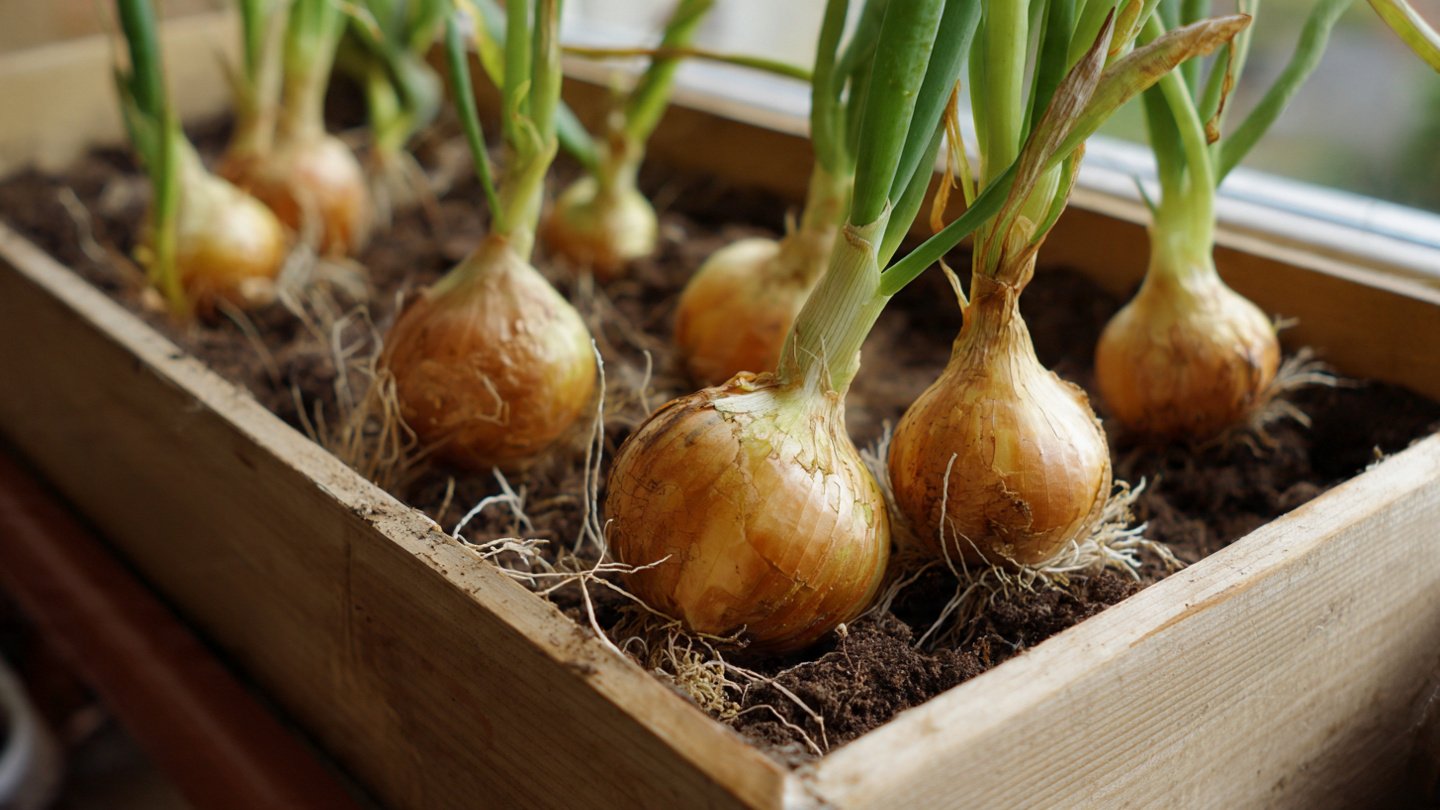
Growing your own vegetables at home is a rewarding experience, especially if you have limited space. Onions are one of the most versatile and essential vegetables in the kitchen, and the good news is that they can be grown successfully even in small spaces, such as a balcony tray. With the right approach, shallow containers, and proper care, you can enjoy fresh, flavorful onions right at home. Let’s dive into how to grow onions in a shallow balcony tray successfully.
1. Choosing the Right Onion Variety
The first step to a successful onion harvest is selecting the right variety for container gardening. Onions come in different types: short-day, long-day, and intermediate varieties.
- Short-day onions: Best for regions with shorter daylight hours; they start forming bulbs when daylight is 10-12 hours.
- Long-day onions: Ideal for areas with longer daylight (14-16 hours); they require more sunlight to develop bulbs.
- Intermediate onions: Adaptable to most conditions and a safe choice for beginners.
For balcony trays, choose small or medium-sized varieties that are well-suited for container growth, such as ‘Red Baron’, ‘White Lisbon’, or ‘Yellow Sweet Spanish’.
2. Selecting the Tray and Soil
A shallow tray is sufficient for onions because their roots don’t grow very deep. Here’s what to look for:
- Tray size: At least 6–8 inches deep and 12–18 inches wide. Shallow trays are fine, but ensure there’s enough room for each plant.
- Drainage: Make sure your tray has holes at the bottom to prevent waterlogging, which can cause root rot.
- Soil: Onions thrive in loose, well-draining soil rich in organic matter. A mix of garden soil, compost, and sand works well. The soil should be slightly acidic to neutral (pH 6.0–7.0).
3. Planting Onion Seeds or Sets
You can grow onions either from seeds, sets (small bulbs), or transplants. For shallow trays, sets or transplants are often easier for beginners.
- From seeds: Sow seeds thinly on the surface and lightly cover them with ¼ inch of soil. Keep the soil moist until germination, which takes 7–14 days.
- From sets: Plant small onion bulbs about 1–2 inches apart, with the pointed end facing up.
- From transplants: Plant seedlings 2–3 inches apart, leaving enough space for bulb formation.
Tip: Thin seedlings as they grow to avoid overcrowding, which ensures healthy bulb development.
4. Proper Sunlight and Placement
Onions require 6–8 hours of sunlight daily. A balcony with good sunlight exposure is perfect. If your balcony doesn’t get full sun, you can supplement with grow lights to ensure proper growth. Rotate trays occasionally to make sure all plants get uniform sunlight exposure.
5. Watering and Moisture Management
Consistent moisture is key for onions, but overwatering can lead to disease. Keep the soil evenly moist, especially during bulb formation.
- Water lightly every 2–3 days, depending on weather conditions.
- Avoid waterlogging; ensure proper drainage.
- Use mulch (like straw or dried leaves) to retain moisture and regulate soil temperature.
6. Fertilization and Nutrient Management
Onions are nutrient-demanding, especially for nitrogen, which supports leaf growth. However, balanced nutrition is essential for healthy bulb formation.
- Use organic fertilizers like compost or well-rotted manure before planting.
- Side-dress with a nitrogen-rich fertilizer once plants are 4–6 inches tall.
- Avoid excessive nitrogen during bulb formation, as it can delay maturation.
7. Pest and Disease Management
Even on a balcony, onions can attract pests such as onion maggots, aphids, and thrips. Diseases like downy mildew and white rot can also occur.
Prevention tips:
- Inspect plants regularly for pests.
- Avoid overhead watering to reduce fungal infections.
- Use natural remedies like neem oil or insecticidal soap for pest control.
- Rotate crops or clean trays thoroughly before replanting.
8. Supporting Healthy Bulb Formation
Onion bulbs form underground while green shoots grow above. To encourage strong bulb growth:
- Ensure proper spacing: Crowded onions produce smaller bulbs.
- Reduce watering slightly when bulbs start swelling to prevent rot.
- Remove weeds promptly; they compete for nutrients and water.
- Keep leaves healthy; green leaves indicate healthy bulb growth.
9. Harvesting Onions in Balcony Trays
Onions are ready to harvest when their leaves start to yellow and fall over. Depending on the variety, this typically occurs 90–120 days after planting.
Steps for harvesting:
- Gently loosen the soil around the bulb.
- Lift the onion without damaging the roots.
- Allow bulbs to dry in a shaded, well-ventilated area for a few days.
After curing, store onions in a cool, dry place. Balcony-grown onions often have a milder flavor and can be used fresh in salads or cooking.
10. Advantages of Growing Onions in Balcony Trays
Growing onions in shallow trays has several benefits:
- Space efficiency: Perfect for small apartments or limited balcony space.
- Easy maintenance: Trays are portable and easy to water, fertilize, and monitor.
- Reduced pest exposure: Elevated trays limit contact with ground pests.
- Fresh harvest: Homegrown onions have superior flavor compared to store-bought ones.
Additionally, growing onions in trays encourages urban gardeners to experiment with other shallow-rooted vegetables like garlic, leeks, or leafy greens.
11. Tips for Maximum Success
- Choose disease-resistant varieties.
- Rotate tray locations to avoid soil depletion.
- Keep the soil consistently moist but well-drained.
- Thin seedlings to prevent overcrowding.
- Fertilize according to growth stages: nitrogen for leaves, potassium for bulb formation.
- Observe sunlight requirements carefully; onions need full sun to thrive.
Conclusion
Growing onions in shallow balcony trays is a rewarding and practical way to enjoy homegrown vegetables even with limited space. By choosing the right varieties, preparing nutrient-rich soil, ensuring proper sunlight, watering, and pest management, anyone can achieve a successful onion harvest. Shallow trays not only save space but also make maintenance easier, offering urban gardeners the opportunity to enjoy fresh, flavorful onions year-round. With patience and consistent care, your balcony can transform into a mini vegetable garden, producing onions that are both healthy and delicious.