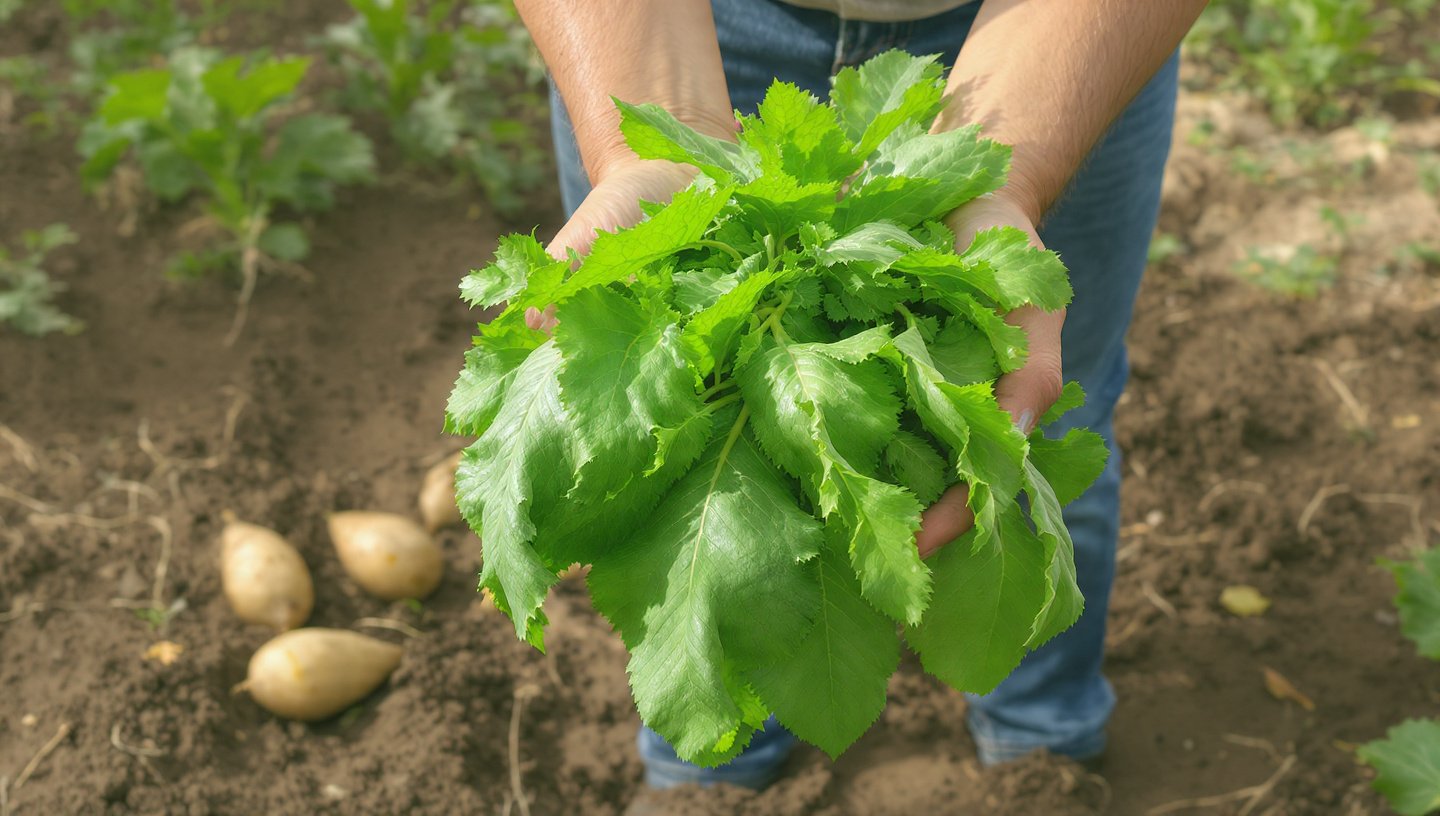
When most people think about growing sweet potatoes, they imagine planting slips or vine cuttings in warm soil and waiting patiently for months. But what if I told you that sweet potato leaves alone can help you grow a massive harvest? It sounds surprising, but this simple, often-overlooked trick completely transformed my harvest—and it can do the same for you.
Sweet potatoes are forgiving, productive plants, but understanding how their leaves work can unlock their full potential. Here’s how I used sweet potato leaves strategically and ended up harvesting basketfuls of healthy, oversized tubers.
Understanding How Sweet Potatoes Grow
Sweet potatoes don’t grow like regular potatoes. The edible tubers form underground, but the plant’s vigorous leafy vines above ground are what fuel tuber production. The more energy the plant produces through its leaves, the more resources it can send down into the roots.
That’s where this leaf-based trick comes into play.
Healthy, well-managed foliage equals bigger, better sweet potatoes.
The “Leaf Trick” That Changed Everything
Instead of letting sweet potato vines grow wild and unchecked, I focused on using the leaves intentionally—both for growth management and soil improvement.
Here’s the simple strategy:
- Encourage rapid leaf growth early
- Prune and reuse excess leaves
- Redirect energy back into tuber formation
This approach does not reduce yields—it dramatically increases them.
Step 1: Boost Leaf Growth Early
The first 4–6 weeks after planting are crucial. During this time, I focused entirely on leaf development.
What worked best:
- Planting in loose, nutrient-rich soil
- Spacing plants properly to avoid overcrowding
- Watering deeply but infrequently
- Avoiding nitrogen-heavy fertilizers after early growth
Lush, deep-green leaves during the early stage signal a strong root system forming underground.
Step 2: Prune Leaves at the Right Time
Here’s where most gardeners go wrong—they let the vines sprawl endlessly.
Once the vines became long and aggressive, I selectively pruned excess leaves and trailing vines. This does two important things:
- Prevents the plant from wasting energy on endless vine growth
- Forces the plant to redirect sugars and nutrients into tuber development
The key is moderation. Never remove more than one-third of the foliage at a time.
Step 3: Use Leaves as Living Mulch
Instead of discarding pruned leaves, I placed them directly on the soil surface around the plants.
This simple step delivered huge benefits:
- Retained soil moisture
- Suppressed weeds naturally
- Improved soil organic matter
- Protected developing tubers from sun exposure
As the leaves broke down, they fed the soil—creating a self-sustaining growth cycle.
Step 4: Prevent Rerooting Along Vines
Sweet potato vines naturally try to root wherever they touch the soil. While this seems helpful, it actually steals energy from the main tubers.
The leaf-based solution:
- Lift wandering vines every few days
- Redirect them back toward the plant base
- Remove excess leaves where vines root aggressively
This small habit alone led to noticeably larger tubers at harvest.
Step 5: Improve Airflow and Sunlight
Dense leaf growth can block sunlight and trap moisture, increasing disease risk. Strategic leaf pruning opened up the plant canopy, allowing:
- Better airflow
- Stronger photosynthesis
- Reduced fungal issues
- Healthier overall growth
Healthier leaves mean more energy flowing underground.
Step 6: Use Leaves as a Growth Indicator
Sweet potato leaves tell you exactly what the plant needs—if you know how to read them.
- Pale leaves = nutrient deficiency
- Yellowing leaves = overwatering or poor drainage
- Wilting leaves = heat stress or shallow watering
By responding quickly to leaf signals, I avoided setbacks and kept plants growing steadily all season.
The Harvest Results
When harvest time arrived, the difference was impossible to miss.
Instead of small, scattered tubers, I uncovered:
- Large, evenly shaped sweet potatoes
- Minimal cracking or deformities
- Higher total yield per plant
Some plants produced nearly double what I’d harvested in previous years—all from smarter leaf management.
Common Mistakes to Avoid
If you try this method, avoid these pitfalls:
- Over-pruning too early
- Removing leaves during extreme heat
- Ignoring vine rerooting
- Letting foliage smother neighboring plants
Balance is everything.
Why This Trick Works So Well
Sweet potatoes store energy underground, but that energy is created above ground. By managing leaves instead of ignoring them, you control where the plant sends its resources.
Think of leaves as solar panels—the better you manage them, the more power your plant generates.
Final Thoughts
Growing sweet potatoes using leaves isn’t a gimmick—it’s a smarter way to garden. With just a little pruning, observation, and reuse of foliage, you can dramatically increase your harvest without extra fertilizer or effort.
If you’ve struggled with small yields or endless vines, try this simple leaf-based trick this season. You may be shocked at how many sweet potatoes you pull from the soil.