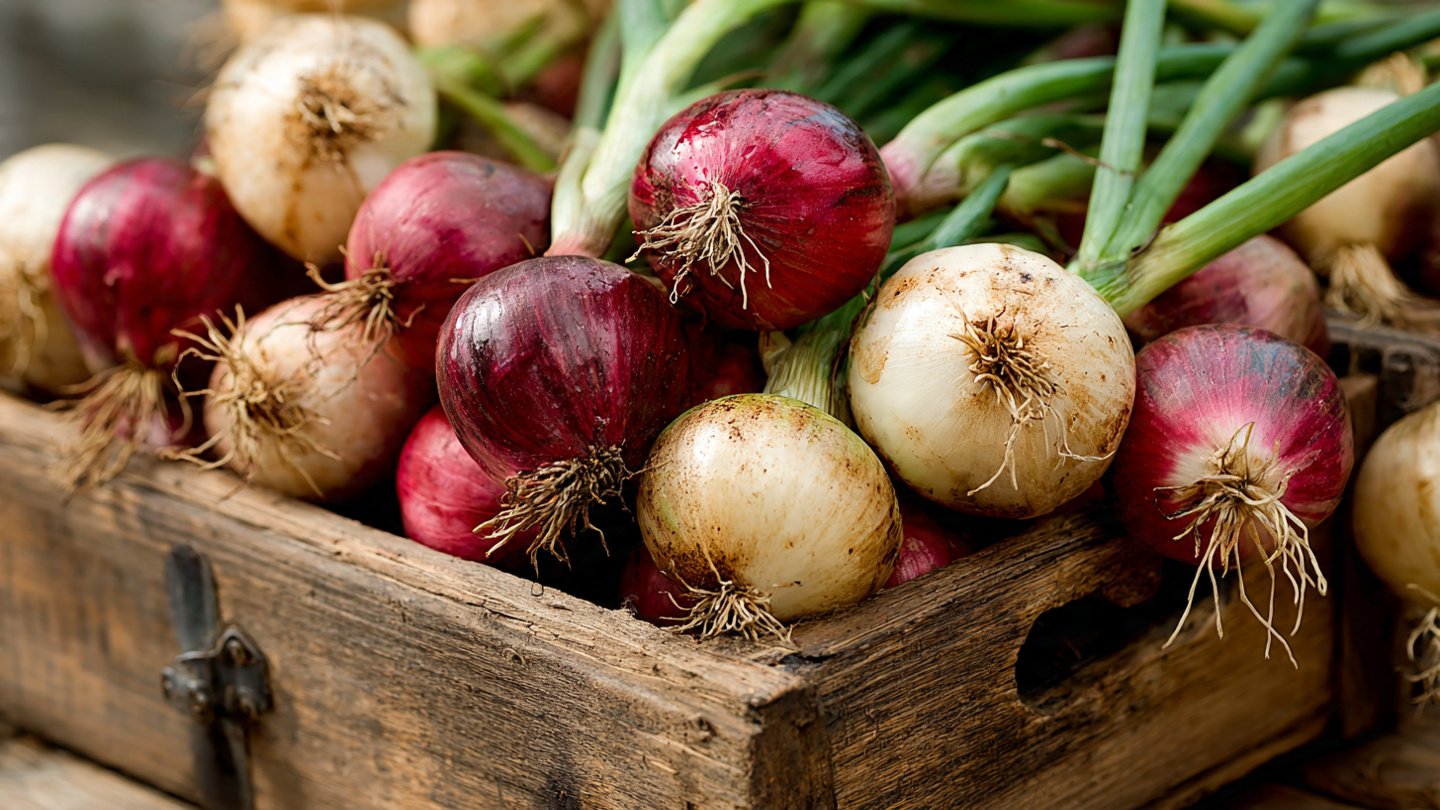
Onions are one of the most versatile and essential ingredients in kitchens around the world. From soups and stews to salads and stir-fries, their flavor enhances almost every dish. While store-bought onions are readily available, growing your own at home offers several advantages: fresher produce, lower costs, and the satisfaction of harvesting a crop you nurtured yourself. Even if you have limited space, homegrown onions are surprisingly easy to cultivate with the right guidance. This step-by-step guide will walk you through everything you need to know to grow onions at home successfully, ensuring bountiful and flavorful harvests.
Understanding Onion Varieties
Before planting, it’s important to choose the right onion variety for your garden. Onions are broadly categorized into short-day, long-day, and day-neutral types, which are defined by the amount of daylight they need to form bulbs.
- Short-day onions: These onions form bulbs when daylight reaches 10–12 hours. They are ideal for southern climates and are usually planted in the fall for a spring harvest.
- Long-day onions: These onions require 14–16 hours of daylight to bulb and are best suited for northern regions. Plant them in early spring for a late summer harvest.
- Day-neutral onions: These varieties are less sensitive to day length and can adapt to a wider range of climates.
Popular onion varieties for home gardeners include ‘Walla Walla,’ ‘Red Creole,’ ‘Yellow Sweet Spanish,’ and ‘White Lisbon.’ Choosing a variety adapted to your climate ensures optimal growth and maximum yield.
Choosing the Right Growing Method
Onions can be grown from seeds, sets, or transplants, and each method has its advantages:
- Seeds: Growing onions from seeds gives you the widest variety options, but it takes longer for the plants to mature. Seeds are typically started indoors 8–10 weeks before the last frost date.
- Sets: Onion sets are small, immature bulbs. They are easy to plant, mature faster than seeds, and are less prone to disease. Sets are ideal for beginners.
- Transplants: These are young onion plants purchased from nurseries. Transplants offer a middle ground between seeds and sets, providing faster growth and a good success rate.
For most home gardeners, starting with sets or transplants is the quickest path to a bountiful harvest.
Preparing the Soil
Onions thrive in well-drained, fertile soil with a pH between 6.0 and 7.0. Before planting:
- Choose a sunny location: Onions require at least 6–8 hours of direct sunlight per day.
- Prepare the soil: Loosen the soil to a depth of 12–15 inches. Remove rocks, weeds, and debris.
- Enrich the soil: Incorporate organic matter such as compost or well-rotted manure to improve fertility and drainage.
- Fertilize: Apply a balanced fertilizer high in phosphorus to encourage root development, following the package instructions.
Proper soil preparation ensures strong root systems and large, healthy bulbs.
Planting Onions
Planting Sets
- Spacing: Plant onion sets 1–2 inches deep and 4–6 inches apart in rows 12–18 inches apart.
- Orientation: Ensure the pointed end of the set faces upward for proper growth.
- Watering: Lightly water the soil after planting to settle the sets in place.
Planting Seeds or Transplants
- Seedlings: If starting from seeds indoors, transplant seedlings outdoors when they are 4–6 inches tall and the risk of frost has passed.
- Spacing: Plant seedlings 4–6 inches apart, ensuring enough space for bulbs to form.
- Depth: Bury the roots while keeping the base of the leaves just above the soil surface.
- Watering: Water immediately after transplanting and maintain consistent moisture during the growing season.
Caring for Your Onions
Proper care throughout the growing season is essential for producing large, flavorful bulbs. Here’s what you need to do:
1. Watering
Onions have shallow roots, so they require regular watering. Aim for 1 inch of water per week, either through rainfall or manual irrigation. Water deeply but avoid waterlogging, which can lead to rot. Mulching around the plants helps retain moisture and suppress weeds.
2. Fertilizing
Onions are heavy feeders. Apply a nitrogen-rich fertilizer every 2–3 weeks during the early stages of growth to promote leafy development. Once the bulbs begin forming, switch to a balanced fertilizer to support bulb enlargement.
3. Weed Control
Weeds compete with onions for nutrients and water. Regularly remove weeds by hand or use a shallow hoe to avoid disturbing the onion roots. Mulching with straw or grass clippings also helps reduce weed growth.
4. Pest and Disease Management
Common pests include onion maggots, thrips, and aphids. Use organic insecticides or natural predators to control infestations. Rot and fungal diseases can occur if onions are overwatered or crowded. Ensure proper spacing, airflow, and avoid wetting the foliage excessively.
Monitoring Growth
As onions grow, keep an eye on their development:
- Leaf color: Healthy leaves should be green and upright. Yellowing leaves may indicate nutrient deficiency.
- Bulb formation: Bulbs begin forming when leaves reach a certain maturity. Soft or irregular bulbs may result from inconsistent watering or poor soil fertility.
- Pest activity: Regularly inspect leaves and bulbs for signs of pests or disease and take action promptly.
Harvesting Onions
Knowing when and how to harvest onions is key to preserving flavor and ensuring long-term storage:
- Timing: Onions are usually ready to harvest when the tops start to yellow and fall over. This is a sign that the bulbs have matured.
- Lifting bulbs: Gently loosen the soil with a garden fork and lift the bulbs. Avoid pulling by the leaves, as this can damage the bulb.
- Curing: After harvesting, cure onions by placing them in a warm, dry, and ventilated area for 2–3 weeks. The outer skins should become papery, and the roots dry completely.
- Storage: Store cured onions in a cool, dark, and dry location. Mesh bags or baskets allow air circulation and prevent mold.
Tips for Bountiful Onion Harvests
To maximize your onion yield:
- Succession planting: Plant sets or seeds every few weeks to ensure a continuous harvest throughout the season.
- Rotate crops: Avoid planting onions in the same spot each year to prevent soil-borne diseases.
- Companion planting: Grow onions alongside carrots, lettuce, and tomatoes to deter pests and improve overall garden health.
- Record keeping: Keep a garden journal to track planting dates, growth progress, and harvest times for future improvement.
Container Gardening for Onions
For those with limited outdoor space, onions can also thrive in containers:
- Choose the right container: Use a pot that is at least 8–12 inches deep and has drainage holes.
- Use high-quality soil: A mix of potting soil and compost provides nutrients and retains moisture.
- Water consistently: Container onions may dry out faster, so monitor soil moisture closely.
- Sunlight: Place containers in a location that receives full sun for optimal growth.
Container gardening allows you to grow onions on balconies, patios, or even indoors with sufficient light.
Conclusion
Growing onions at home is easier than many gardeners think. With careful planning, proper soil preparation, and consistent care, you can cultivate onions that are flavorful, fresh, and abundant. From selecting the right variety to monitoring growth, watering correctly, and harvesting at the right time, each step contributes to a successful crop.
Not only do homegrown onions enhance your meals, but they also provide the satisfaction of nurturing a plant from seed or set to full maturity. By following this step-by-step guide, even beginners can enjoy bountiful onion harvests year after year. Whether in a backyard garden or a sunny balcony container, onions can become a rewarding and sustainable addition to your home garden.