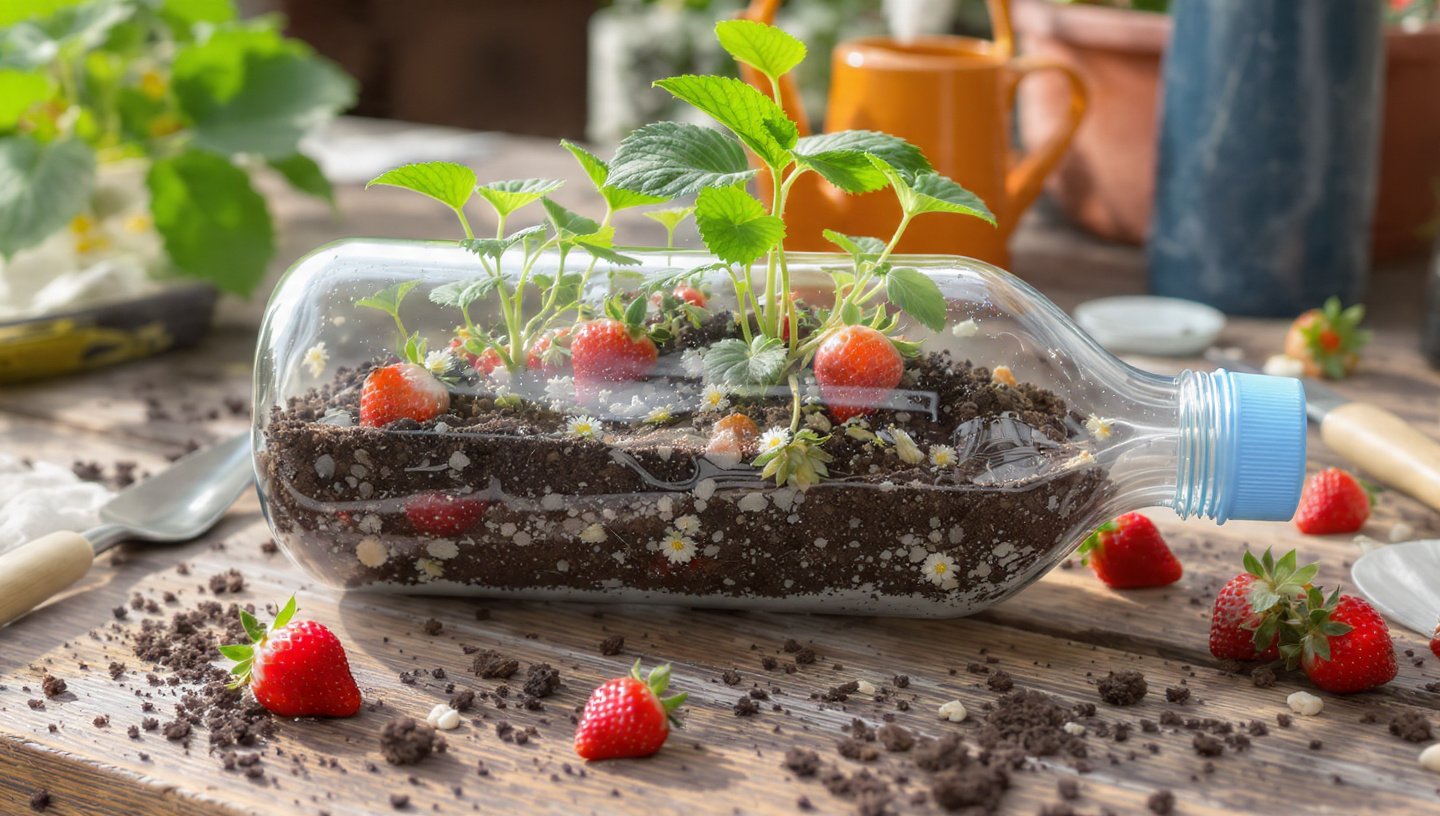
Strawberries are one of the most rewarding fruits to grow at home. Sweet, juicy, and packed with vitamins, strawberries (Fragaria × ananassa) are a delight for both gardeners and families. The good news is that you don’t need a large garden or expensive containers to grow them—recycled plastic bottles can serve as creative, sustainable, and space-saving planters. With a little effort, you can transform simple bottles into thriving strawberry gardens that yield fresh fruit right on your windowsill, balcony, or backyard.
This guide will take you step by step through growing strawberries in recycled plastic bottles, covering preparation, planting, care, and harvesting.
Why Use Recycled Plastic Bottles?
Recycling plastic bottles into planters is an environmentally friendly and practical solution. Benefits include:
- Space Efficiency: Vertical bottle gardens are perfect for small spaces like apartments or patios.
- Cost-Effective: Plastic bottles are inexpensive and widely available.
- Portability: Bottle gardens are lightweight and easy to move to optimize sunlight exposure.
- Sustainability: Reusing plastic reduces waste and promotes eco-friendly gardening.
- Water Efficiency: Bottles retain water well, reducing the frequency of watering.
By combining sustainability with gardening, you can enjoy fresh strawberries while contributing to waste reduction.
Choosing the Right Strawberries
Selecting the right strawberry variety is crucial for success in container gardening:
- Day-Neutral Varieties: These produce fruit continuously throughout the growing season and are ideal for bottle gardens. Examples include ‘Albion,’ ‘Seascape,’ and ‘Tristar.’
- Everbearing Varieties: Produce two to three harvests per season and are also suitable for containers.
- June-Bearing Varieties: Produce one large harvest in early summer but may require more space and care.
Opt for healthy, disease-free seedlings or transplants from a trusted nursery. Avoid bare-root plants that appear dry or weak.
Preparing Recycled Plastic Bottles
Recycling plastic bottles for strawberries is simple and creative. Here’s how to prepare them:
- Select Bottles: Use 1–2 liter bottles for larger plants or smaller bottles for strawberry runners or micro-gardens.
- Cut Openings: Cut a rectangular opening on the side of the bottle large enough to plant strawberries while leaving space for leaves to grow.
- Drainage Holes: Punch small holes at the bottom to allow excess water to drain. Good drainage prevents root rot.
- Optional Hanging System: For vertical gardens, attach strong strings, wires, or hooks to hang bottles in tiers.
By modifying bottles carefully, you create functional and attractive mini-planters suitable for indoor and outdoor gardening.
Choosing the Right Soil
Strawberries prefer well-draining, nutrient-rich soil. Container soil requires a lightweight, fertile mix:
- Potting Mix: Use a high-quality potting soil enriched with organic matter.
- Compost: Adding compost improves soil fertility and water retention.
- Sand or Perlite: Mix in sand or perlite to improve drainage and prevent soggy roots.
Avoid garden soil alone, as it can be too dense for container gardening and may harbor pests or diseases.
Planting Strawberries in Plastic Bottles
Planting strawberries properly ensures strong growth and abundant fruit:
- Fill Bottles with Soil: Add 2–3 inches of soil at the bottom, then position the plant so the crown (the base of the leaves) is at soil level. Fill around the roots with soil.
- Spacing: If using larger bottles, plant one strawberry per bottle. For hanging vertical gardens, stagger bottles to allow space for leaves and fruit.
- Watering: Water thoroughly after planting, ensuring soil is moist but not waterlogged.
Caring for Strawberry Bottle Gardens
Proper care is essential for healthy plants and bountiful harvests:
1. Sunlight
Strawberries need at least 6–8 hours of direct sunlight per day. Place your bottle gardens on windowsills, balconies, or outdoors where they receive maximum sunlight. For indoor gardens with limited natural light, supplement with grow lights.
2. Watering
Strawberries prefer consistently moist soil but are sensitive to overwatering. Water bottles when the top inch of soil feels dry. Vertical or hanging bottle gardens may dry faster, so monitor moisture more frequently.
3. Fertilization
Container-grown strawberries need nutrients:
- Use a balanced liquid fertilizer every 2–3 weeks during the growing season.
- Organic options like compost tea or diluted fish emulsion work well.
- Avoid excessive nitrogen, which promotes leaf growth over fruiting.
4. Mulching
Adding mulch, such as straw or shredded leaves, helps retain moisture, reduce weeds, and keep berries clean. For vertical gardens, a small layer of mulch around the base of the plant is sufficient.
Managing Pests and Diseases
Even container strawberries can face pest or disease challenges:
- Aphids: Remove by spraying with water or using insecticidal soap.
- Slugs and Snails: Handpick or create barriers using copper tape around bottles.
- Fungal Diseases: Powdery mildew and gray mold can occur in humid conditions. Ensure proper airflow and avoid watering leaves directly.
- Birds: Cover plants with netting or mesh to protect berries outdoors.
Early detection and preventive care help maintain healthy, productive plants.
Encouraging Fruit Production
To maximize fruit in bottle gardens:
- Pruning Runners: Trim long runners if you want to focus energy on fruiting rather than spreading. Alternatively, plant runners in additional bottles to expand your garden.
- Pollination: If growing indoors, gently shake flowers or use a small brush to transfer pollen between flowers. Outdoors, bees and wind usually handle pollination.
- Temperature Management: Strawberries thrive in 60–80°F (15–27°C). Protect plants from frost with covers or bring bottles indoors during cold snaps.
Harvesting Strawberries
Harvesting is simple and rewarding:
- Timing: Pick strawberries when they are fully red, firm, and fragrant. Avoid green or partially ripe berries, as they will not ripen after picking.
- Method: Gently twist or snip the fruit with scissors, leaving the green calyx attached to prevent damage to the plant.
- Frequency: Check plants every 2–3 days during peak fruiting season for ripe berries.
Regular harvesting encourages the plant to produce more fruit and prevents overripening or rot.
Creative Arrangements and Vertical Gardens
Plastic bottle strawberry gardens can be arranged in creative ways:
- Vertical Towers: Stack bottles in a vertical arrangement for space-saving and aesthetic appeal.
- Hanging Gardens: Suspend bottles from balconies or rails for eye-catching strawberry displays.
- Windowsill Rows: Line bottles along a sunny windowsill for easy access to fresh berries.
These arrangements make growing strawberries accessible even in urban environments or small apartments.
Advantages of Bottle Gardening
Growing strawberries in recycled bottles offers several advantages:
- Space Efficiency: Ideal for limited spaces like apartments, balconies, and small yards.
- Accessibility: Strawberries are easy to reach for daily harvesting.
- Cost Savings: Reuse plastic bottles instead of buying expensive pots.
- Educational: Perfect for teaching children about gardening, recycling, and sustainable living.
- Flexibility: Easy to move plants to optimize sunlight or protect from weather.
Troubleshooting Common Issues
Even with careful care, you may face minor challenges:
- Yellow Leaves: May indicate overwatering, nutrient deficiency, or poor drainage. Adjust watering and fertilize appropriately.
- Poor Flowering: Ensure sufficient sunlight and avoid excessive nitrogen.
- Fruit Rot: Improve airflow, avoid overhead watering, and remove damaged berries promptly.
- Stunted Growth: Check root space, soil quality, and light exposure.
By monitoring plants regularly and addressing issues promptly, you can maintain a productive strawberry bottle garden.
Conclusion
Growing strawberries in recycled plastic bottles is an innovative, eco-friendly, and rewarding way to enjoy fresh fruit at home. With proper seed selection, bottle preparation, soil management, and care, you can produce healthy plants that yield sweet, juicy berries. Whether you’re an urban gardener with limited space or simply want to reduce plastic waste while growing your own food, bottle gardens offer a creative solution for sustainable gardening.
From setting up your first bottles to harvesting vibrant red berries, this approach transforms everyday plastic waste into a productive, beautiful, and tasty garden. By following the steps outlined in this guide, anyone can cultivate strawberries easily, enjoy fresh fruit year-round, and embrace sustainable gardening practices—all with simple recycled bottles.