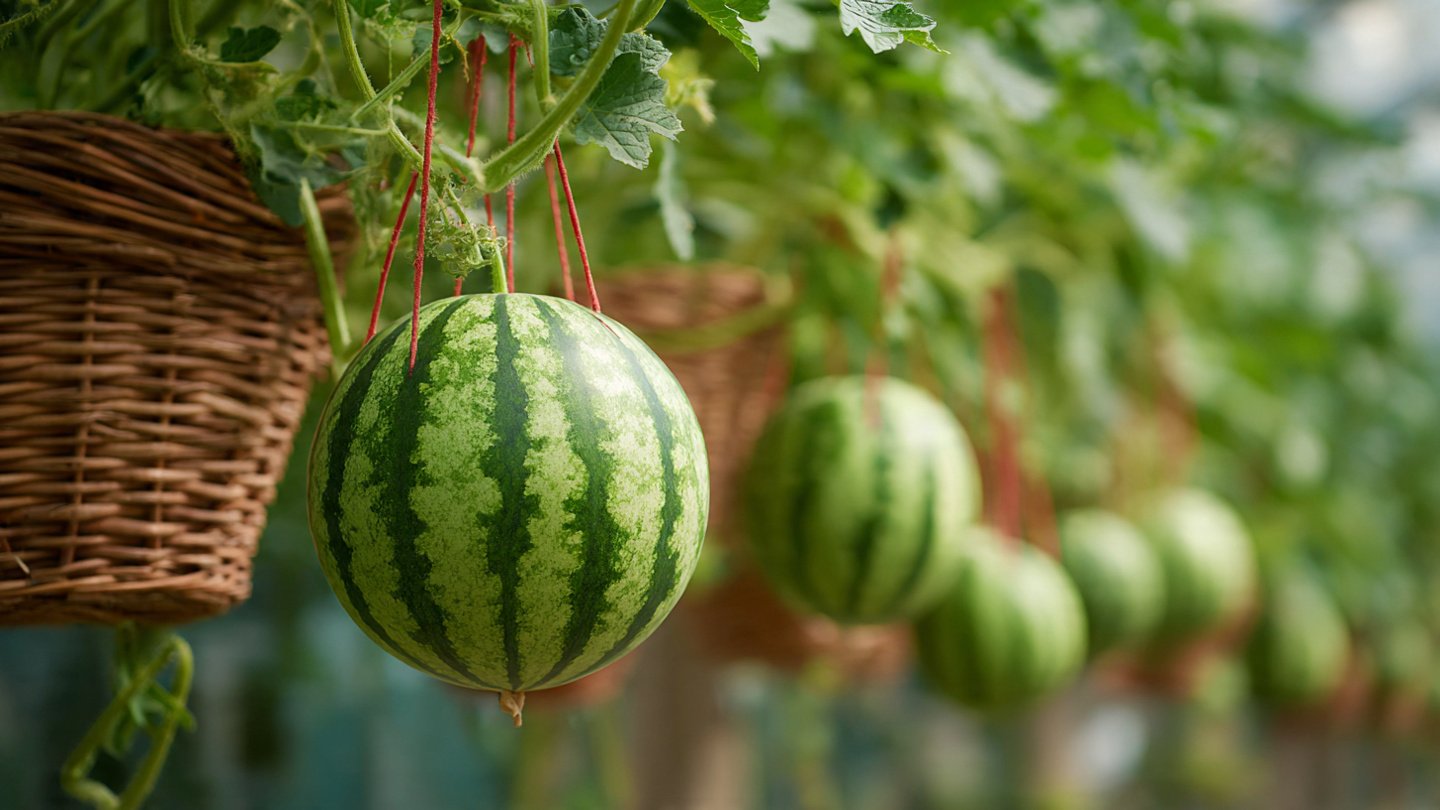
Growing watermelons at home may sound like a task reserved for large farms or spacious backyards, but with the right techniques, you can enjoy sweet, juicy watermelons even in limited spaces. Hanging basket gardening has opened new possibilities for home gardeners, especially those with balconies, terraces, or small patios. This innovative approach not only saves space but also helps keep fruits clean, healthy, and easy to manage. In this complete guide, you’ll learn everything you need to know about growing watermelons successfully in hanging baskets at home.
Why Choose Hanging Basket Gardening for Watermelons?
Watermelons are naturally vining plants that spread across the ground, often taking up a lot of space. Hanging basket gardening allows you to train the vines upward instead of outward. This vertical growing method is perfect for urban homes, apartments, and small gardens.
Some key benefits include:
- Space efficiency: Ideal for balconies and small areas
- Better air circulation: Reduces fungal diseases
- Cleaner fruits: No contact with soil
- Easy monitoring: Pests and ripeness are easier to spot
With proper support and care, even a heavy fruit like watermelon can thrive in a hanging setup.
Selecting the Right Watermelon Variety
Not all watermelon varieties are suitable for hanging baskets. Choose compact or small-fruited types that are bred for containers or vertical growth. These varieties produce lighter fruits and shorter vines, making them easier to manage.
Look for:
- Bush or compact growth habits
- Fruits weighing between 1–3 kg
- Shorter maturation periods
Seed packets or nursery labels often indicate whether a variety is suitable for container or vertical gardening.
Choosing the Perfect Hanging Basket
The success of hanging watermelon plants largely depends on the container you choose.
Basket size:
Select a sturdy hanging basket that is at least 16–20 inches wide and deep. Watermelons have extensive root systems, and cramped roots can limit fruit development.
Material:
Strong plastic, thick coir-lined baskets, or fabric grow bags with reinforced handles work well. Make sure the basket can support both the plant and the fruit weight.
Drainage:
Good drainage holes are essential to prevent root rot. Excess water should flow out easily.
Soil Preparation for Healthy Growth
Watermelons thrive in rich, well-draining soil. A lightweight but nutrient-dense potting mix is ideal for hanging baskets.
A good soil mix includes:
- High-quality potting soil
- Compost or well-rotted manure
- Coco peat or perlite for aeration
The soil should retain moisture without becoming soggy. Before planting, moisten the soil slightly to create a comfortable environment for young roots.
Planting Watermelon Seeds or Seedlings
You can start watermelons either from seeds or from nursery-raised seedlings.
From seeds:
Sow 2–3 seeds about 1 inch deep in the center of the basket. Once seedlings emerge, keep the strongest one and remove the rest.
From seedlings:
Gently transplant one healthy seedling into the prepared basket, ensuring the root ball remains intact.
After planting, water thoroughly and place the basket in a sunny location.
Sunlight Requirements
Watermelons love sunlight. For sweet and juicy fruits, they need at least 6–8 hours of direct sunlight every day.
Hang the basket:
- On a sunny balcony
- Near a south- or west-facing wall
- In an open terrace with minimal shade
Insufficient sunlight often results in poor flowering and bland-tasting fruits.
Watering: The Key to Juicy Fruits
Consistent watering is crucial when growing watermelons in hanging baskets, as containers dry out faster than ground soil.
- Water deeply whenever the top inch of soil feels dry
- Avoid letting the soil completely dry out
- Reduce watering slightly once fruits start ripening to improve sweetness
Always water at the base of the plant to keep leaves dry and prevent disease.
Feeding and Fertilization
Watermelons are heavy feeders, especially when grown in containers.
Early growth:
Use a balanced liquid fertilizer every 10–14 days to promote strong vines and leaves.
Flowering and fruiting:
Switch to a fertilizer higher in potassium and phosphorus to support flower formation and fruit development.
Organic options like compost tea, banana peel water, or vermicompost extract also work well.
Supporting Vines and Fruits
As the vines grow, gently guide them downward or along strings, trellises, or hooks. Soft ties or garden clips can help secure the vines without damaging them.
When fruits begin to form, they need extra support:
- Use old cloth, net bags, or slings
- Tie the support securely to the basket or nearby railing
- Ensure the fruit’s weight is evenly distributed
This prevents the vine from breaking and allows the watermelon to grow to full size safely.
Pollination Tips
Watermelons produce separate male and female flowers. In outdoor settings, insects usually handle pollination. However, on high balconies or enclosed spaces, hand pollination may be necessary.
To hand-pollinate:
- Identify a male flower (thin stem, no swelling)
- Gently transfer pollen to a female flower (small fruit at the base) using a soft brush or cotton swab
Proper pollination ensures well-shaped, fully developed fruits.
Pest and Disease Management
Hanging basket gardening naturally reduces many soil-borne pests, but you should still stay alert.
Common issues include:
- Aphids and spider mites
- Powdery mildew in humid conditions
Control methods:
- Spray neem oil or mild soap solution
- Remove affected leaves promptly
- Ensure good air circulation
Healthy plants are less likely to suffer from serious infestations.
Harvesting Your Homegrown Watermelons
Watermelons are ready to harvest when:
- The underside turns yellow or creamy
- The tendril near the fruit dries out
- The fruit sounds hollow when tapped
Cut the watermelon from the vine using a sharp knife or pruners. Handle gently to avoid cracking.
Final Thoughts
Growing watermelons in hanging baskets is a rewarding and surprisingly practical way to enjoy fresh fruit at home, even in small spaces. With the right variety, proper care, and a little creativity, you can watch your watermelons grow and ripen right before your eyes—literally hanging in the air. This unique gardening method not only maximizes space but also adds a beautiful, lush touch to balconies and terraces. Try it once, and you may never look at watermelons the same way again.