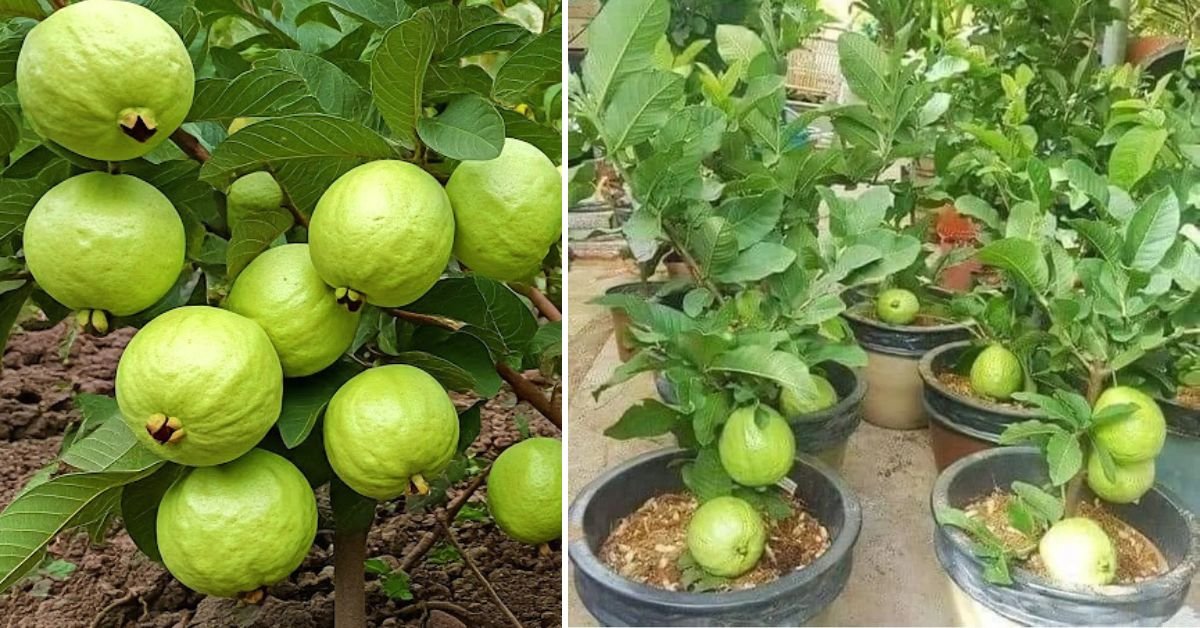
Guava trees are loved by home gardeners for their adaptability, fast growth, and delicious, nutritious fruits. However, many people feel disappointed when their guava plants grow slowly, remain weak, or take too long to bear fruit. The good news is that with the right professional techniques, you can significantly speed up guava tree growth while keeping the plant healthy and productive.
Growing guava faster is not about using excessive fertilizers or shortcuts. It is about understanding how the tree grows and supporting it at every stage. With consistent care and a few expert-approved strategies, your guava tree can transform into a vigorous, fruit-bearing plant much sooner than expected.
Understand How Guava Trees Grow
Before applying any growth-boosting methods, it’s important to understand guava’s natural growth pattern. Guava trees grow rapidly when young, especially during warm weather. Their growth depends heavily on root strength, sunlight, soil quality, and proper pruning.
Guava responds best when stress is minimized. Healthy roots lead to faster shoot development, stronger branches, and earlier flowering. Every pro tip shared below focuses on reducing stress and improving efficiency within the plant.
Start with the Right Planting Material
One of the most overlooked factors in fast guava growth is how the plant is started. Seed-grown guava trees often grow unevenly and take longer to fruit. Experienced gardeners prefer air-layered or cutting-grown plants because they already possess mature growth characteristics.
If you must grow from seed, choose fresh seeds from healthy fruits and expect a longer wait. For faster results, select a young plant with a thick stem, healthy leaves, and no signs of disease. Strong planting material gives you a head start that no fertilizer can replace.
Prepare Soil That Encourages Rapid Root Growth
Fast-growing guava trees depend on soil that allows roots to expand easily. Heavy or compacted soil restricts root development and slows growth.
Create loose, nutrient-rich soil by mixing:
- Garden soil
- Well-rotted compost or vermicompost
- Sand or coco peat for drainage
This blend provides oxygen, moisture, and nutrients in balance. Roots grow deeper and spread faster in such soil, allowing the tree to absorb nutrients more efficiently. Healthy roots are the foundation of fast growth above ground.
Water Deeply but Correctly
Improper watering is a major reason guava trees grow slowly. Too much water suffocates roots, while too little causes stress.
Professional growers follow deep, spaced watering. Water thoroughly, then allow the topsoil to dry slightly before watering again. This encourages roots to grow deeper in search of moisture, creating a strong root system that supports faster growth.
Mulching with dry leaves, straw, or grass clippings helps retain moisture and keeps soil temperature stable. A stable root environment leads to uninterrupted growth.
Feed the Tree the Smart Way
Guava trees are not heavy feeders, but they do need consistent nutrition. Overfeeding with chemical fertilizers often results in weak growth and poor long-term health.
Experts recommend organic feeding in small, regular doses. During the growing season, apply:
- Compost or vermicompost every 30–40 days
- Liquid compost tea every 2–3 weeks
- Banana peel water for potassium
Nitrogen supports leaf and stem growth, phosphorus strengthens roots, and potassium improves overall plant metabolism. Balanced nutrition speeds up growth while keeping the tree resilient.
Use Pruning to Trigger Faster Growth
Pruning is one of the most powerful pro techniques for speeding up guava growth. Many beginners avoid pruning, fearing it will slow the plant down. In reality, correct pruning activates growth hormones and redirects energy to new shoots.
When the guava plant reaches about 2–3 feet:
- Pinch the top growing tip
- Remove weak or inward-growing branches
- Encourage an open, bushy structure
This stimulates lateral branching, increases leaf production, and improves sunlight penetration. More leaves mean more photosynthesis, which directly accelerates growth.
Maximize Sunlight Exposure
Guava trees love sunlight. Insufficient light results in slow growth, weak branches, and delayed fruiting.
Ensure your guava tree receives at least 6–8 hours of direct sunlight daily. If growing in a pot, move the plant to the brightest location available. Rotate container-grown plants occasionally to ensure even growth.
More sunlight equals more energy, and more energy means faster development.
Strengthen Leaves for Better Photosynthesis
Leaves are the engine of plant growth. Healthy, dark-green leaves can produce more food for the tree.
Spraying diluted compost tea or seaweed extract on the leaves once a month strengthens leaf tissue and boosts chlorophyll production. Clean leaves also absorb sunlight more efficiently, so gently wash off dust when needed.
Remove damaged or yellowing leaves promptly so the tree focuses energy on healthy growth.
Protect the Tree from Stress
Stress is the enemy of fast growth. Heat stress, pests, poor drainage, or sudden changes in care can slow development dramatically.
To reduce stress:
- Provide temporary shade during extreme heat
- Use neem oil sprays to prevent pest infestations
- Maintain consistent watering and feeding routines
A stress-free guava tree grows faster because it uses energy for growth rather than survival.
Grow Guava Faster in Containers
If you are growing guava in pots, container size matters. A pot that is too small restricts root growth and slows the plant.
Choose a large container with proper drainage holes. Refresh the topsoil every few months with compost. Repot into a larger container when roots begin to circle the pot.
Container-grown guava can grow just as fast as ground-planted trees when given enough space and care.
Patience and Consistency Make the Difference
Even with the best techniques, consistency is the real secret. Small, regular actions—watering properly, feeding lightly, pruning on time, and observing the plant—produce the biggest results over time.
Fast growth does not mean careless growth. When guava trees are grown steadily and naturally, they develop stronger structures and produce better-quality fruit earlier.
Final Thoughts
Growing guava trees faster is completely achievable when you follow proven, professional techniques. By starting with quality planting material, improving soil health, watering wisely, feeding organically, pruning strategically, and minimizing stress, you create the perfect conditions for rapid, healthy growth.
These expert tips do not require expensive tools or chemicals—just understanding, consistency, and care. Apply them patiently, and your guava tree will reward you with vigorous growth, lush foliage, and abundant harvests much sooner than expected.