rop breeding has always been a race against time. As populations grow, climates shift, and pests evolve, scientists and farmers must continually develop better, stronger, and more resilient crops. Today, that urgency is greater than ever. From drought-resistant wheat to disease-tolerant bananas, modern crop breeding stands at the forefront of global food security. The challenge is clear: produce more food, on less land, under increasingly unpredictable conditions — and do it faster than ever before.
Why Time Matters in Crop Breeding
Traditional crop breeding is a slow process. Developing a new variety can take 8 to 15 years, depending on the crop. Breeders must select parent plants with desirable traits, cross them, grow generations of offspring, and carefully evaluate which plants perform best. This cycle repeats multiple times before a stable, high-performing variety is ready for farmers.
But climate change has accelerated agricultural challenges. Rising temperatures, irregular rainfall, extreme weather events, and emerging diseases are putting crops under stress. Farmers cannot wait decades for solutions. The pressure to shorten breeding timelines has never been more intense.
The Growing Threats to Global Agriculture
Agriculture faces multiple overlapping threats:
- Climate volatility – Heatwaves, floods, and droughts reduce yields and damage soil health.
- New pests and diseases – Warmer conditions allow insects and pathogens to expand into new regions.
- Shrinking arable land – Urbanization and land degradation reduce available farmland.
- Population growth – The global population continues to rise, increasing food demand.
These challenges mean crop varieties developed even 10 years ago may no longer perform optimally in today’s environment. Breeding must keep pace with a moving target.
Traditional Breeding: Strong but Slow
Conventional breeding relies on natural genetic variation. Farmers and scientists select plants with favorable traits — higher yield, better flavor, disease resistance — and cross them with other promising plants. Over generations, desirable characteristics are combined.
This approach has produced remarkable achievements, such as high-yield wheat and rice varieties that helped prevent famine during the Green Revolution. However, it requires multiple growing seasons and extensive field trials. Weather variability can delay testing, and some crops have long growth cycles, slowing progress further.
While traditional methods remain essential, relying solely on them is no longer enough.
Modern Tools Speeding Up the Process
To stay ahead, plant scientists are using advanced technologies to accelerate breeding.
Marker-Assisted Selection
Instead of waiting for plants to mature and show visible traits, breeders can now analyze DNA markers linked to specific characteristics. If a seedling carries the right genetic markers, it can be selected early, saving years of testing.
Genomic Selection
Genomic selection uses advanced data analysis to predict how a plant will perform based on its genetic profile. This allows breeders to make informed decisions before field trials are complete, dramatically reducing development time.
Gene Editing
Technologies such as CRISPR allow scientists to make precise changes in a plant’s DNA. Rather than introducing foreign genes, gene editing can modify existing genes to enhance traits like drought tolerance or disease resistance. This precision speeds up improvement while maintaining desirable characteristics.
Speed Breeding
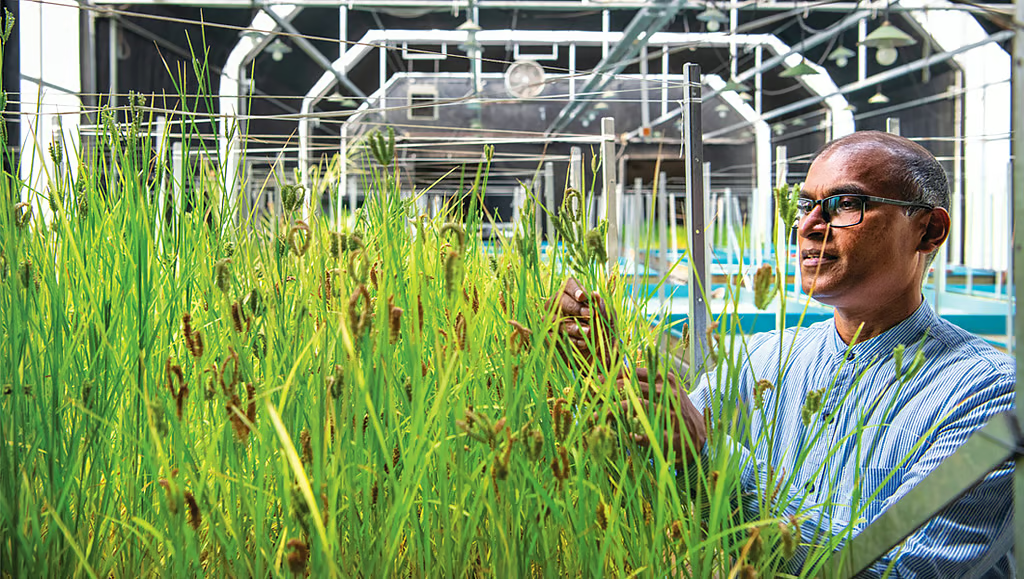
Speed breeding uses controlled environments with extended light exposure and optimized growing conditions to accelerate plant growth cycles. Some crops can produce multiple generations per year instead of just one or two. This approach compresses years of breeding into a much shorter timeframe.
Balancing Speed with Safety
While accelerating crop breeding is critical, safety and sustainability remain priorities. New varieties must undergo rigorous testing to ensure they are safe for consumption, environmentally responsible, and stable under diverse conditions.
Public acceptance is another factor. Transparency, communication, and responsible regulation are essential to maintain trust in modern breeding technologies.
Climate-Resilient Crops: A Global Priority
One of the most urgent goals of crop breeding is resilience. Crops must withstand:
- High temperatures
- Water scarcity
- Salinity in soils
- Emerging plant diseases
For example, heat-tolerant wheat varieties can maintain grain quality even during extreme temperature spikes. Drought-resistant maize can survive with less water, supporting farmers in arid regions.
These improvements are not optional — they are necessary to protect global food supplies.
The Role of Data and Artificial Intelligence
Data-driven agriculture is transforming breeding strategies. Artificial intelligence can analyze vast amounts of genetic, environmental, and performance data to identify patterns humans might miss.
Predictive models help breeders understand how specific genes interact with environmental conditions. This speeds up decision-making and improves accuracy. As computing power increases, breeding programs become more efficient and precise.
Supporting Smallholder Farmers
While advanced technologies dominate headlines, crop breeding must also support smallholder farmers, especially in developing countries. These farmers often face the harshest climate impacts yet have limited resources.
Breeding programs tailored to local conditions — such as flood-tolerant rice or pest-resistant cassava — can significantly improve livelihoods. Partnerships between research institutions, governments, and farming communities are essential to ensure innovations reach those who need them most.
Preserving Genetic Diversity
Ironically, racing against time also means protecting the past. Genetic diversity stored in seed banks is crucial for future breeding efforts. Wild relatives of crops often carry traits like natural disease resistance or environmental tolerance.
Preserving biodiversity ensures breeders have access to a broad genetic pool. Without it, future improvements could become more difficult or even impossible.
Economic and Policy Challenges
Crop breeding is resource-intensive. It requires funding, infrastructure, skilled scientists, and long-term commitment. Public and private investment both play roles, but consistent policy support is vital.
Governments must balance innovation with regulation. Clear guidelines encourage research while ensuring safety standards. International cooperation is also important, as climate challenges cross national borders.
The Future of Crop Breeding
The future of agriculture depends on how quickly and responsibly crop breeding evolves. Emerging technologies will likely become more integrated, combining genomic tools, AI modeling, and advanced field testing.
Urban farming, vertical agriculture, and controlled-environment systems may demand new crop varieties specifically designed for indoor production. Meanwhile, global warming will continue reshaping growing zones, requiring adaptable crops for shifting climates.
Breeding programs must remain flexible and forward-looking.
Conclusion
Crop breeding is truly against the clock globally. The stakes are enormous: feeding billions of people, protecting farmer livelihoods, and preserving ecosystems. Traditional methods laid the foundation for agricultural progress, but modern science is accelerating the pace of innovation.
By combining advanced genetics, data analysis, sustainable practices, and global collaboration, breeders are working tirelessly to develop crops that can thrive in an uncertain future. The race is not simply about producing more food — it is about ensuring resilience, stability, and security for generations to come.
In this urgent era, crop breeding is no longer just an agricultural practice. It is a critical mission shaping the future of humanity.