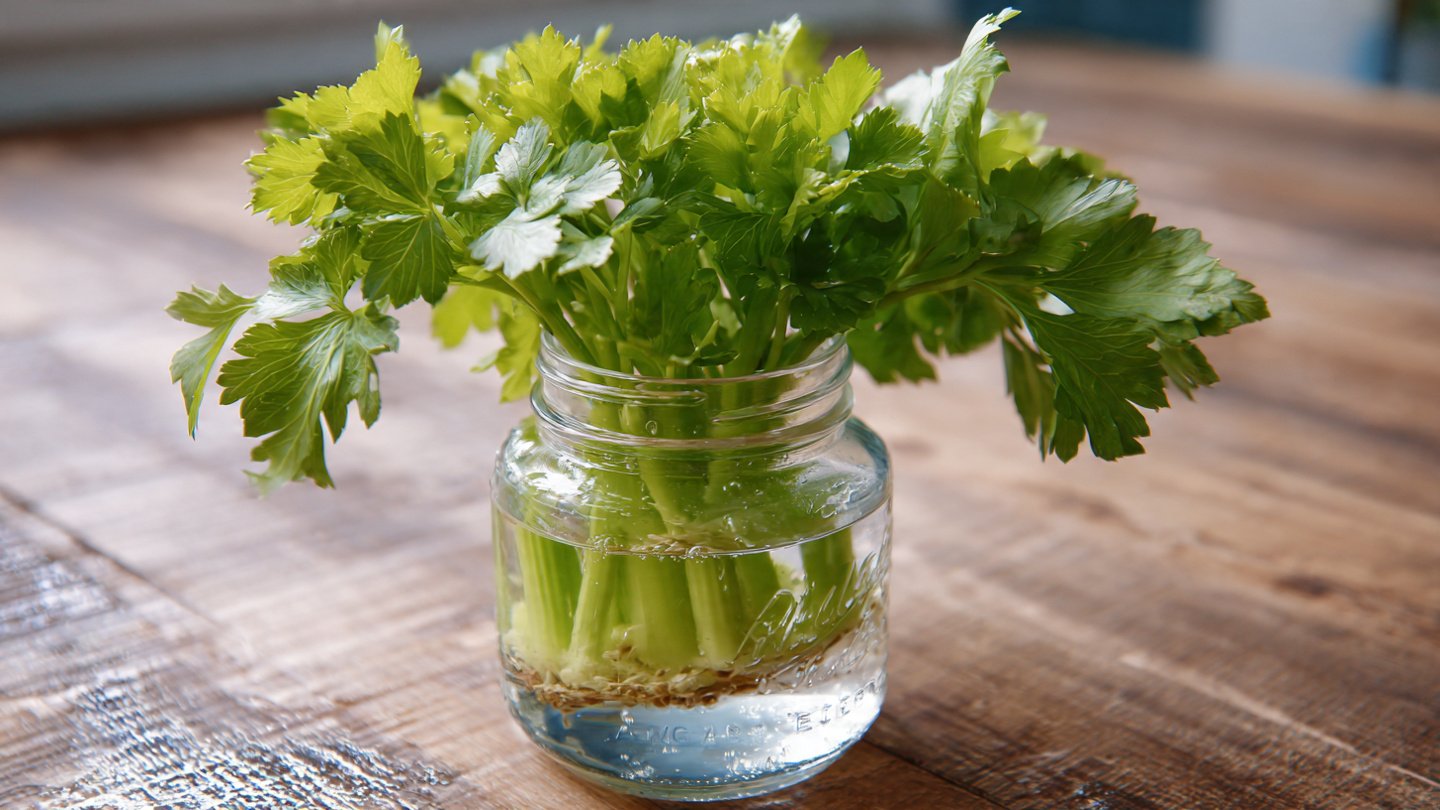
Celery is a crisp, refreshing vegetable that adds flavor, crunch, and nutrition to countless dishes. From soups and salads to smoothies and stir-fries, it’s a kitchen staple in many homes. But what if you could grow celery right on your windowsill—without soil, gardening tools, or much effort at all? Surprisingly, you can. Growing celery in water is one of the easiest kitchen gardening hacks, perfect for beginners, apartment dwellers, and anyone who wants fresh greens year-round.
This article walks you through everything you need to know about regrowing celery in water, explains how it works, and shows how to keep your plants healthy for repeated harvests.
Why Grow Celery in Water?
Growing celery in water is not only simple but also incredibly rewarding. Instead of throwing away the base of store-bought celery, you can reuse it to grow fresh stalks. This method:
- Requires no soil or garden space
- Is budget-friendly and sustainable
- Works well indoors
- Helps reduce kitchen waste
- Is ideal for beginners and children
While water-grown celery won’t produce the massive bunches you see in farms, it does provide fresh, tender stalks and leaves for weeks.
Understanding How Celery Regrows
Celery has a natural ability to regenerate from its base. The bottom portion, often discarded, contains the plant’s growing point. When placed in water, this growing point activates and begins producing new shoots and leaves.
Initially, the celery uses stored energy to regrow. Over time, light, water, and optional nutrients support continued development. This makes celery one of the easiest vegetables to regrow at home.
What You’ll Need
To grow celery in water, gather the following:
- A fresh celery bunch
- A sharp knife
- A shallow bowl, jar, or glass
- Clean water
- A sunny windowsill or balcony
Optional additions include liquid plant nutrients or compost tea if you want stronger growth.
Step-by-Step Guide to Growing Celery in Water
1. Prepare the Celery Base
Cut the celery stalks about 2 inches from the bottom. Use the stalks for cooking and save the base for regrowing.
2. Place in Water
Set the celery base upright in a shallow container. Add enough water to cover the bottom inch. Avoid submerging the entire base.
3. Choose a Bright Spot
Place the container near a sunny window where it receives at least 5–6 hours of light daily. Natural light is essential for healthy leaf growth.
4. Change the Water Regularly
Replace the water every one to two days to prevent odor and bacterial growth. Fresh water keeps the base healthy and oxygenated.
5. Watch the Growth
Within 3–5 days, you’ll see small yellow leaves emerging from the center. Over the next 1–2 weeks, these leaves will turn green and grow taller.
When and How to Harvest
You can begin harvesting celery leaves and small stalks after about 2–3 weeks. Use scissors to cut outer stalks, leaving the center intact so it continues growing.
The leaves are flavorful and excellent for soups, stocks, stir-fries, and garnishing dishes. Even if stalks remain thinner than store-bought celery, the taste is fresh and satisfying.
Tips for Healthier Water-Grown Celery
- Rotate the container every few days so all sides get equal light
- Keep water clean to prevent rot
- Trim yellowing leaves to redirect energy to new growth
- Use filtered water if possible to reduce chemical stress
- Add nutrients sparingly if growth slows
If roots grow long and tangled, that’s a good sign—your celery is thriving.
Can Celery Stay in Water Forever?
Celery can grow in water for several weeks, but long-term growth is limited without nutrients. For continued and stronger stalk development, you can transfer the celery to soil after roots form. However, if your goal is quick regrowth and leaf harvest, water alone works perfectly.
Many home gardeners keep celery in water for 3–4 weeks before starting a new base.
Common Problems and Solutions
Problem: Celery smells bad
Solution: Change the water more frequently and rinse the base gently.
Problem: Leaves are pale or weak
Solution: Increase sunlight exposure or move closer to a brighter window.
Problem: No growth after one week
Solution: Ensure the celery was fresh and the growing point wasn’t damaged during cutting.
Is Water-Grown Celery Nutritious?
Yes. While water-grown celery may be smaller, it still contains vitamins, minerals, and antioxidants—especially in the leaves. It’s a great way to add fresh greens to your meals without buying more produce.
A Sustainable Kitchen Gardening Hack
Regrowing celery in water is more than a fun experiment—it’s a step toward sustainable living. By reusing kitchen scraps, you reduce food waste and gain a better connection to your food. This simple practice encourages mindful consumption and can inspire you to regrow other vegetables like lettuce, green onions, and herbs.
Final Thoughts
Growing celery in water is one of the easiest and most satisfying gardening hacks you can try at home. With just a leftover celery base, water, and sunlight, you can enjoy fresh greens in a matter of weeks. No soil, no mess, and no gardening experience required.
Whether you’re new to gardening or just looking for a simple way to add freshness to your kitchen, this effortless celery-growing method proves that anyone can grow food—right from their windowsill. 🌱