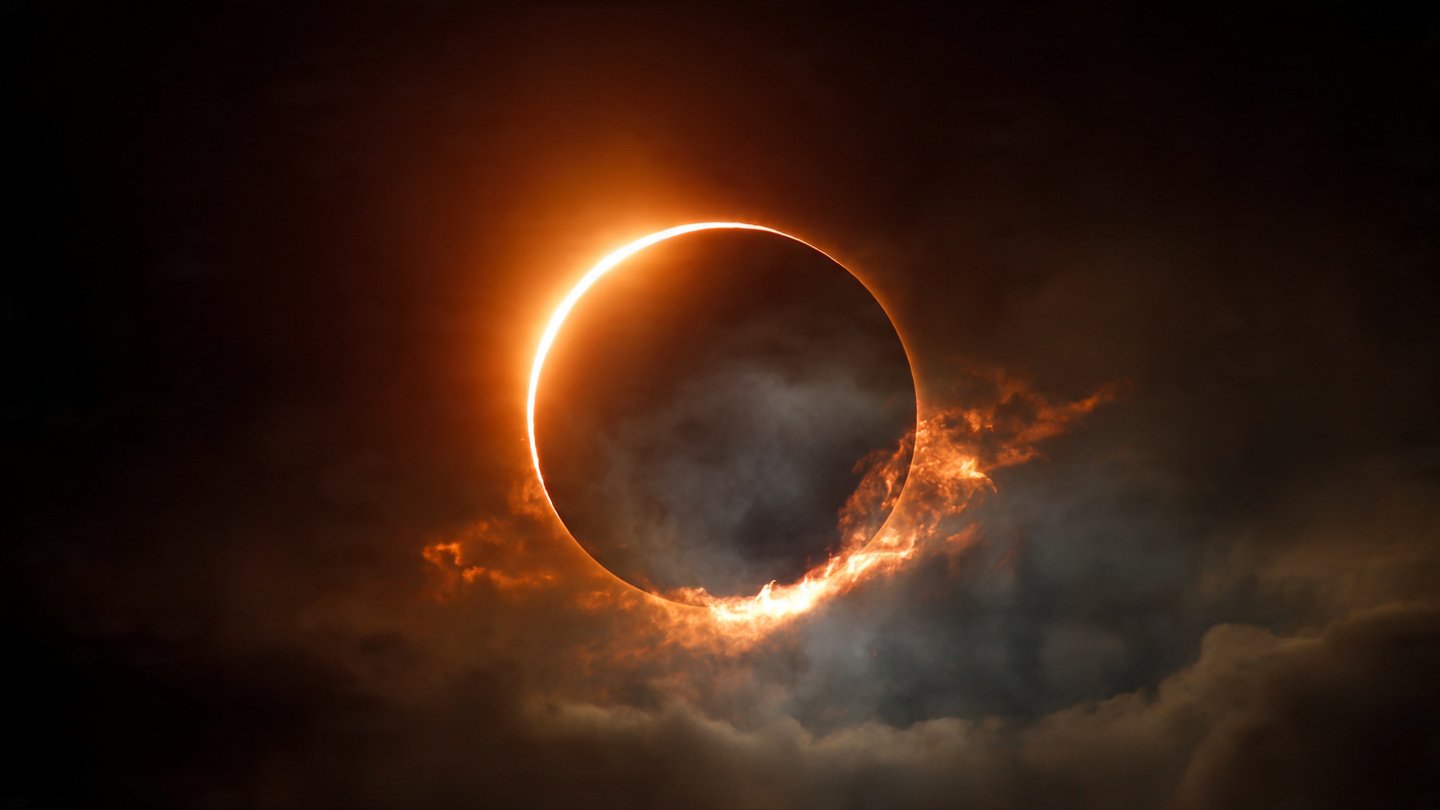
Astronomers have officially confirmed that one of the most extraordinary celestial events of the century — a total solar eclipse with record‑breaking duration — will occur on August 2, 2027. This spectacular phenomenon, often called the “eclipse of the century,” will give millions the chance to witness daytime turn to temporary darkness as the Moon fully blocks the Sun.
Unlike partial eclipses, where only a portion of the Sun is covered, a total solar eclipse occurs when the Moon moves directly between Earth and the Sun, completely obscuring the solar disk for observers in the narrow path of totality. During this period, the sky darkens momentarily and the Sun’s corona — its outer atmosphere — becomes visible, creating one of the most awe‑inspiring sights in astronomy.
Why This Eclipse Is Special
This August 2, 2027 eclipse is noteworthy for several reasons:
- It is the longest total solar eclipse of the 21st century that will be visible from accessible land.
- Totality — the time when the Sun is completely covered — will last up to approximately 6 minutes and 23 seconds at peak locations.
- Such a duration of totality is rare; eclipses with more than six minutes of darkness are infrequent and deeply cherished by astronomers and skywatchers.
The only eclipses with longer totality occur rarely over oceans or distant regions and may not be easily viewable from land.
When and How It Happens
The eclipse will take place on Monday, August 2, 2027, when the Moon’s orbit brings it directly between Earth and the Sun at just the right distance to fully block sunlight. This alignment puts the Moon’s shadow on Earth, creating a narrow path where totality will be visible.
Total solar eclipses unfold in phases:
- Partial Eclipse Begins — The Moon begins to cover the Sun’s disk; observers outside the path of totality see a partial eclipse.
- Totality — For observers within the path, the Sun is completely blocked, and the sky darkens as if it were twilight.
- Partial Eclipse Ends — The Moon moves past the Sun, and daylight returns.
During totality, the Sun’s corona — normally invisible because of the bright solar surface — becomes visible, shining in ethereal loops and streamers. Eclipse scientists often use this opportunity to study the corona, which is invaluable for understanding solar wind and space weather.
Where the Eclipse Will Be Visible
Unlike lunar eclipses, which can be seen from roughly half the world, total solar eclipses have a much narrower path of visibility. For the 2027 eclipse, this path of totality will cut across portions of three continents, offering ideal viewing spots to millions of people.
The regions that will experience totality include:
- North Africa — including parts of Morocco, Algeria, Tunisia, Libya, and Egypt
- Southern Europe — including Spain and its territories
- The Middle East — including Saudi Arabia, Yemen, and Sudan
- The path begins over the Atlantic Ocean and sweeps inland, crossing these lands as it progresses.
According to visibility projections, around 89 million people live within the zone that will experience totality, making this eclipse not just scientifically significant but also accessible to many observers across populated areas.
Outside this narrow path, viewers in surrounding regions — including much of Europe, northern Africa, and the Middle East — will still see a partial solar eclipse, where part of the Sun is covered by the Moon.
Why Astronomers Are So Excited
Solar eclipses provide rare scientific opportunities. When the Sun is fully obscured, instruments can observe the corona without the overwhelming brightness of the solar surface. Studying the corona helps scientists understand:
- Solar winds and magnetic fields
- Space weather events that can impact Earth
- The structure and dynamics of the Sun’s outer atmosphere
Though total solar eclipses offer only minutes of total darkness, they deliver insights that ripple through astrophysics and space science. Additionally, they help astronomers refine orbital models and test predictions about Earth‑Moon‑Sun geometry.
Planning to See the Eclipse
People worldwide are already making plans to travel to locations within the path of totality. Some regions along the eclipse track are historic destinations or feature ancient ruins, enhancing the experience as observers combine travel with skywatching.
If you plan to witness the eclipse:
- Prepare protective eyewear — Solar eclipse glasses are essential for safely viewing the Sun before and after totality.
- Check local timing — Totality will occur at different local times along the path.
- Consider weather forecasts — A clear sky greatly improves eclipse visibility.
- Use maps and guides — NASA and eclipse planning websites typically provide detailed maps with precise timings and path contours.
Eclipses Are Part of a Larger Pattern
This event is part of a broader sequence of eclipse activity in the 2020s. Total and annular (ring‑shaped) solar eclipses are clustered over several years, offering multiple viewing opportunities across the globe. For instance, there was a significant annular solar eclipse in 2026, visible primarily over remote regions in the Southern Hemisphere.
Total eclipses like the 2027 event occur at periodic intervals as part of larger eclipse cycles driven by the orbits of the Moon and Earth.
Summary: What You Need to Know
- Date: August 2, 2027.
- Type: Total solar eclipse — Moon fully blocks the Sun.
- Duration: Up to ~6 minutes 23 seconds of totality in peak areas — a record for this century on accessible land.
- Where visible: Totality across parts of North Africa, southern Europe, and the Middle East.
- Scientific significance: A rare chance to study the Sun’s corona and witness a dramatic daytime eclipse.
This celestial spectacle is already one of the most anticipated astronomical events of the decade, offering both scientific value and unforgettable beauty.