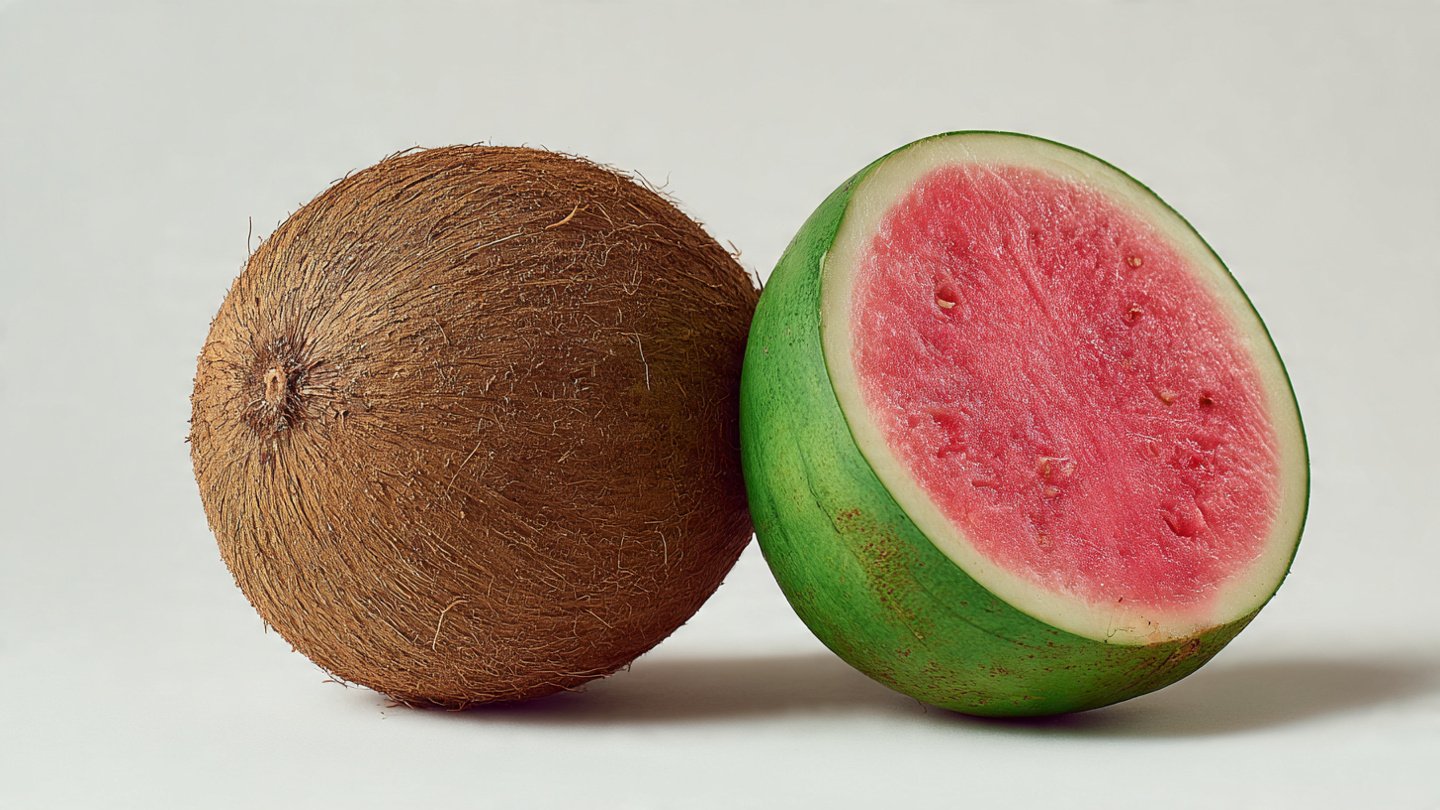
The world of gardening is full of innovation and creativity, with plant enthusiasts constantly experimenting to develop new varieties, enhance yields, or combine unique traits. One of the most intriguing concepts gaining attention among tropical fruit growers is the idea of grafting a coconut and a watermelon—a fusion of two iconic tropical plants. While this may sound unusual or even impossible at first, exploring the science, potential, and challenges of such a hybrid can spark curiosity and inspire creative gardening approaches. This article delves into the concept, possibilities, and considerations of this fascinating tropical experiment.
Understanding the Plants: Coconut and Watermelon
Before exploring hybridization, it is important to understand the unique characteristics of the two plants involved.
Coconut (Cocos nucifera)
Coconuts are tall, perennial palms native to tropical regions. They are known for their fibrous trunk, large fronds, and nutritious fruits containing water and white flesh. Coconut palms are highly resilient, salt-tolerant, and can live for decades, producing fruit for many years. Their growth is slow but steady, and they thrive in sandy, well-drained soils with full sunlight.
Watermelon (Citrullus lanatus)
Watermelon is a fast-growing, sprawling vine from the Cucurbitaceae family. It is cultivated for its large, juicy fruits with sweet red or pink flesh. Unlike coconuts, watermelons complete their growth cycle in a single season and require a rich, well-drained soil with plenty of water and sunlight. Their vines spread widely, and they produce fruit in about 70–90 days after planting.
At first glance, these plants could not seem more different—one is a tall perennial tree, the other a short, sprawling annual vine. Yet, the idea of combining traits through grafting sparks the imagination.
The Concept of Grafting
Grafting is a horticultural technique where tissues from one plant are joined with those of another so that they grow as a single plant. The upper part of the graft (the scion) grows and produces the desired traits, while the lower part (the rootstock) provides the root system.
Grafting is commonly used in fruit trees, roses, and vegetables to:
- Improve disease resistance
- Reduce growth time
- Combine desirable traits from two plants
However, successful grafting generally requires that the plants be closely related. Plants within the same family or genus often have higher chances of successful grafting because their vascular tissues can integrate more easily.
Exploring the Coconut–Watermelon Hybrid
The idea of a coconut–watermelon hybrid is mostly conceptual, as coconuts and watermelons belong to entirely different plant families—coconuts are in the Arecaceae family, while watermelons belong to the Cucurbitaceae family. Traditional grafting between these two plants is biologically impossible due to the differences in their vascular systems, growth habits, and life cycles.
Despite this, innovative horticulturists and hobby gardeners often explore creative grafting experiments or alternative methods inspired by this concept, such as:
- Interplanting or companion planting: Growing watermelon vines around the base of young coconut palms. The coconuts provide partial shade in hot climates, while watermelons benefit from fertile soil.
- Hydroponic or container-based co-cultivation: Both plants can be grown in controlled systems where nutrient delivery is optimized, allowing gardeners to observe potential growth synergies.
- Tissue culture experimentation: Advanced plant biotechnology explores ways to transfer genes between unrelated species. While still experimental and highly technical, such techniques may one day create crops with traits inspired by two unrelated plants.
In essence, the “coconut–watermelon hybrid” idea is more about conceptual exploration and creative gardening than an actual graftable plant.
Potential Benefits of a Conceptual Hybrid
While a true graft may not be possible, imagining a coconut–watermelon hybrid can inspire gardeners to pursue:
- Faster fruit yields: By using innovative techniques like intercropping or grafting compatible plants, gardeners may speed up fruit production in the same space.
- Space optimization: Watermelon vines can utilize the shaded areas around coconut palms, maximizing vertical and horizontal garden space.
- Enhanced aesthetics: Combining tall coconut palms with low-lying, fruit-bearing watermelon vines creates a visually appealing tropical garden layout.
- Experimental learning: Attempting creative combinations teaches gardeners about plant physiology, nutrient needs, and ecological interactions.
Challenges and Limitations
There are significant hurdles to making a coconut–watermelon hybrid a reality:
- Genetic incompatibility: Their completely different plant families make grafting impossible using traditional methods.
- Growth habit mismatch: Coconut palms grow tall and slowly, while watermelon vines spread quickly and have a short life cycle.
- Nutrient competition: If planted too closely, watermelons may compete with young coconut palms for water and nutrients.
- Maintenance complexity: Coordinating watering, fertilization, and pest control for two very different plants requires careful planning.
Recognizing these challenges helps gardeners adjust expectations and focus on practical approaches, such as companion planting, rather than forcing an impossible hybrid.
Creative Alternatives Inspired by the Concept
Even if direct grafting is impossible, there are fun and productive ways to experiment with the concept:
- Intercropping in tropical gardens: Plant watermelons around coconut palms. Young palms provide shade and support, while the vines benefit from rich soil.
- Using watermelon containers near coconut trees: Place watermelon containers nearby to create a “paired growth” effect, allowing gardeners to harvest both crops in proximity.
- Exploring tissue culture in laboratories: Advanced plant biotechnology allows researchers to study gene transfer and hybrid traits in controlled environments. While not for home gardeners, it is an exciting area of tropical crop innovation.
- Themed gardening: Design a tropical-themed garden that visually merges the aesthetics of coconut palms and sprawling watermelon vines, enhancing both edible and ornamental value.
These creative alternatives demonstrate how conceptual ideas can translate into practical gardening practices without requiring impossible scientific feats.
Final Thoughts
The coconut–watermelon hybrid is a fascinating concept that sparks curiosity and imagination in tropical gardening. While traditional grafting between these two plants is impossible due to biological limitations, exploring alternative approaches—such as intercropping, companion planting, and innovative container gardening—can bring some of the concept to life.
For gardeners, this idea emphasizes creativity, experimentation, and learning. By observing how different plants interact, adapting techniques to their growth habits, and applying innovative methods, tropical gardeners can maximize space, enhance yields, and create visually stunning gardens.
Even if you cannot grow a true coconut–watermelon hybrid, the journey of exploring possibilities, experimenting responsibly, and creating synergistic planting setups is both educational and rewarding. Tropical gardening thrives on creativity, and ideas like this inspire a new generation of gardeners to think beyond conventional limits.