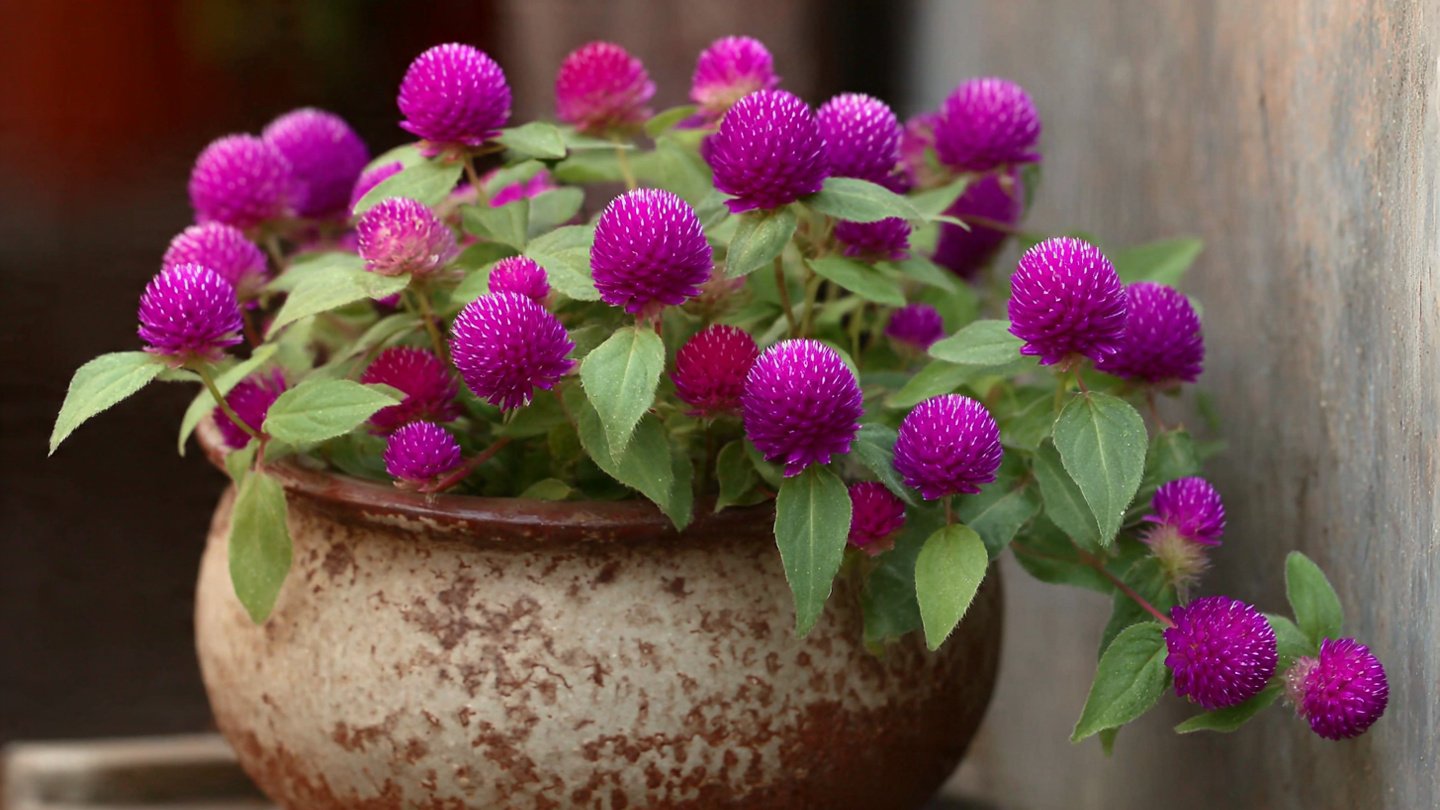
Globe amaranth (Gomphrena globosa) is a striking, low-maintenance flowering plant prized for its vibrant, long-lasting blooms. Its clover-like, globe-shaped flowers come in shades of purple, pink, red, and white, making it a popular choice for pots, garden beds, and floral arrangements. Globe amaranth is also drought-tolerant, heat-resistant, and attracts pollinators, making it perfect for urban gardeners, balcony growers, and container gardening enthusiasts.
Growing globe amaranth in pots is an ideal way to enjoy its colorful, enduring blooms, even if you lack a garden. This guide will walk you through every step to cultivate healthy, thriving plants in containers for maximum flowering success.
Understanding Globe Amaranth
Globe amaranth is an annual flowering plant native to Central and South America. It prefers warm climates and full sun, thriving even in hot, dry conditions. Known for its compact growth and long-lasting flowers, globe amaranth is easy to care for and highly adaptable, making it suitable for both beginner and experienced gardeners.
Key Characteristics:
- Height: 12–24 inches, depending on the variety
- Flower colors: Purple, pink, red, and white
- Blooming season: Summer to fall
- Growth habit: Compact, bushy, upright
Potted globe amaranth not only beautifies spaces but also provides cut flowers that retain color for weeks when dried.
Step 1: Choosing the Right Pot
The first step in successful container gardening is selecting a suitable pot:
Guidelines for Pot Selection:
- Size: Minimum 8–12 inches in diameter and depth for single plants; larger pots can accommodate multiple plants
- Material: Plastic, ceramic, or terracotta; plastic retains moisture longer, terracotta dries faster
- Drainage: Ensure the pot has drainage holes to prevent waterlogging, which can harm roots
A well-chosen pot provides ample space for root growth and ensures proper drainage, essential for thriving plants.
Step 2: Preparing the Potting Medium
Globe amaranth prefers well-draining, nutrient-rich soil. A good potting mix encourages root development, supports healthy foliage, and enhances flower production.
Recommended Potting Mix:
- 50% high-quality potting soil
- 30% compost or well-rotted organic matter
- 20% perlite or sand for drainage
Optional: Add a slow-release balanced fertilizer to provide nutrients over time. Avoid heavy, water-retentive soils, which can lead to root rot.
Step 3: Selecting Seeds or Seedlings
You can grow globe amaranth from seeds or seedlings, depending on availability and preference.
Growing from Seeds:
- Sow seeds indoors 4–6 weeks before the last frost or directly in pots after the risk of frost has passed
- Sow seeds on the soil surface and press lightly; do not cover heavily as they need light to germinate
- Keep soil moist until germination, which usually takes 7–14 days
Using Seedlings:
- Purchase healthy seedlings from a nursery for faster results
- Transplant carefully to avoid damaging roots
Starting with the right seeds or seedlings ensures strong, healthy plants that bloom abundantly.
Step 4: Planting in Pots
Once the seeds have germinated or seedlings are ready, it’s time to plant in the pot.
Planting Instructions:
- Fill the pot with prepared soil mix
- Plant seedlings 6–8 inches apart to allow air circulation and bushy growth
- Water immediately after planting to help roots establish
- Place the pot in a location with full sun (6–8 hours per day)
Proper spacing and sunlight exposure are crucial for healthy, thriving globe amaranth.
Step 5: Watering Guidelines
Watering is key to growing globe amaranth successfully in pots. Although drought-tolerant, consistent moisture during establishment supports strong growth.
Watering Tips:
- Water when the top inch of soil feels dry
- Avoid overwatering, which can cause root rot
- Water at the base of the plant rather than overhead to prevent fungal issues
Mulching the soil surface can help retain moisture, regulate temperature, and reduce watering frequency.
Step 6: Fertilization
Proper fertilization encourages lush foliage and abundant blooms.
Fertilization Tips:
- Use a balanced liquid fertilizer every 2–3 weeks during the growing season
- Alternatively, apply slow-release fertilizer at planting time for continuous nutrients
- Avoid excessive nitrogen, which can promote leafy growth at the expense of flowers
With regular feeding, globe amaranth plants remain compact, bushy, and bloom profusely.
Step 7: Pruning and Deadheading
Pruning and deadheading are effective ways to encourage continuous flowering and bushier growth.
Techniques:
- Remove faded or dead flowers to stimulate new blooms
- Pinch back stems slightly to encourage branching
- Trim weak or leggy stems to maintain a compact shape
Regular maintenance ensures plants stay dense and produce vibrant flowers throughout the season.
Step 8: Controlling Pests and Diseases
While globe amaranth is relatively resistant to pests and diseases, occasional issues can occur:
Common Pests: Aphids, spider mites, and whiteflies
Common Diseases: Powdery mildew or leaf spots in humid conditions
Preventive Measures:
- Ensure good air circulation around plants
- Avoid overhead watering
- Use neem oil or insecticidal soap for minor infestations
Healthy plants with minimal pest interference produce more flowers with less effort.
Step 9: Supporting Growth in Containers
Some globe amaranth varieties may grow taller and need support in pots:
Support Techniques:
- Use small stakes or bamboo sticks for taller varieties
- Plant multiple stems together for natural support
- Regularly rotate pots to ensure even sunlight exposure
Providing support helps flowers remain upright, improving aesthetic appeal and preventing damage.
Step 10: Maximizing Blooms
To achieve vibrant, continuous blooms:
- Provide at least 6–8 hours of sunlight daily
- Keep soil moderately moist, not soggy
- Regularly deadhead and trim plants
- Fertilize lightly every 2–3 weeks
With consistent care, globe amaranth blooms from early summer until frost, offering long-lasting color in your garden or balcony.
Step 11: Additional Tips for Container Success
- Choose pots that allow adequate airflow and root development
- Avoid overcrowding multiple plants in small pots
- Use organic mulch to maintain soil moisture and suppress weeds
- Consider companion planting with herbs or small flowering plants to attract pollinators
These small adjustments ensure maximum flower production and a thriving container garden.
Conclusion
Growing globe amaranth in pots is an excellent way to enjoy vibrant, long-lasting flowers, even in small spaces. By choosing the right containers, using nutrient-rich soil, selecting healthy seeds or seedlings, watering consistently, fertilizing appropriately, and performing minimal pruning and pest management, you can create a thriving, bushy display of colorful blooms.
Potted globe amaranth not only brightens your home or balcony but also attracts pollinators, supports biodiversity, and provides flowers that can be enjoyed fresh or dried for decoration. With these simple techniques, anyone—even beginners—can achieve a successful and flourishing globe amaranth garden in containers.