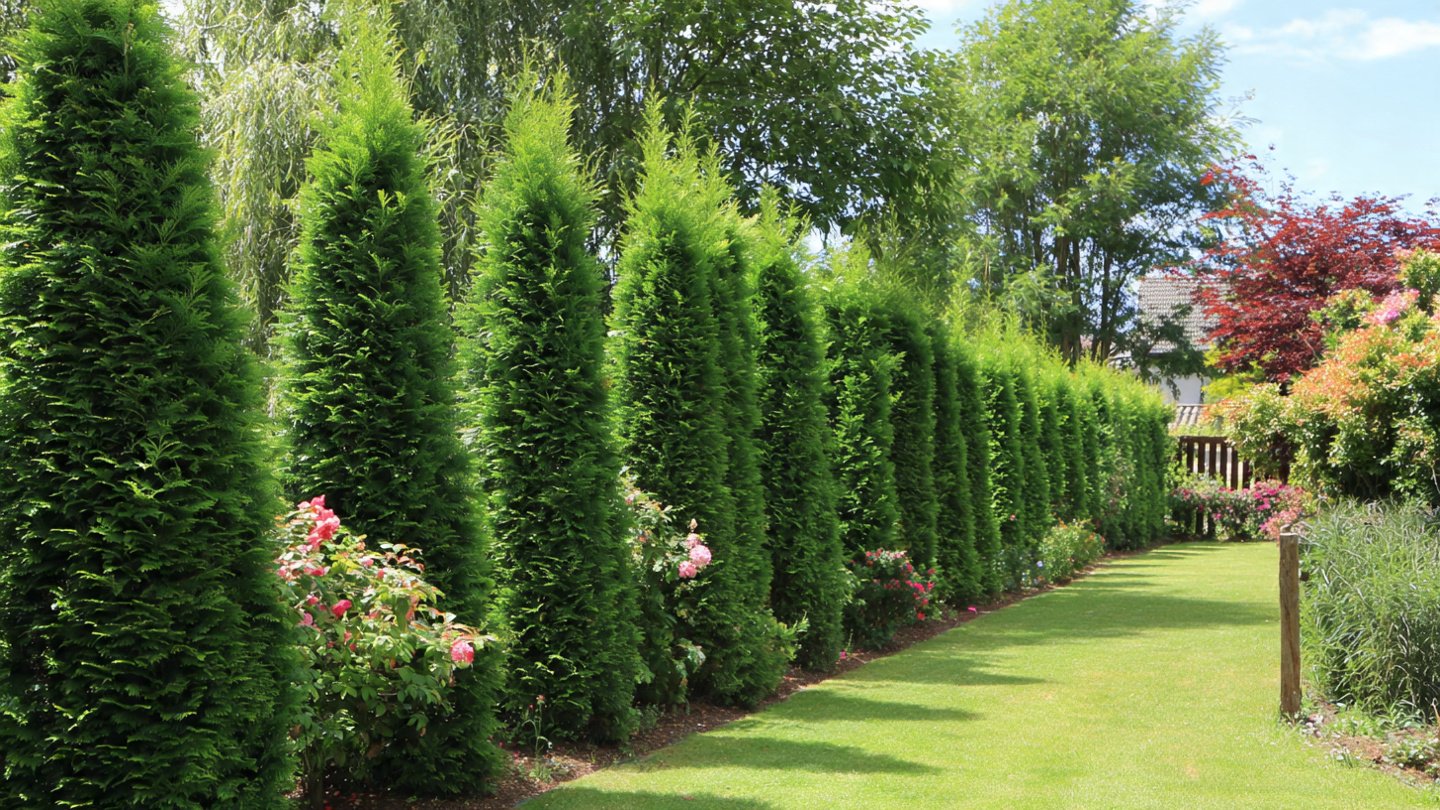
Thuja, commonly known as arborvitae or “tree of life,” is one of the most popular evergreen trees for creating natural privacy screens. Its dense foliage, tall growth, and adaptability make it ideal for homeowners looking to enhance privacy, reduce noise, and add aesthetic appeal to their gardens. Planting Thuja in rows, also known as hedgerow planting, can transform an ordinary yard into a private, serene oasis.
This comprehensive guide explores optimal techniques for growing Thuja in rows, including site selection, soil preparation, planting methods, care tips, pruning, and maintenance strategies to ensure a lush and effective privacy screen.
Why Choose Thuja for Privacy Hedges?
Thuja trees are highly favored for creating garden privacy screens due to several key qualities:
- Dense Foliage: Thuja’s tightly packed evergreen leaves provide year-round privacy.
- Rapid Growth: Many varieties grow quickly, filling in gaps within a few years.
- Adaptable: Thrives in a variety of soils, climates, and lighting conditions.
- Low Maintenance: Once established, Thuja requires minimal care aside from occasional pruning.
- Aesthetic Appeal: The rich green color and uniform growth of Thuja create elegant, natural barriers.
By planting Thuja in rows, gardeners can create a functional yet beautiful privacy solution for their outdoor space.
Step 1: Selecting the Right Thuja Variety
Choosing the correct Thuja variety is essential for an effective and attractive hedge:
- Thuja occidentalis (American Arborvitae): Hardy and dense, ideal for cold climates.
- Thuja plicata (Western Red Cedar): Tall-growing and fast-growing, perfect for large screens.
- Dwarf Varieties: Suitable for smaller spaces or decorative hedges.
- Columnar Varieties: Narrow growth habit ensures a straight, uniform hedge, ideal for limited space.
Consider your garden size, climate, and desired height when selecting the variety. Fast-growing varieties are preferred for quick privacy, while columnar types provide neat, compact barriers.
Step 2: Choosing the Ideal Planting Site
Proper site selection ensures strong growth and longevity:
- Sunlight: Thuja grows best in full sun to partial shade, with at least 4–6 hours of sunlight daily.
- Wind Protection: Avoid planting in extremely windy areas, as strong winds can damage young trees.
- Soil Conditions: Well-drained soil is essential; Thuja dislikes waterlogged roots. Sandy loam enriched with organic matter is ideal.
- Space Considerations: Provide adequate space for root expansion and air circulation.
Selecting a favorable site sets the foundation for a dense, healthy hedge that will thrive for decades.
Step 3: Preparing the Soil
Soil preparation is critical to ensure Thuja establishes quickly and grows vigorously:
- Soil Testing: Check soil pH (ideal 6.0–7.5) and nutrient content before planting.
- Loosening Soil: Dig and loosen soil to a depth of 12–18 inches to promote root penetration.
- Amending Soil: Incorporate compost or well-rotted manure to improve fertility and water retention.
- Drainage Improvement: If soil is clay-heavy, mix in sand or perlite to enhance drainage.
Healthy, well-drained soil is the key to reducing transplant stress and encouraging rapid growth.
Step 4: Planting Thuja in Rows
Correct planting ensures a uniform, dense privacy screen:
- Spacing: Plant trees 2–3 feet apart for smaller varieties and 3–5 feet apart for larger types. Closer spacing accelerates hedge density.
- Digging Holes: Each hole should be twice as wide as the root ball and deep enough to accommodate roots without bending.
- Positioning: Place the Thuja upright, ensuring the top of the root ball is level with surrounding soil.
- Backfilling: Fill the hole with enriched soil, gently pressing around roots to remove air pockets.
- Watering: Water deeply after planting to settle soil and reduce transplant shock.
Planting with precision guarantees that your Thuja row grows evenly and forms a solid privacy barrier.
Step 5: Watering Practices
Thuja requires consistent moisture, especially during the first few years:
- Young Plants: Water 2–3 times per week, depending on rainfall, to keep soil moist but not soggy.
- Established Hedges: Reduce frequency but maintain consistent moisture during dry periods.
- Mulching: Apply 2–3 inches of organic mulch around the base to conserve water, regulate soil temperature, and suppress weeds.
Balanced watering ensures robust root development and lush foliage for a dense hedge.
Step 6: Fertilization
Proper nutrition is essential for growth and longevity:
- Initial Fertilization: Apply a slow-release, balanced fertilizer during planting to stimulate early growth.
- Annual Fertilization: Use a nitrogen-rich fertilizer in early spring to promote dense foliage.
- Organic Alternatives: Compost, worm castings, or seaweed extract provide natural nutrition.
- Avoid Overfertilization: Excess nitrogen may cause rapid but weak growth prone to disease.
Well-fed Thuja develops vibrant green foliage and a strong, uniform structure.
Step 7: Pruning for Density and Shape
Pruning enhances density, shape, and overall aesthetic appeal:
- First Year: Limit pruning to remove damaged or diseased branches.
- Annual Pruning: Trim sides and tops to maintain straight lines and uniform height.
- Encourage Lateral Growth: Pinch new tips to stimulate branching and increase hedge density.
- Avoid Heavy Cuts on Old Wood: Thuja does not regenerate well from bare wood, so avoid cutting too deeply into older branches.
Regular pruning ensures a well-formed hedge that provides maximum privacy.
Step 8: Pest and Disease Management
Thuja is relatively hardy but can occasionally encounter pests and diseases:
- Bagworms: Inspect trees regularly and remove any webbed caterpillars.
- Spider Mites: Spray with water or neem oil if infestations occur.
- Fungal Diseases: Ensure proper spacing and airflow; remove infected branches promptly.
- Winter Protection: In areas with heavy snow or ice, protect young plants with burlap to prevent branch damage.
Proactive monitoring keeps your Thuja hedge healthy, dense, and visually appealing.
Step 9: Enhancing Privacy and Aesthetic Appeal
Thuja hedges can be designed to maximize privacy and enhance garden aesthetics:
- Layered Planting: Plant rows staggered to create a thicker screen.
- Height Management: Train hedges to desired height gradually, ensuring stability.
- Companion Plants: Add flowering shrubs, groundcovers, or climbers along the base for visual variety.
- Pathway Screening: Use Thuja rows to line walkways or block unsightly views.
Strategic planting enhances both functionality and beauty in your landscape.
Step 10: Maintenance Tips
Consistency in care ensures your Thuja hedge remains healthy and dense:
- Regular Watering: Especially during dry summer months.
- Mulching: Conserves moisture and reduces weeds.
- Monitoring Growth: Maintain uniform spacing and prune regularly.
- Fertilizing: Feed annually to maintain lush green foliage.
- Inspecting for Pests: Early detection prevents major infestations.
Ongoing maintenance keeps your Thuja hedge strong, vibrant, and effective as a privacy screen.
Advantages of Row-Planted Thuja Hedges
- Year-Round Privacy: Dense evergreen foliage blocks views and enhances seclusion.
- Noise Reduction: Thick hedges reduce street or neighbor noise.
- Windbreak: Protects your garden and outdoor living areas from strong winds.
- Low Maintenance: Minimal care required once established.
- Aesthetic Appeal: Elegant, uniform hedges enhance the overall landscape design.
Thuja hedges provide a multifunctional, visually appealing solution for garden privacy and protection.
Conclusion
Growing Thuja in rows is one of the most effective ways to create a dense, lush privacy screen in your garden. By carefully selecting the right variety, preparing the soil, planting correctly, providing consistent water and nutrition, and pruning regularly, you can enjoy a tall, elegant hedge that blocks unwanted views, reduces noise, and enhances your outdoor space.
This ultimate guide equips gardeners with the knowledge to establish and maintain a thriving Thuja hedge, combining beauty, functionality, and long-lasting privacy. With patience and proper care, your garden can be transformed into a serene, secluded sanctuary, framed by the timeless elegance of Thuja trees.