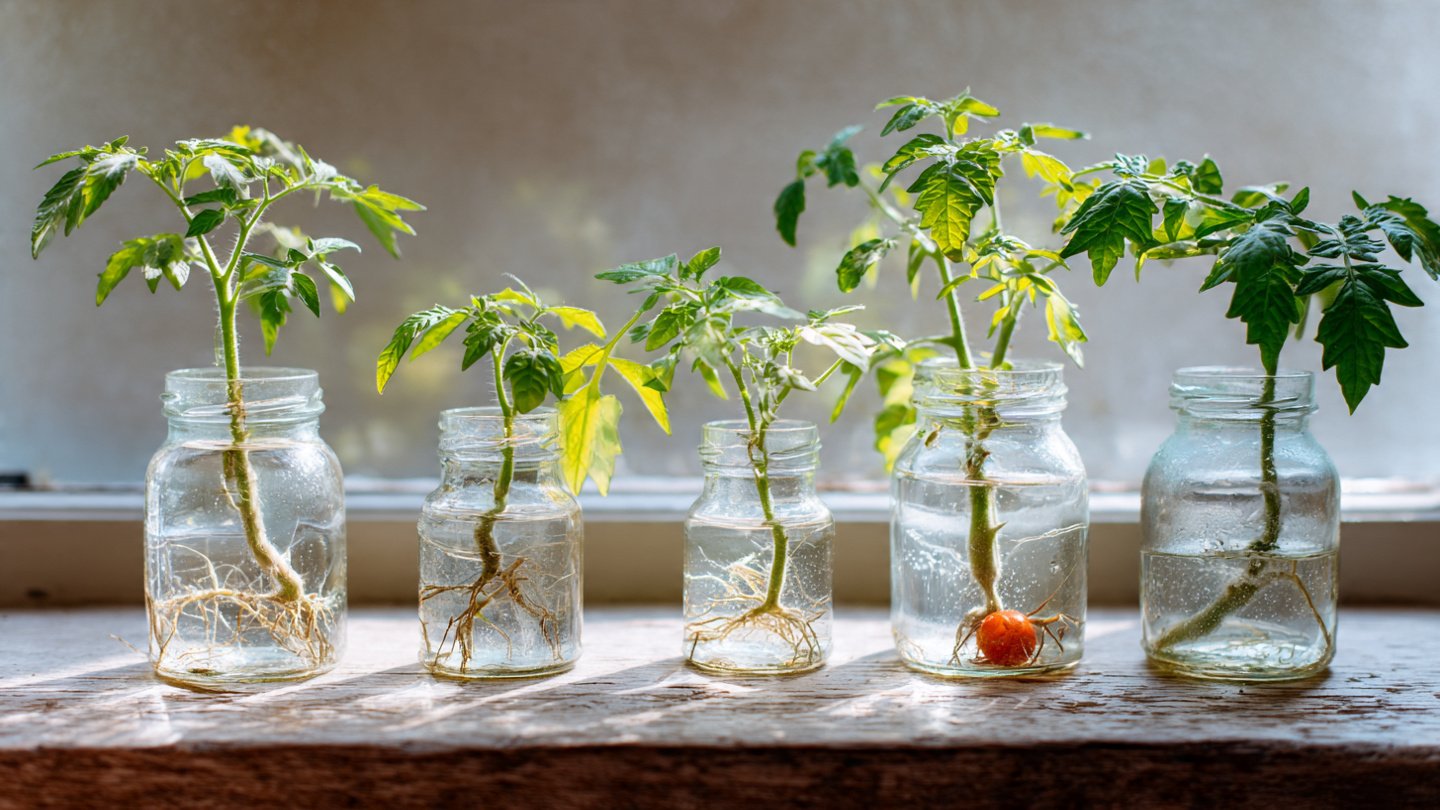
Tomatoes are among the most rewarding and versatile vegetables you can grow at home. Fresh, juicy, and flavorful, homegrown tomatoes elevate everything from salads to sauces. While planting seeds is the traditional method, propagating tomatoes from cuttings is a fast, reliable, and cost-effective way to multiply your plants. One of the easiest and most successful techniques is rooting tomato cuttings in water.
Whether you’re a beginner gardener or an experienced grower, this method ensures you can quickly produce healthy, vigorous tomato plants ready for your garden or containers. This guide will walk you step by step through the process, from selecting cuttings to transplanting rooted plants for maximum yield.
Why Root Tomato Cuttings in Water
Rooting tomato cuttings in water is a popular method for several reasons:
- Rapid root development: Water promotes faster root initiation compared to some soil-based methods.
- High success rate: Tomato cuttings root reliably when placed in water under proper conditions.
- Cost-effective: No special equipment or soil is needed to start cuttings.
- Preserves plant traits: Ensures the new plants are true to the parent tomato variety.
- Year-round propagation: Indoor rooting allows you to prepare plants even before the growing season.
This simple technique allows gardeners to expand their tomato plants without relying on seeds or buying new seedlings.
Selecting the Right Parent Plant
The first step to successful propagation is choosing healthy, robust tomato plants as the source of your cuttings:
- Look for disease-free, vigorous plants with strong stems.
- Select non-flowering stems or those with small flowers, as cuttings with mature fruits root less successfully.
- Avoid weak, yellowing, or pest-infested branches.
Strong parent plants ensure cuttings are healthy and more likely to develop roots quickly.
Preparing Tomato Cuttings
Once you have selected a parent plant, follow these steps to prepare your cuttings:
- Select a healthy stem: Choose a side shoot or main stem that is 4–6 inches long.
- Make a clean cut: Use sterilized scissors or pruning shears to cut just below a node (the point where leaves emerge).
- Remove lower leaves: Strip the leaves from the bottom half of the cutting to prevent rot and focus energy on root development.
- Optional rooting hormone: Dip the cut end in a rooting hormone to speed up root growth.
Well-prepared cuttings have higher chances of rooting successfully and growing into strong plants.
Choosing the Right Container
A suitable container is essential for rooting tomato cuttings in water:
- Use a clear glass, jar, or small vase so you can monitor root development.
- Clean the container thoroughly to prevent bacterial or fungal growth.
- Ensure the container is tall enough to fully submerge the cutting’s lower nodes in water.
Transparent containers also help you see root progress, making it easier to know when the cutting is ready for planting.
Rooting Tomato Cuttings in Water
Follow these steps for rooting tomato cuttings successfully:
- Fill the container with clean, room-temperature water.
- Place the cutting into the water, ensuring the lower nodes are submerged but leaves are above water.
- Position the container in a bright, indirect light area—avoid direct sunlight, which can overheat the water and stress the cutting.
- Change the water every 2–3 days to prevent stagnation and provide oxygen.
- Roots typically start forming within 7–10 days, with strong roots developing in 2–3 weeks.
During this time, maintain a consistent environment to encourage vigorous root growth.
Caring for Rooted Cuttings
Once roots start to develop, continue to provide proper care to ensure strong plant establishment:
- Keep the water level consistent so roots remain submerged.
- Ensure the cutting is in a well-lit area but avoid scorching sunlight.
- If roots appear weak or brown, trim damaged portions and continue nurturing.
- Maintain a stable indoor temperature (20–25°C / 68–77°F) to optimize growth.
Healthy root systems are crucial for successful transplantation and rapid establishment in soil.
Transplanting Tomato Cuttings
Once your cuttings have developed strong, white, healthy roots (usually 2–3 inches long), it’s time to transfer them to soil:
- Prepare pots or garden beds with nutrient-rich, well-draining soil.
- Dig a hole deep enough to accommodate the root system.
- Gently place the rooted cutting into the soil, ensuring roots are fully covered.
- Firm the soil gently around the base of the plant.
- Water thoroughly to settle the soil and support the young plant.
Transplanted cuttings should now receive regular care to grow into productive tomato plants.
Sunlight and Temperature Requirements
Tomatoes thrive in warm, sunny conditions:
- Provide 6–8 hours of direct sunlight daily.
- Maintain temperatures around 20–30°C (68–86°F) for optimal growth.
- For container plants on balconies or indoors, rotate pots to ensure even sunlight exposure.
Adequate light and warmth promote strong stems, healthy leaves, and abundant flowering.
Watering and Fertilization
Proper watering and fertilization help young tomato plants establish and produce fruit:
- Water deeply 2–3 times per week, keeping soil consistently moist but not waterlogged.
- Mulch around the base of the plant to retain moisture and regulate soil temperature.
- Apply a balanced, water-soluble fertilizer every 2–3 weeks to support vegetative growth and flowering.
- Avoid over-fertilizing, which can result in excessive foliage at the expense of flowers.
Consistent care ensures vigorous plants that will yield an abundant tomato harvest.
Supporting and Pruning
Tomato plants grown from cuttings require structural support:
- Use stakes, cages, or trellises to keep stems upright and prevent breakage.
- Pinch back lateral shoots to encourage bushier growth and more fruit production.
- Remove yellowing or diseased leaves to prevent infection and improve airflow.
Proper support and pruning encourage healthy growth and high yields throughout the season.
Advantages of Propagating Tomatoes from Cuttings
- Rapid multiplication of plants without buying seeds.
- Preserves the characteristics of favorite tomato varieties.
- Faster fruiting compared to starting from seeds.
- Ideal for balcony gardens, small plots, and container gardening.
- Allows year-round propagation and continuous harvesting.
This method is practical, efficient, and rewarding for gardeners of all experience levels.
Troubleshooting Common Problems
- Cuttings not rooting: Ensure stems are healthy, water is fresh, and light conditions are adequate.
- Root rot: Change water frequently and avoid submerging leaves.
- Weak growth after transplant: Harden off plants gradually by exposing them to outdoor conditions before planting in the garden.
- Pest issues: Monitor for aphids or whiteflies and treat with organic solutions if necessary.
Preventive care and attention ensure a high success rate for water-propagated tomato cuttings.
Final Thoughts
Rooting tomato cuttings in water is a simple, effective, and rewarding way to expand your tomato garden. With minimal equipment, a little patience, and proper care, you can produce healthy, vigorous plants that will yield fresh, juicy tomatoes season after season.
Whether you are growing in a garden bed, balcony containers, or indoor spaces, this method guarantees a thriving tomato garden without the hassle of starting from seeds. By following these simple steps, your water-rooted tomato cuttings will develop into strong, productive plants, filling your garden with vibrant foliage and delicious fruits.