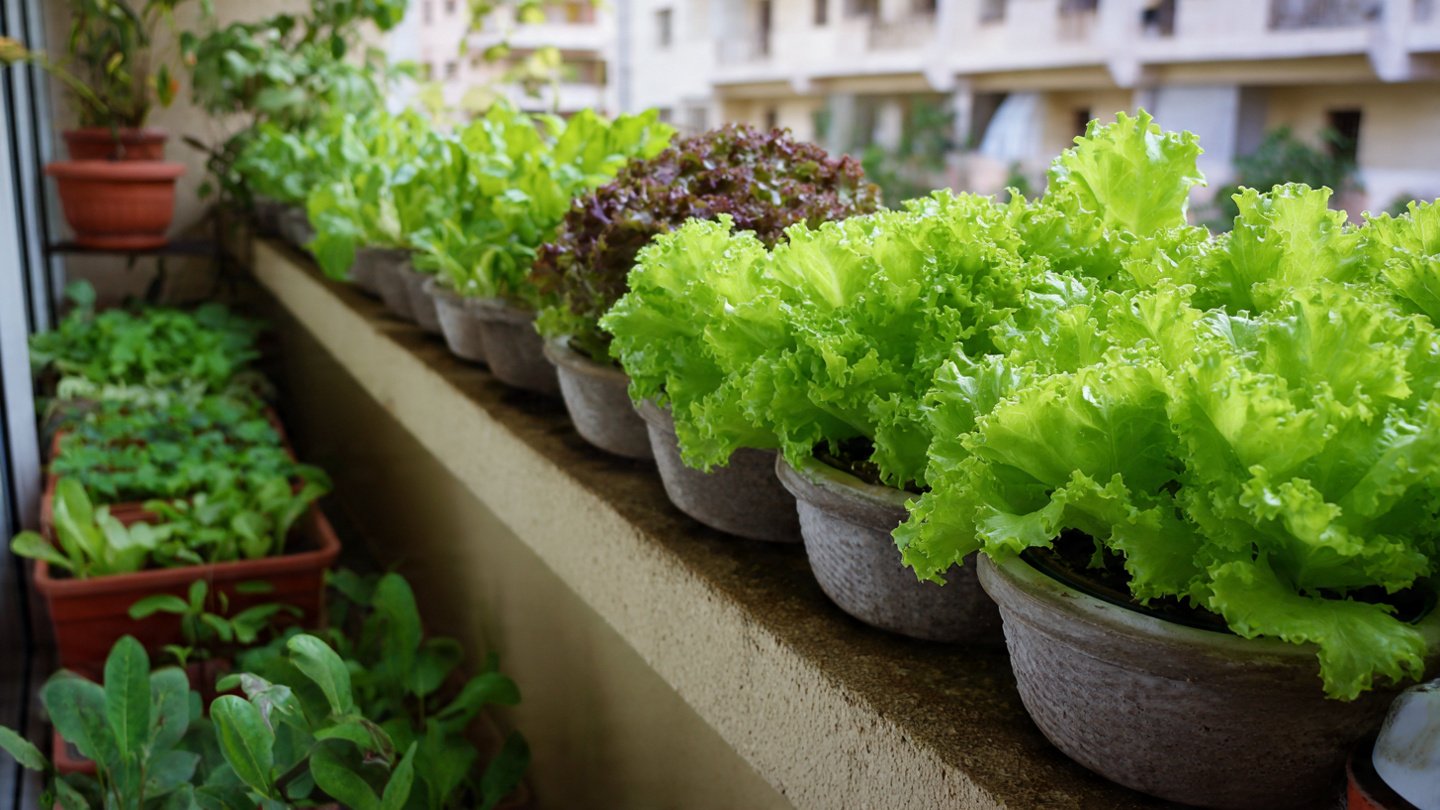
Growing your own salad greens on a balcony is one of the simplest and most rewarding ways to enjoy fresh, nutritious vegetables at home. Even in limited spaces, you can cultivate a variety of leafy greens such as lettuce, spinach, arugula, and kale, creating a sustainable source of fresh produce. A balcony salad garden not only provides healthy food but also adds greenery, improves air quality, and brings a touch of nature to urban living.
This complete guide will walk you through everything you need to know to establish a thriving balcony salad garden—from selecting containers and soil to planting, watering, fertilizing, and harvesting for continuous growth.
Why Grow a Balcony Salad Garden?
Balcony gardening has several advantages, especially when it comes to growing salad greens:
- Freshness: Homegrown greens retain more flavor and nutrients compared to store-bought options.
- Convenience: Access fresh ingredients directly from your balcony, reducing the need for store trips.
- Space Efficiency: Balcony gardens are perfect for urban dwellers with limited space.
- Sustainability: Reduce packaging waste and carbon footprint associated with commercially grown produce.
- Health Benefits: Growing your own salad greens encourages healthy eating habits and provides a source of vitamins and minerals.
Creating a balcony garden combines practicality, nutrition, and beauty, transforming small outdoor spaces into productive green areas.
Step 1: Choosing the Right Containers
Selecting the proper containers is essential for a thriving balcony salad garden:
- Size: Opt for containers at least 6–12 inches deep for leafy greens. Shallow trays can work for microgreens or smaller lettuces.
- Material: Plastic, ceramic, or wooden containers are ideal. Plastic is lightweight, while ceramic offers durability.
- Drainage: Ensure containers have drainage holes to prevent waterlogging and root rot.
- Mobility: Lightweight containers or pots on wheels make it easier to adjust position for sunlight or bring plants indoors during extreme weather.
Using the right containers allows roots to grow freely and keeps your balcony garden manageable.
Step 2: Selecting Soil
Healthy soil is key to growing lush, flavorful greens:
- Potting Mix: Use a high-quality, well-draining potting mix enriched with organic matter. Avoid garden soil alone, as it may compact in containers.
- Organic Additives: Incorporate compost or vermicompost to provide nutrients.
- pH Level: Aim for slightly acidic to neutral soil (pH 6.0–7.0) for optimal growth.
- Aeration: Mix in perlite or coco coir to improve drainage and prevent soil compaction.
Good soil ensures your salad greens receive the nutrients, moisture, and oxygen they need for healthy growth.
Step 3: Choosing Salad Green Varieties
Balcony gardens are ideal for leafy greens that thrive in containers:
- Lettuce: Varieties like Romaine, Butterhead, or Looseleaf grow quickly and can be harvested continuously.
- Spinach: Fast-growing and nutrient-dense, ideal for fresh salads or smoothies.
- Arugula: Adds a peppery flavor to salads; grows well in partial sunlight.
- Kale: Hardy and nutritious, perfect for harvest over several months.
- Microgreens: Quick-growing sprouts like radish, mustard, or broccoli provide concentrated nutrients in just 10–14 days.
Select a mix of fast-growing and slow-growing greens for a continuous harvest throughout the season.
Step 4: Planting Your Greens
Planting techniques vary slightly depending on the type of green:
- Direct Sowing: Most lettuce, spinach, and arugula varieties can be sown directly into containers. Sow seeds thinly and cover lightly with soil.
- Seedlings: For faster results, transplant young seedlings into pots. This is ideal for kale or larger leaf varieties.
- Spacing: Follow the recommended spacing on seed packets to allow proper growth and airflow. Overcrowding can reduce yield and increase disease risk.
Planting correctly sets the foundation for healthy, productive plants.
Step 5: Providing Adequate Sunlight
Salad greens need sunlight to thrive, though the amount varies by type:
- Lettuce and Spinach: Prefer 4–6 hours of sunlight daily; can tolerate partial shade.
- Kale and Arugula: Require 6–8 hours of sunlight for optimal growth.
- Balcony Placement: South- or west-facing balconies provide the most consistent sunlight.
- Supplemental Light: For balconies with limited light, consider using small LED grow lights for 4–6 hours a day.
Adequate sunlight ensures vigorous growth, vibrant color, and sweet, tender leaves.
Step 6: Watering Your Balcony Salad Garden
Consistent moisture is critical for container-grown greens:
- Frequency: Water lightly daily or when the top inch of soil feels dry. Container soil dries faster than garden beds.
- Method: Water at the base to avoid wetting foliage, which reduces fungal risk.
- Drainage: Ensure containers drain excess water freely. Avoid waterlogging, which can harm roots and reduce growth.
- Mulching: Use straw or coco coir on the soil surface to retain moisture and reduce evaporation.
Balanced watering keeps greens tender, flavorful, and disease-free.
Step 7: Fertilizing for Continuous Growth
Container plants rely on nutrients in the soil, so regular feeding is necessary:
- Liquid Fertilizers: Use balanced liquid fertilizers every 2–3 weeks for fast uptake.
- Organic Options: Compost tea or fish emulsion enrich soil naturally.
- Slow-Release Fertilizers: Incorporate slow-release granular fertilizers at planting for sustained nutrition.
- Caution: Avoid over-fertilizing, which can make leaves taste bitter or reduce plant health.
Consistent fertilization ensures vibrant, nutrient-rich leaves ready for salads.
Step 8: Pruning and Harvesting
Regular harvesting encourages new growth and extends the life of your balcony garden:
- Cut-and-Come-Again: Harvest outer leaves while leaving the center intact; this allows plants to keep producing.
- Frequency: Pick leaves 1–2 times per week for a continuous supply.
- Microgreens: Harvest at 10–14 days when leaves are tender.
- Maintenance: Remove yellow or damaged leaves to prevent disease and promote airflow.
Frequent harvesting encourages bushier growth and a constant supply of fresh greens.
Step 9: Pest and Disease Management
Even balcony gardens can attract pests or develop diseases:
- Common Pests: Aphids, whiteflies, and snails. Remove manually or use insecticidal soap or neem oil.
- Fungal Diseases: Powdery mildew can develop in humid conditions; ensure proper spacing and airflow.
- Prevention: Inspect plants regularly, avoid overhead watering, and remove debris from containers.
Maintaining healthy plants reduces stress, improves yield, and keeps your greens safe to eat.
Step 10: Maximizing Your Balcony Garden
- Vertical Gardening: Use shelves, hanging baskets, or trellises to grow more greens in limited space.
- Succession Planting: Sow seeds every 2–3 weeks to ensure continuous harvest.
- Companion Planting: Grow herbs like basil, cilantro, or chives alongside salad greens for natural pest control and flavor enhancement.
- Rotation: Change container locations seasonally to optimize sunlight exposure and prevent soil depletion.
These strategies allow you to make the most of your balcony and enjoy an ongoing supply of fresh greens.
Benefits of a Balcony Salad Garden
- Health and Nutrition: Access to fresh, organic greens rich in vitamins and minerals.
- Sustainability: Reduces reliance on store-bought produce and packaging waste.
- Convenience: Easy access to salad ingredients without leaving your home.
- Aesthetic Appeal: Adds greenery and vibrancy to urban living spaces.
- Stress Relief: Gardening provides a relaxing, rewarding hobby even in small spaces.
A balcony salad garden offers both practical and aesthetic benefits, making it a perfect addition to any home.
Final Thoughts
Creating a thriving balcony salad garden is easier than many people imagine. By selecting appropriate containers, nutritious soil, and fast-growing leafy greens, providing adequate sunlight and water, and maintaining proper care, you can enjoy fresh, healthy, and flavorful greens year-round.
Even with limited space, a balcony can become a productive oasis of nutrition and greenery. Whether for salads, smoothies, or garnishes, your indoor or balcony salad garden offers convenience, sustainability, and wellness benefits.
With regular care, harvesting, and strategic planting, your balcony garden can continuously provide vibrant, delicious greens while transforming your urban space into a refreshing, productive retreat.