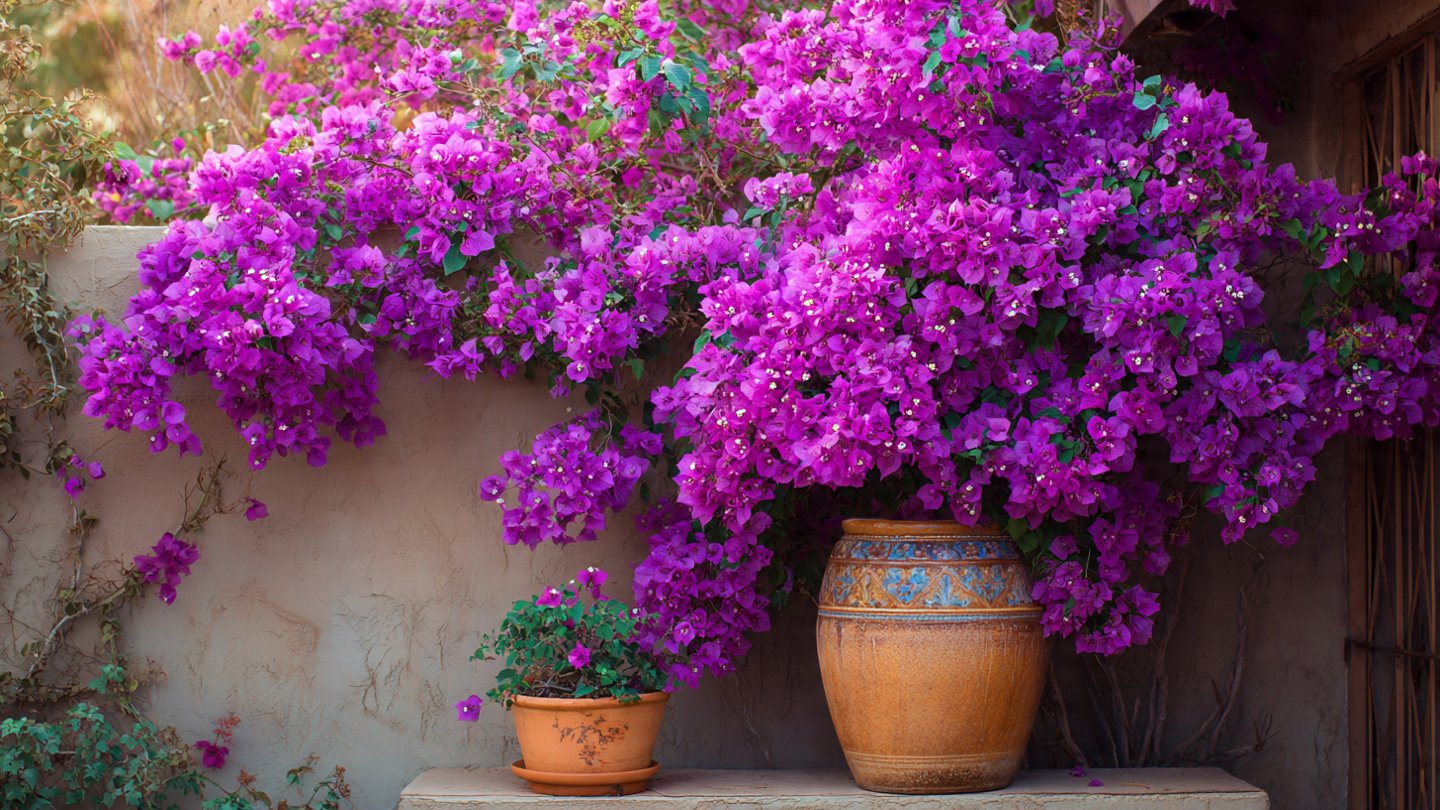
Bougainvillea is one of the most spectacular flowering plants for outdoor decoration, admired for its cascading branches and vibrant paper-like bracts in shades of pink, purple, red, orange, and white. While commonly grown as climbers or shrubs, bougainvillea can also thrive beautifully in hanging pots when given the right care. Growing bougainvillea this way adds vertical color to balconies, patios, terraces, and garden corners. This detailed guide explains how to successfully grow bougainvillea in hanging pots and keep them blooming profusely.
Why Choose Bougainvillea for Hanging Pots?
Bougainvillea is naturally well-suited for hanging containers because of its trailing growth habit and drought tolerance. When allowed to spill over the edges of pots, its long stems create a dramatic waterfall of color. Compared to many flowering plants, bougainvillea requires relatively low maintenance and rewards gardeners with long-lasting blooms.
Key advantages include:
- Long flowering season
- Excellent heat and sun tolerance
- Minimal water requirements once established
- Strong visual impact in small spaces
Selecting the Right Bougainvillea Variety
Not all bougainvillea varieties perform equally well in hanging pots. Compact or semi-dwarf varieties are better suited than aggressive climbers.
What to Look For
- Naturally bushy or trailing growth habit
- Moderate growth rate
- Strong flowering ability in containers
Choosing a plant already adapted to container growth ensures easier maintenance and better flowering results.
Choosing the Ideal Hanging Pot
The right container plays a crucial role in healthy growth and flowering.
Pot Size and Material
- Choose a pot at least 10–14 inches deep
- Ensure multiple drainage holes
- Lightweight materials like plastic or fiber pots are safer for hanging
Bougainvillea prefers slightly root-bound conditions, so avoid oversized pots that encourage excessive leaf growth instead of flowers.
Best Soil Mix for Hanging Pots
Bougainvillea is highly sensitive to poor drainage. A well-draining soil mix is essential to prevent root rot.
Ideal Soil Composition
- Garden soil or potting mix
- Coarse sand or perlite
- Compost or well-rotted organic matter
The soil should drain quickly while retaining enough moisture for healthy roots.
Sunlight Requirements for Abundant Blooms
Sunlight is the most important factor for successful bougainvillea flowering.
Light Needs
- Minimum 5–6 hours of direct sunlight daily
- Full sun exposure produces brighter colors and more blooms
Insufficient sunlight results in lush green growth with very few flowers, so choose the sunniest possible location for your hanging pot.
Watering Techniques That Encourage Flowering
Overwatering is the most common reason bougainvillea fails to bloom.
Proper Watering Method
- Water thoroughly, then allow soil to dry slightly
- Avoid daily watering unless weather is extremely hot
- Reduce watering during cooler or rainy periods
Mild water stress encourages flowering, while constantly wet soil leads to leaf growth and poor blooms.
Feeding Bougainvillea the Right Way
Bougainvillea does not need heavy feeding, but balanced nutrition supports healthy flowering.
Fertilizer Tips
- Use a low-nitrogen, high-phosphorus fertilizer
- Feed once every 3–4 weeks during the growing season
- Avoid excessive nitrogen, which reduces flowering
Organic alternatives such as compost tea or diluted liquid manure can also be used sparingly.
Pruning and Training for Hanging Displays
Pruning is essential for shaping bougainvillea and encouraging more blooms.
When and How to Prune
- Light pruning after each flowering cycle
- Remove weak, overcrowded, or excessively long shoots
- Pinch tips to encourage branching
Training stems to trail naturally over the pot edges creates a fuller and more attractive hanging display.
Supporting the Plant in Hanging Pots
Although bougainvillea can trail, young plants may need initial support.
Support Tips
- Use small stakes or rings inside the pot
- Gently tie stems with soft ties
- Remove support gradually as stems strengthen
Proper support prevents breakage and helps guide growth in the desired direction.
Pest and Disease Management
Bougainvillea is generally pest-resistant but may occasionally attract insects.
Common Issues
- Aphids and mealybugs
- Leaf drop due to stress or overwatering
Prevention
- Inspect plants regularly
- Spray neem oil if pests appear
- Maintain good air circulation
Healthy plants grown in correct conditions rarely face serious pest problems.
Seasonal Care for Hanging Bougainvillea
Summer Care
- Increase watering slightly during extreme heat
- Protect from scorching afternoon sun if temperatures are excessive
Rainy Season Care
- Ensure excellent drainage
- Move hanging pots under shelter during prolonged rain
Winter Care
- Reduce watering
- Protect from cold winds and frost
Adjusting care according to season ensures consistent growth and flowering.
Common Mistakes to Avoid
- Using oversized pots
- Overwatering
- Growing in partial or full shade
- Skipping pruning
Avoiding these mistakes greatly improves flowering performance.
Long-Term Care and Repotting
Bougainvillea prefers being slightly root-bound, so repot only every 2–3 years or when roots outgrow the container. Choose only one pot size larger when repotting to avoid disturbing flowering cycles.
Final Thoughts
Growing bougainvillea in hanging pots is an excellent way to add vibrant color and vertical interest to outdoor spaces. With plenty of sunlight, well-draining soil, controlled watering, and regular pruning, bougainvillea thrives and blooms generously in containers. This stunning plant rewards minimal care with maximum visual impact, making it an ideal choice for balconies, patios, and gardens of all sizes. By following these proven techniques, you can enjoy a cascading display of colorful blooms that transforms your outdoor area into a lively, welcoming space.