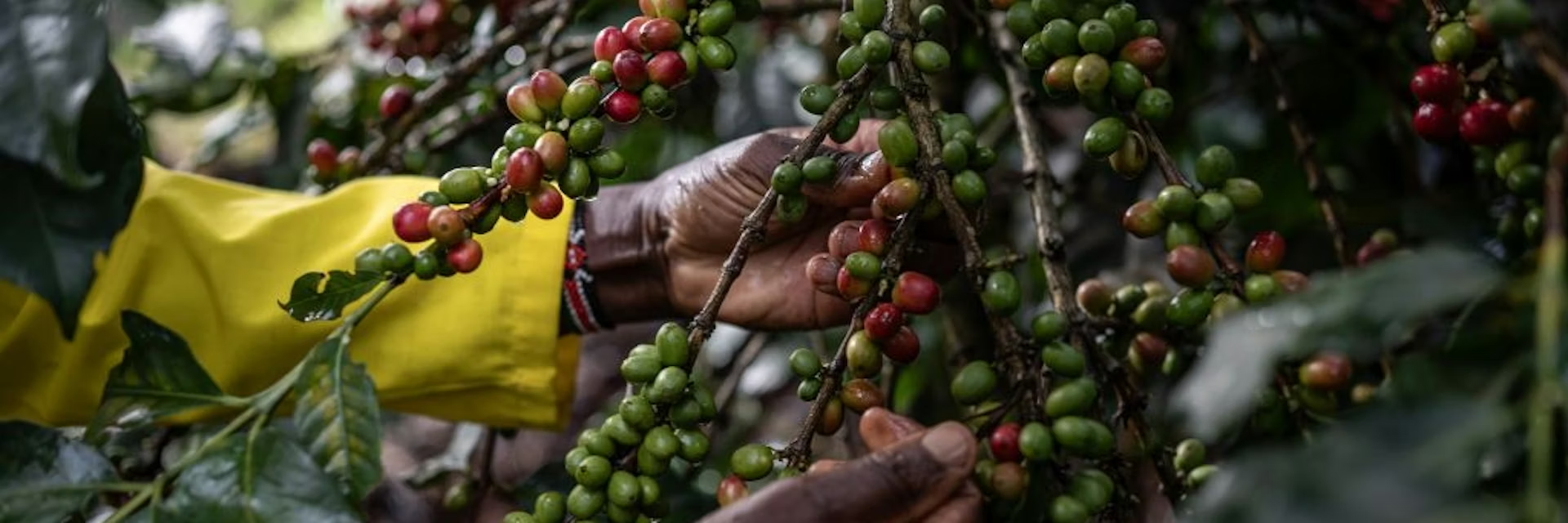
Coffee is more than just a morning ritual. It supports the livelihoods of millions of farmers and fuels a global industry worth billions. But in recent years, coffee crops across major producing regions have been under severe threat from a destructive fungal disease. What makes this pathogen particularly alarming is its ability to “jump” between species through gene exchange. To fight back, scientists are now using advanced genomic tools to reconstruct and “resurrect” the fungus’s genetic history — uncovering clues about how it evolved and how it spreads.
This cutting-edge research could be the key to saving coffee crops worldwide.
The Growing Threat to Coffee Crops
Coffee plants, especially Arabica varieties, are highly sensitive to fungal diseases. One of the most notorious culprits is coffee leaf rust, a disease caused by a fungal pathogen that attacks leaves, reduces photosynthesis, and drastically lowers yields.
Over the past decade, outbreaks have intensified due to:
- Rising global temperatures
- Increased humidity
- Expanding monoculture farming
- Global trade and plant movement
Entire plantations have suffered severe losses, pushing small-scale farmers into financial hardship.
What Makes This Fungus So Dangerous?
Unlike many plant pathogens that evolve slowly, this fungus appears to have acquired genes from related species — a phenomenon known as horizontal gene transfer. In simple terms, it can borrow useful genetic traits from other fungi, allowing it to adapt quickly to new environments and hosts.
These species-jumping genes may:
- Increase virulence
- Improve resistance to plant defenses
- Expand host range
- Help survive in changing climates
This genetic flexibility makes the pathogen more difficult to control.
Understanding Species-Jumping Genes
Traditionally, we think of genes being passed down from parent to offspring. But fungi can exchange genetic material in more complex ways. Through processes like hybridization and horizontal gene transfer, they can integrate foreign DNA into their genomes.
This gives them new tools for survival.
In agricultural systems where many plant species grow close together, fungi have more opportunities to interact and exchange genetic material. Over time, this can create new, more aggressive strains.
How Climate Change Is Accelerating the Crisis
Warmer temperatures and unpredictable rainfall patterns create ideal conditions for fungal growth. Coffee thrives in specific climate ranges, but as those ranges shift, stress on the plants increases.
Stressed plants are more vulnerable to infection.
Additionally, expanding coffee cultivation into new areas may expose crops to previously isolated fungal species, increasing opportunities for gene exchange.
‘Resurrecting’ Genomes: What Does It Mean?
To understand how this fungus evolved, researchers are turning to genomic archaeology. By analyzing preserved fungal samples from past outbreaks, scientists can reconstruct older versions of the pathogen’s genome.
Using advanced DNA sequencing technology, they:
- Extract genetic material from archived specimens
- Compare historical and modern genomes
- Identify mutations and gene transfers
- Trace evolutionary patterns
This process is often described as “resurrecting” genomes because it brings ancient genetic information back into scientific analysis.
Why Studying Old Genomes Matters
By comparing past and present strains, researchers can identify:
- When species-jumping events occurred
- Which genes are responsible for increased virulence
- How fast the pathogen evolves
- Whether certain environmental changes triggered adaptation
Understanding this timeline helps scientists predict future risks.
If a particular gene cluster is linked to aggressive outbreaks, breeders can focus on developing resistant coffee varieties targeting that specific weakness.
Impacts on Coffee Farmers
The human cost of fungal outbreaks is significant.
Smallholder farmers are particularly vulnerable because they often lack:
- Access to resistant plant varieties
- Affordable fungicides
- Technical support
- Crop insurance
In some regions, severe outbreaks have reduced production by 30–50%, threatening income stability and food security.
As global demand for coffee continues to grow, supply disruptions can also increase prices and market instability.
Breeding Resistant Coffee Varieties
Genomic research is not just about understanding the pathogen — it’s also about strengthening the plant.
Scientists are using genetic insights to:
- Identify resistance genes in coffee plants
- Crossbreed resilient varieties
- Develop hybrid strains with improved tolerance
- Monitor pathogen evolution in real time
By knowing which fungal genes are most dangerous, breeders can design more targeted resistance strategies.
The Role of Biotechnology
Modern tools such as genome sequencing, CRISPR gene editing, and bioinformatics are transforming plant pathology research.
Potential innovations include:
- Rapid disease detection using DNA markers
- Development of disease-resistant coffee lines
- Improved forecasting models
- Early-warning systems for outbreaks
However, biotechnology solutions must balance innovation with farmer accessibility and environmental sustainability.
Sustainable Farming Practices as Defense
While scientific research progresses, farmers can adopt preventive measures:
- Diversified cropping systems
- Shade-grown coffee cultivation
- Improved airflow between plants
- Proper pruning techniques
- Organic soil management
Biodiverse farms are generally more resilient to disease outbreaks because they reduce the conditions that favor rapid pathogen spread.
Global Collaboration Is Essential
Coffee is grown in over 70 countries. Because fungal pathogens do not respect borders, international cooperation is critical.
Researchers are collaborating across continents to:
- Share genomic data
- Monitor disease migration patterns
- Develop joint breeding programs
- Support small-scale farmers
Open-access databases allow scientists to compare fungal genomes globally, accelerating discoveries.
What This Means for the Future of Coffee
The discovery of species-jumping genes highlights how dynamic and adaptable plant pathogens can be. It also shows that agriculture must evolve alongside these threats.
By reconstructing the fungus’s evolutionary journey, researchers gain powerful insight into:
- How new strains emerge
- Why certain outbreaks become severe
- What vulnerabilities exist
This knowledge can help build a more resilient coffee industry.
Challenges Ahead
Despite technological advances, several challenges remain:
- Rapid mutation rates
- Limited funding in developing regions
- Political and trade barriers
- Climate unpredictability
Fungal pathogens evolve quickly, meaning solutions must be adaptable and forward-thinking.
Hope Through Science
Although the situation is serious, genomic research offers hope. By “resurrecting” the pathogen’s genetic past, scientists are uncovering patterns that were previously invisible.
This research could lead to:
- More durable resistance in coffee plants
- Reduced reliance on chemical fungicides
- Greater understanding of cross-species gene transfer
- Improved crop resilience in a warming world
The fight against fungal disease is not just about saving a beverage — it’s about protecting livelihoods, ecosystems, and global agricultural stability.
Final Thoughts
Coffee crops face a formidable enemy in a fungus equipped with species-jumping genes. Its ability to adapt and evolve has intensified outbreaks across growing regions. But researchers are responding with equally powerful tools, using genomic reconstruction to understand the pathogen’s history and predict its future.
By combining advanced science with sustainable farming practices and global cooperation, the coffee industry can build resilience against this evolving threat. The work being done today to “resurrect” fungal genomes may ultimately safeguard the future of coffee for generations to come.