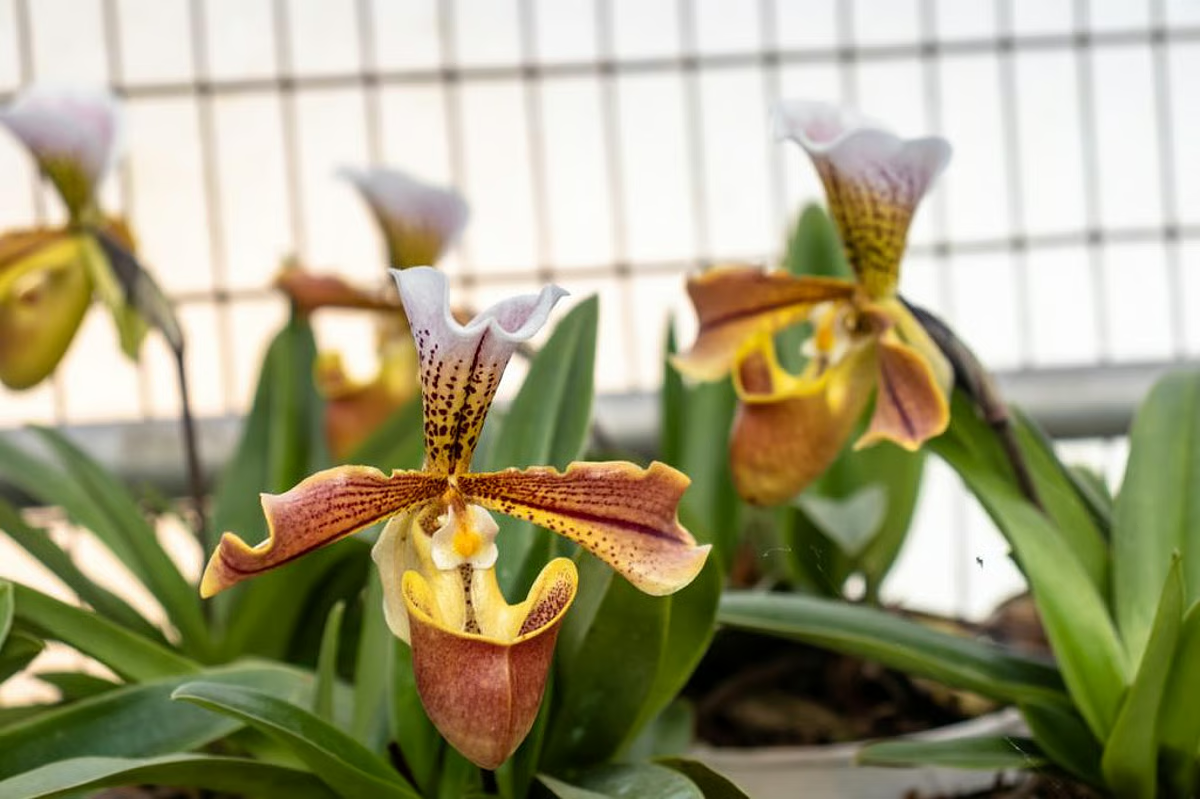
Orchids are among the most mysterious, diverse, and captivating plants on Earth. With their striking colors, unusual shapes, and surprising survival strategies, orchids have fascinated humans for centuries. In Gobar Times, a platform known for making science and nature exciting for young minds, orchids stand out as a perfect example of how extraordinary the natural world can be.
From rainforests and mountains to city homes and school gardens, orchids thrive in places you might never expect. Their story is one of beauty, adaptation, and wonder.
What Makes Orchids So Special?
Orchids belong to one of the largest plant families in the world, with tens of thousands of species found across almost every continent except Antarctica. What makes them truly fascinating is that no two orchids are exactly alike.
Some orchids are tiny and delicate, while others grow large and dramatic blooms. Their flowers can last for weeks, sometimes even months, making them favorites among plant lovers.
But orchids are not just beautiful—they are clever survivors.
Orchids Grow in Surprising Places
Many people think orchids only grow in pots or tropical forests, but that’s far from the truth. Orchids can be found:
- On tree trunks
- Clinging to rocks
- In grasslands
- In mountains
- Even in semi-desert regions
In India, orchids grow naturally in regions like the Western Ghats and the Himalayas, where different climates support different species. Some orchids prefer cool mountain air, while others love warm, humid forests.
Epiphytes: Orchids That Live in the Air
One of the most fascinating orchid traits is that many of them are epiphytes. This means they grow on other plants—usually trees—but they are not parasites.
Instead of taking food from the tree, epiphytic orchids:
- Use trees only for support
- Absorb moisture from rain and air
- Collect nutrients from dust and fallen leaves
This clever adaptation helps orchids reach sunlight high above the forest floor, where competition is less intense.
Orchids and Their Incredible Flowers
Orchid flowers are famous for their unusual shapes. Some look like insects, birds, or even dancing figures. This is not accidental—it’s a survival strategy.
Why Orchid Flowers Look So Unique
Orchids rely on pollinators like bees, butterflies, birds, and moths. Their shapes, colors, and scents are designed to:
- Attract specific pollinators
- Ensure pollen sticks to the right body part
- Increase chances of successful reproduction
Some orchids even release scents that mimic insects or food to trick pollinators into visiting them.
A Special Relationship With Pollinators
Unlike many plants that accept help from any insect, orchids are often very selective. Some orchid species depend on just one type of insect for pollination.
This close relationship means:
- Orchids and pollinators evolve together
- If one disappears, the other is affected
- Orchids become indicators of ecosystem health
This makes orchids important not just for beauty, but also for understanding biodiversity.
Orchids in Indian Culture
Orchids have a special place in Indian tradition and modern horticulture. Certain species are used for:
- Decorative purposes
- Festivals and ceremonies
- Botanical research
India is home to over a thousand orchid species, many of which are found nowhere else in the world. States in the Northeast, especially, are rich in orchid diversity due to their rainfall and forest cover.
Orchids Are Not Easy—but Not Impossible—to Grow
Orchids are often seen as difficult plants, but with basic knowledge, they can thrive at home.
What Orchids Need
- Indirect sunlight
- Good air circulation
- Proper drainage
- Controlled watering
Unlike regular plants, orchids don’t like their roots sitting in water. Many are grown in bark, moss, or coconut husk instead of soil.
Once their needs are met, orchids reward growers with stunning blooms and long-lasting flowers.
Orchids and Science
Orchids play an important role in scientific research. Scientists study orchids to understand:
- Plant evolution
- Pollination biology
- Climate change effects
- Conservation strategies
Because orchids are sensitive to environmental changes, their presence—or absence—can tell scientists a lot about the health of an ecosystem.
Threats to Orchids
Despite their adaptability, orchids face serious threats.
Major Challenges
- Deforestation
- Illegal plant collection
- Climate change
- Habitat destruction
Many wild orchids are endangered because forests are disappearing and plants are removed without permission. Conservation efforts are crucial to protect these natural treasures.
How Conservation Helps Orchids
Conservation programs focus on:
- Protecting natural habitats
- Growing orchids in nurseries
- Educating communities and students
- Enforcing wildlife protection laws
Learning about orchids through platforms like Gobar Times helps young readers understand why protecting plants matters just as much as protecting animals.
Orchids as Symbols
Across the world, orchids symbolize:
- Beauty and elegance
- Strength and resilience
- Love and uniqueness
Their ability to grow in challenging environments teaches an important lesson: survival often depends on adaptation and balance with nature.
Fun Orchid Facts
- Some orchids can live for over 100 years
- Orchid seeds are so small they look like dust
- Vanilla comes from an orchid plant
- Certain orchids bloom only once a year
These facts make orchids not just plants, but living wonders.
Why Orchids Inspire Curiosity
Orchids combine science, art, and mystery. Their colors attract artists, their structures fascinate scientists, and their stories inspire nature lovers of all ages.
By learning about orchids, students and readers develop curiosity about:
- Plant life
- Ecosystems
- Conservation
- The interconnectedness of nature
Final Thoughts
The world of orchids is truly fascinating—full of beauty, intelligence, and surprises. Through platforms like Gobar Times, exploring orchids becomes an exciting journey into nature’s creativity.
Orchids remind us that plants are not silent decorations. They are living, evolving beings with stories to tell. By understanding and protecting them, we take one small but meaningful step toward caring for the planet we all share.