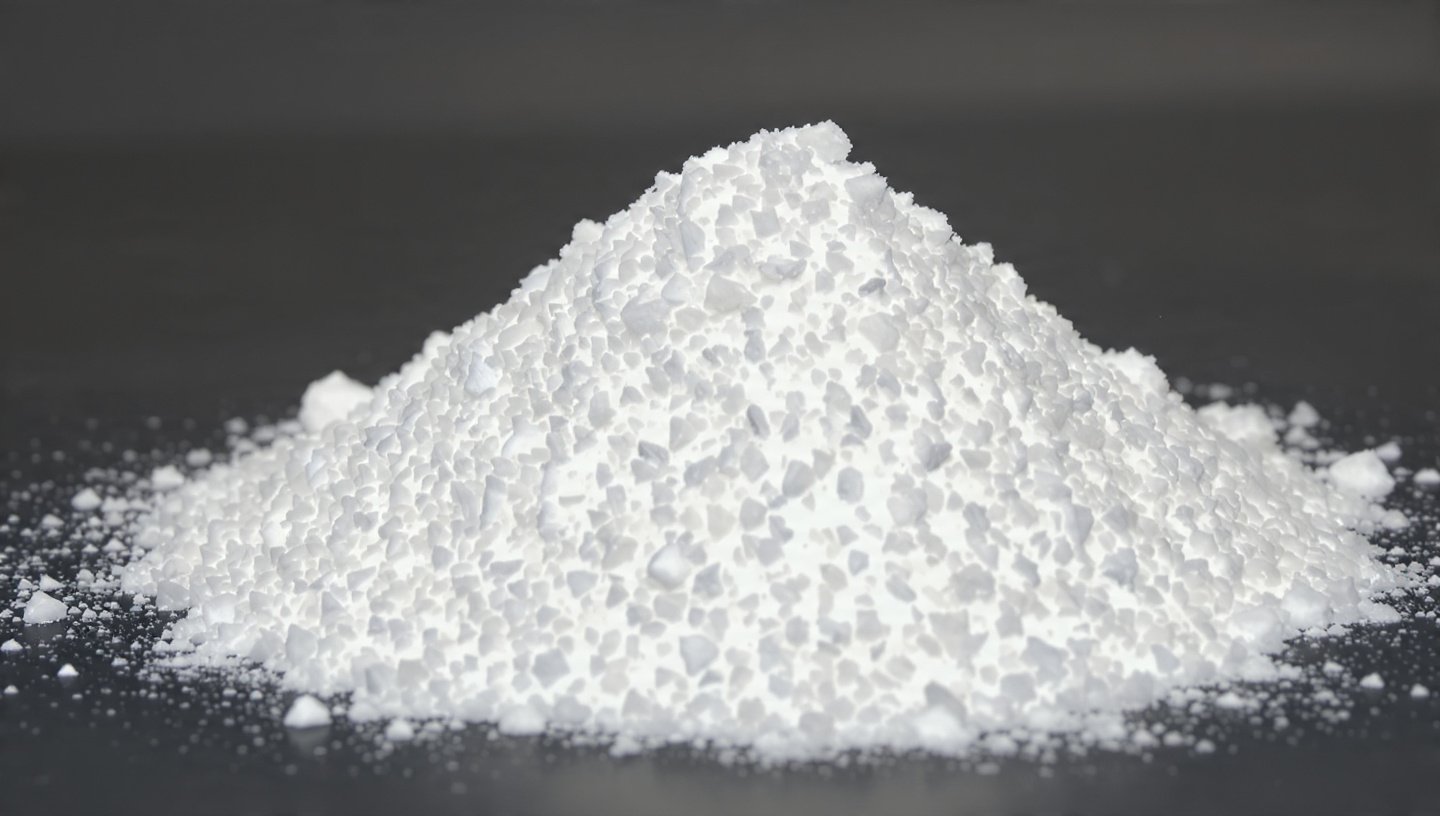
Alum, commonly known as Fitkari in India, is a chemical compound widely used in everyday life, ranging from water purification to skincare and even culinary applications. Despite its widespread use, many people are curious about its chemical name, formula, and underlying properties. Understanding these aspects provides insights into why alum is such a versatile and effective compound.
What is Alum (Fitkari)?
Alum is a type of double salt that belongs to a category of compounds called hydrated double sulfates. The term “alum” can refer to several similar compounds, but in general, it is a potassium aluminum sulfate, often found in its hydrated form. In India, this substance is popularly called Fitkari, and it has been used for centuries in traditional medicine, cosmetics, and food processing.
Alum is most commonly available in crystalline form, appearing as colorless or white crystals that are soluble in water. Its natural occurrence can be traced back to minerals like alunite, which is processed to obtain alum commercially.
Chemical Name of Alum
The most widely recognized form of alum is Potassium Aluminum Sulfate Dodecahydrate, with the chemical name:
Potassium aluminum sulfate dodecahydrate
This name can also be written as:
Potassium aluminum sulfate – KAl(SO₄)₂·12H₂O
Here’s the breakdown of this chemical name:
- Potassium (K): Acts as a cation balancing the negative charges of the sulfate ions.
- Aluminum (Al): Another cation that forms the double salt with potassium and sulfate.
- Sulfate (SO₄²⁻): The anionic component of alum.
- Dodecahydrate (12H₂O): Indicates that each formula unit is associated with twelve water molecules, making it a hydrated compound.
Chemical Formula of Alum (Fitkari)
The chemical formula for the most common form of alum is:
KAl(SO₄)₂·12H₂O
This formula reveals several important points:
- Double Salt Nature: Alum is a double sulfate salt, meaning it contains two different cations (potassium and aluminum) combined with sulfate ions.
- Hydration: The “12H₂O” indicates that the compound includes twelve molecules of water per formula unit, which are integral to its crystalline structure.
- Crystalline Structure: These water molecules play a role in the formation of the characteristic octahedral crystals of alum.
Other types of alum exist as well, such as ammonium alum (NH₄Al(SO₄)₂·12H₂O) or sodium alum (NaAl(SO₄)₂·12H₂O), but potassium alum is the most commonly used variant.
Physical and Chemical Properties of Alum
Understanding the properties of alum explains why it is so versatile:
Physical Properties:
- Appearance: White crystalline solid
- Solubility: Soluble in water; insoluble in alcohol
- Taste: Slightly astringent
- Melting Point: Around 92 °C (decomposes on heating)
- Density: Approximately 1.74 g/cm³
Chemical Properties:
- Astringent Nature: Causes tissues to contract, which is why it is used in skincare and shaving products.
- Antiseptic Properties: Mild antiseptic effects make it useful in minor cuts and wounds.
- Oxidation: Stable under normal conditions; reacts with strong bases or acids.
- Hydration: The crystalline structure contains water molecules, which are released on heating.
Uses of Alum (Fitkari)
Alum’s chemical structure and properties make it suitable for a variety of applications:
1. Water Purification
Alum is commonly used as a flocculant in water treatment. When added to water, alum reacts with impurities and causes suspended particles to clump together, making them easier to remove. This process is essential in municipal water treatment plants as well as in household water filtration.
2. Skincare and Personal Care
- Alum is widely used in aftershave products due to its astringent and antiseptic properties.
- It helps reduce minor cuts, prevents infections, and tightens skin.
- Fitkari is also used as a natural deodorant to control odor by restricting bacterial growth.
3. Culinary Uses
- In pickling, alum helps maintain crispness in vegetables.
- It is used in baking powders in combination with acids to release carbon dioxide.
- However, excessive consumption is not recommended as it can be harmful in large quantities.
4. Traditional Medicine
- In Ayurveda, Fitkari is sometimes used to treat minor skin irritations and to stop bleeding from small cuts.
- It is also believed to have cooling properties, though modern medicine recommends moderation.
5. Industrial Applications
- Alum is used in paper manufacturing, textile dyeing, and leather tanning.
- It acts as a mordant in dyeing, helping dyes adhere to fabrics.
Safety and Handling of Alum
Although alum has many benefits, it should be used responsibly:
- Topical Use: Generally safe for skin in small amounts. Avoid prolonged application or using on open wounds.
- Ingestion: Safe in small quantities for culinary purposes, but excessive intake can be toxic.
- Storage: Keep in a dry, cool place, away from moisture, as it is highly soluble in water.
Conclusion
Alum, or Fitkari, is much more than a household chemical. Its chemical name — potassium aluminum sulfate dodecahydrate — and formula KAl(SO₄)₂·12H₂O reveal its unique double salt structure and hydration, which are key to its versatile applications. From water purification and skincare to culinary and industrial uses, alum remains an important and widely used compound even today.
Understanding the chemistry behind alum not only explains its functionality but also emphasizes why this compound has been in use for centuries across cultures and industries. Whether you’re a student, home gardener, or just curious about everyday chemicals, alum’s structure and properties make it a fascinating example of practical chemistry in action.