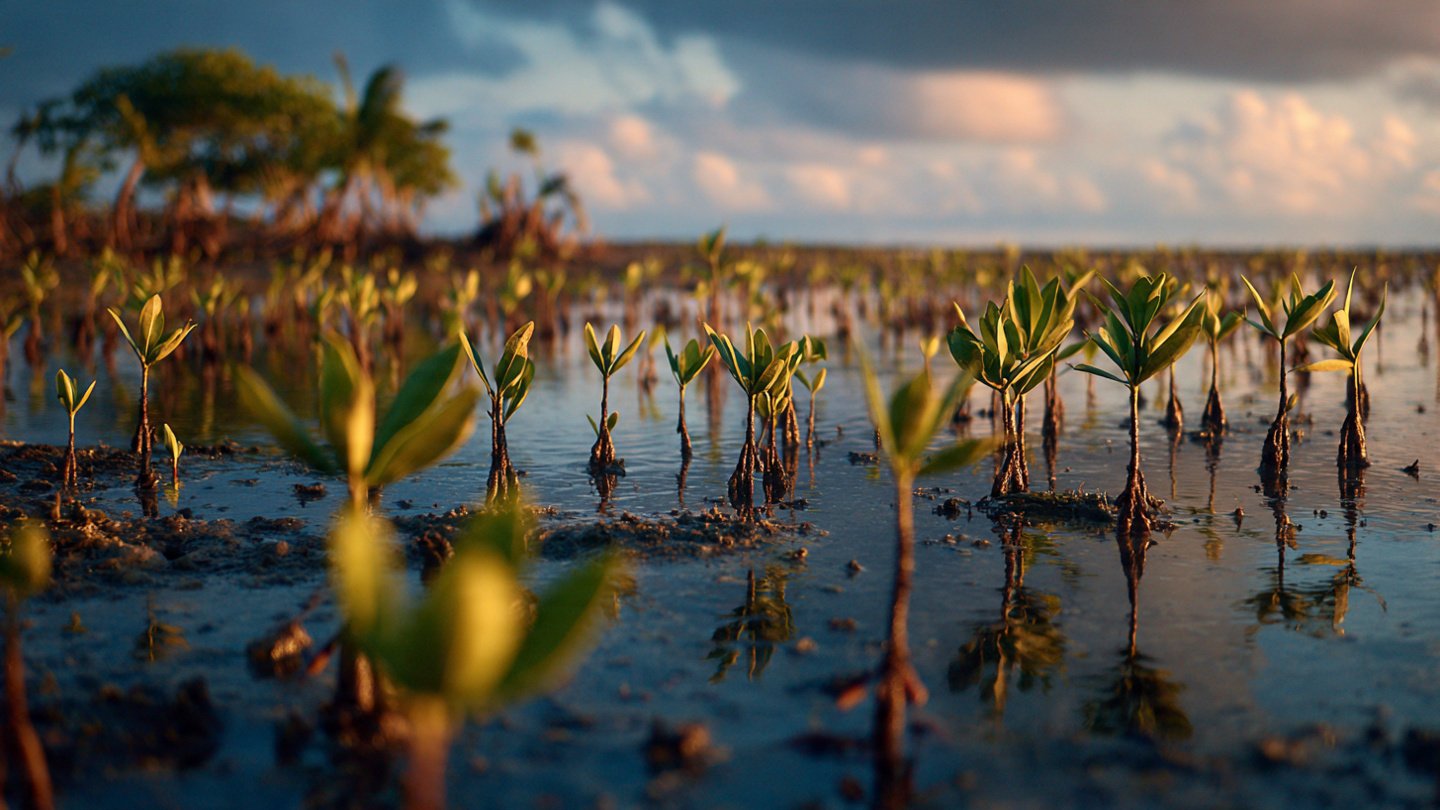
Across coastlines in Asia, Africa, the Americas, and island nations, a quiet but powerful restoration effort is taking root. More than 500,000 mangrove trees have been replanted worldwide, and their impact is already being felt far beyond the muddy shorelines where they grow. These trees are absorbing carbon from the atmosphere, shielding vulnerable coasts from erosion and storms, and rebuilding entire ecosystems that once supported abundant marine life.
Mangrove restoration is proving that nature-based solutions can address some of the planet’s most pressing challenges—climate change, biodiversity loss, and coastal vulnerability—all at once.
Why Mangroves Matter More Than You Think
Mangroves are salt-tolerant trees and shrubs that grow where land meets sea. Found in tropical and subtropical regions, they thrive in harsh conditions that few other plants can survive. Despite covering less than one percent of the world’s coastal area, mangroves punch far above their weight in ecological importance.
They act as:
- Powerful carbon sinks
- Natural storm barriers
- Nurseries for fish and marine species
- Stabilizers of fragile shorelines
When mangrove forests are lost, the consequences ripple through entire coastal systems.
A Carbon-Capturing Powerhouse
One of the most remarkable benefits of mangrove replanting is its impact on climate change. Mangroves store up to four times more carbon per hectare than many tropical rainforests, much of it locked deep within waterlogged soils.
As newly planted mangroves mature:
- Their roots trap organic matter
- Carbon remains stored for centuries
- Atmospheric CO₂ levels are reduced
By replanting more than 500,000 trees, restoration projects are creating long-term carbon reservoirs that help slow global warming while supporting local ecosystems.
Protecting Shorelines from Rising Threats
Coastal communities are on the front lines of climate change. Rising sea levels, stronger storms, and increased erosion threaten homes, livelihoods, and infrastructure. Mangroves act as living coastal defenses.
Their dense root systems:
- Absorb wave energy
- Reduce storm surge height
- Hold sediment in place
- Prevent shoreline collapse
Studies show that coastlines protected by healthy mangrove forests suffer significantly less damage during cyclones and hurricanes than unprotected shores. Replanting efforts are restoring this natural protection in areas that once relied solely on concrete seawalls or had no defense at all.
Rebuilding Coastal and Marine Life
Mangroves are biodiversity hotspots. Their tangled roots provide shelter, food, and breeding grounds for countless species.
As replanted mangroves establish themselves:
- Fish populations rebound
- Crabs, shrimp, and mollusks return
- Birds regain nesting and feeding sites
- Coral reefs offshore benefit from cleaner water
For many coastal fishing communities, mangrove restoration directly translates into improved food security and economic resilience.
Why Mangroves Were Lost in the First Place
Despite their importance, mangroves have been disappearing at alarming rates over the past century. The main drivers include:
- Coastal development and urban expansion
- Shrimp farming and aquaculture
- Logging and fuelwood harvesting
- Pollution and altered water flows
In many regions, mangroves were cleared faster than forests on land. The loss not only released stored carbon but also exposed coastlines to erosion and storms.
The Global Push to Replant Mangroves
The replanting of over 500,000 mangrove trees represents a growing global commitment to restoration. Governments, local communities, scientists, and conservation groups are working together to reverse decades of damage.
Successful restoration projects focus on:
- Planting native mangrove species
- Restoring natural tidal flows
- Involving local communities in long-term care
- Monitoring survival rates and ecosystem recovery
Rather than simply planting trees and walking away, modern projects emphasize ecological understanding and community stewardship.
Community-Led Restoration Makes the Difference
One of the most encouraging aspects of mangrove replanting efforts is the role of local communities. In many regions, residents who once depended on mangroves for fuel or cleared them for development are now leading restoration efforts.
Community involvement ensures:
- Better survival rates for young trees
- Long-term protection from re-clearing
- Sustainable livelihoods through eco-tourism and fishing
- Greater awareness of environmental value
When communities see direct benefits—from increased fish catches to reduced storm damage—mangrove protection becomes a shared priority.
Challenges Still Remain
While the progress is impressive, mangrove restoration is not without challenges. Poorly planned planting can fail if:
- Wrong species are used
- Natural water flows are blocked
- Sites are unsuitable for mangroves
Climate change also presents ongoing risks, including rising sea levels and temperature stress. That’s why restoration efforts must be science-based, adaptive, and long-term.
A Nature-Based Solution with Global Impact
What makes mangrove replanting especially powerful is its ability to address multiple crises at once. Few environmental actions offer such wide-ranging benefits from a single intervention.
Mangroves:
- Mitigate climate change
- Protect human communities
- Restore biodiversity
- Support sustainable livelihoods
The replanting of over half a million trees is not just a symbolic milestone—it’s a measurable investment in planetary resilience.
What the Future Could Look Like
If mangrove restoration continues at scale, the long-term impacts could be transformative. Healthier coastlines, stronger fisheries, lower carbon emissions, and more resilient communities are all within reach.
Expanding these efforts could:
- Prevent millions of tons of carbon emissions
- Save billions in storm damage costs
- Restore ecosystems for future generations
Mangroves remind us that sometimes the most effective solutions are already built into nature—waiting to be restored.
Conclusion
The replanting of more than 500,000 mangrove trees worldwide is a powerful example of how environmental restoration can deliver real, lasting change. These trees are absorbing carbon, protecting coastlines from climate threats, and rebuilding coastal ecosystems that sustain both wildlife and human communities.
As these mangroves grow, so does hope—for healthier oceans, safer shores, and a more balanced relationship between people and the planet. In a world searching for climate solutions, mangroves stand tall as one of nature’s most effective allies.