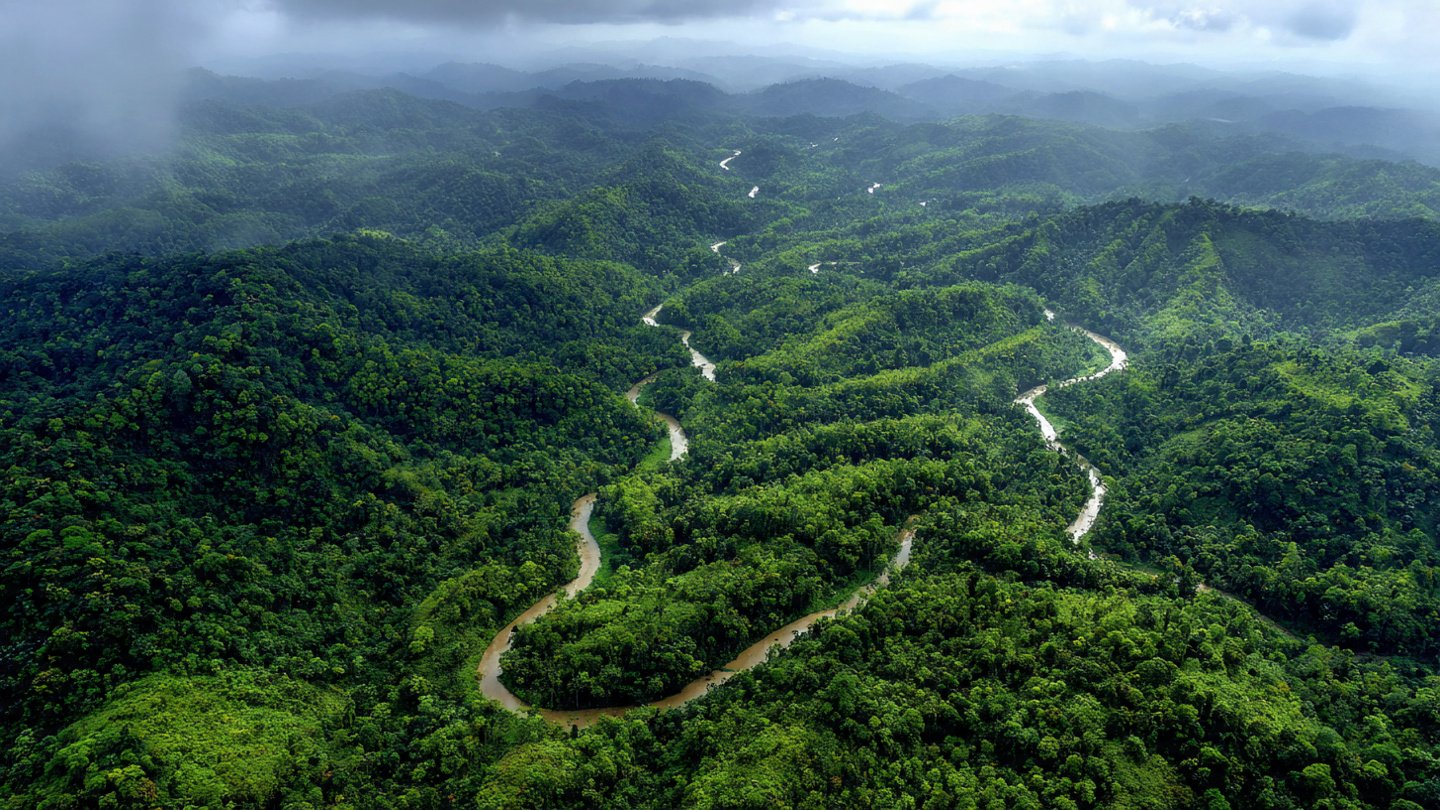
For decades, deforestation has been viewed primarily as a biodiversity and climate issue. But a growing body of research now reveals another powerful consequence of large-scale forest loss: disrupted rainfall cycles. In several regions around the world, scientists have observed that once deforestation slowed or stopped, local and regional rainfall patterns began to stabilize—sometimes within surprisingly short timeframes.
This connection between forests and rain highlights how deeply ecosystems are interwoven with weather systems, and why protecting forests is about far more than saving trees.
The Hidden Role Forests Play in Rainfall
Forests are not passive landscapes. They actively shape the atmosphere above them through a process called evapotranspiration—the combined release of water vapor from plant leaves and soil. Large forested areas act like natural pumps, releasing vast amounts of moisture into the air every day.
In tropical regions such as the Amazon Rainforest, a single mature tree can release hundreds of liters of water into the atmosphere daily. Multiply that by billions of trees, and forests become major drivers of cloud formation and precipitation.
When forests are removed, this moisture cycle weakens. Less water vapor enters the air, clouds form less frequently, and rainfall becomes more erratic.
What Happens When Deforestation Continues Unchecked
Prolonged deforestation alters weather in several damaging ways:
- Reduced rainfall during critical growing seasons
- Longer dry periods and more frequent droughts
- Sudden, intense storms that increase flooding and erosion
- Rising local temperatures, which further suppress rainfall
These changes affect not only forest ecosystems but also agriculture, drinking water supplies, and hydroelectric power generation. In some regions, deforestation has even been linked to shifts in monsoon timing and intensity.
A Turning Point: When Tree Loss Slows
In recent years, satellite data and long-term climate studies have shown encouraging trends in areas where deforestation was significantly reduced. Once large-scale tree clearing halted, rainfall patterns began showing signs of recovery.
Researchers observed this effect in parts of the Amazon, Southeast Asia, and Central Africa, including areas near the Congo Basin. While full recovery can take decades, rainfall stabilization often begins much sooner.
How Rainfall Cycles Begin to Recover
When deforestation stops, several processes work together to restore rainfall:
1. Regrowth Boosts Atmospheric Moisture
Secondary forests and regenerating vegetation quickly resume evapotranspiration. Even younger forests can release substantial moisture back into the air.
2. Cooler Surface Temperatures
Tree cover shades the land, reducing surface heat. Cooler air holds moisture more effectively, increasing cloud formation.
3. Improved Wind and Moisture Flow
Forests influence how air masses move across landscapes. Restored tree cover helps redirect moisture-laden air inland rather than allowing it to dissipate.
4. Soil Recovery
Tree roots improve soil structure and water retention, reducing runoff and allowing more moisture to cycle locally.
Together, these changes help re-establish predictable wet and dry seasons, which are essential for both ecosystems and human communities.
Evidence from Satellite and Climate Models
Modern climate models and satellite observations have strengthened confidence in these findings. Scientists using data from agencies like the NASA have documented measurable increases in atmospheric moisture and rainfall consistency in regions where deforestation declined.
In some areas, rainfall variability decreased by up to 15–20% within a decade of forest protection policies being enforced. While this doesn’t mean rainfall returns instantly to pre-deforestation levels, it does suggest that forest conservation can quickly slow climate damage.
Why Stabilized Rainfall Matters So Much
Stable rainfall is not just a climate statistic—it directly affects daily life.
- Farmers depend on predictable rain for planting and harvesting
- Rivers and reservoirs rely on steady precipitation to recharge
- Cities face fewer floods and water shortages
- Wildlife benefits from restored habitats and food sources
In tropical and subtropical regions, even small shifts in rainfall timing can mean the difference between food security and crop failure.
Forest Protection vs. Tree Planting
While tree planting is valuable, experts emphasize that protecting existing forests delivers faster rainfall benefits. Mature forests already possess deep root systems, complex canopies, and established moisture cycles that new plantings take decades to develop.
Stopping deforestation prevents further disruption while allowing natural regeneration to do much of the recovery work—often at lower cost and with greater ecological success.
A Climate Feedback Loop—For Better or Worse
Forests and rainfall are linked in a feedback loop:
- Forest loss reduces rainfall
- Reduced rainfall stresses remaining trees
- Stressed forests become more vulnerable to fire and dieback
However, halting deforestation flips this cycle in a positive direction. As rainfall stabilizes, forests grow stronger, which further reinforces regional climate balance.
What This Means for Global Climate Strategy
These findings reshape how deforestation is viewed in climate policy. Protecting forests is no longer just about carbon storage—it’s about maintaining regional climate systems that support billions of people.
Rainfall stabilization offers a tangible, near-term benefit that communities can feel within years, not generations. This makes forest conservation one of the most cost-effective climate solutions available today.
Final Thoughts
The discovery that rainfall cycles begin stabilizing once deforestation halts offers a rare piece of good news in climate science. It shows that ecosystems are resilient—and that human choices still matter.
By protecting forests, societies are not only preserving wildlife and storing carbon, but also repairing the natural water cycles that sustain agriculture, cities, and entire regions. The rain, it turns out, remembers the trees.