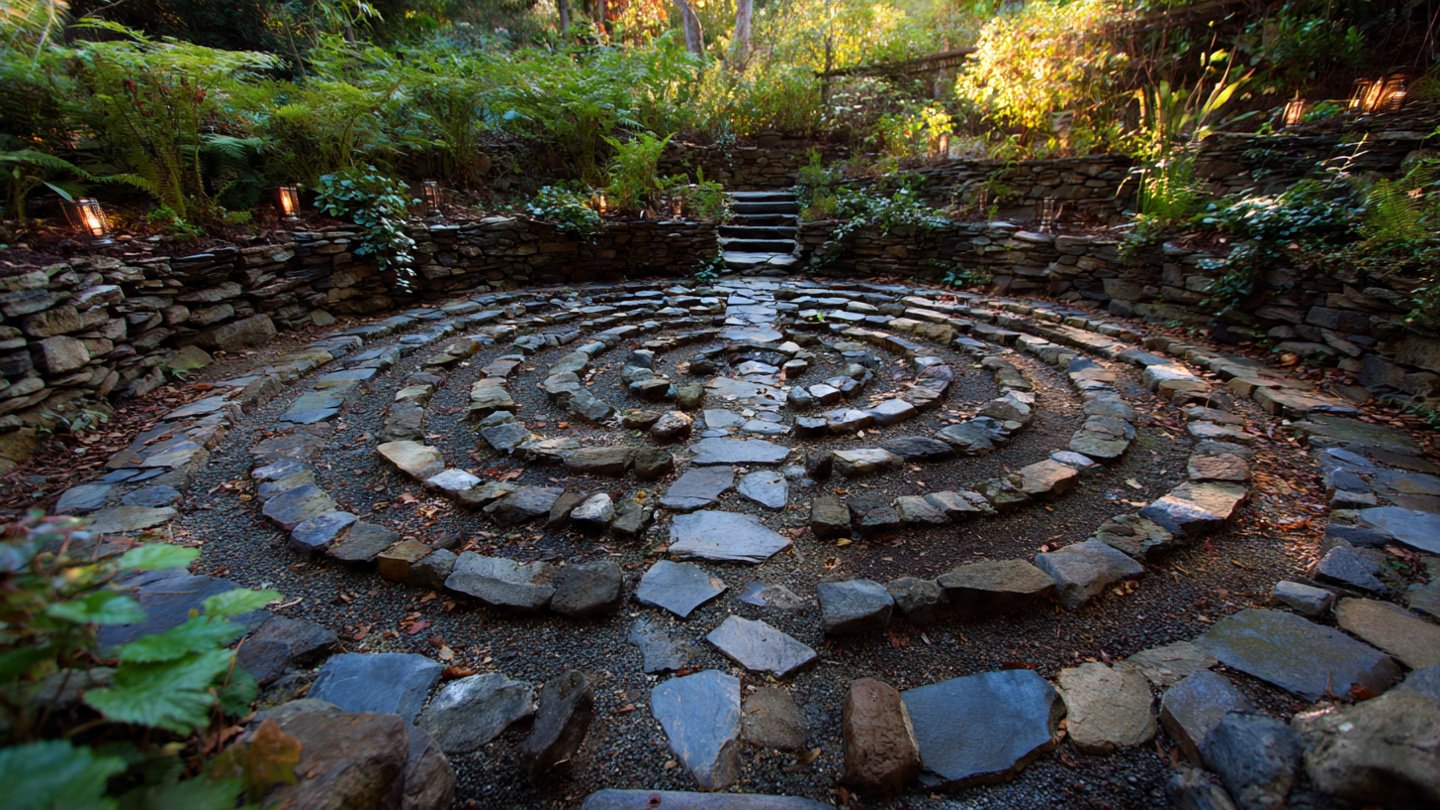
In today’s fast-paced world, finding a quiet space to relax, reflect, and meditate has become essential for mental and emotional well-being. A meditation labyrinth is a powerful tool that combines movement with mindfulness, offering a peaceful retreat right in your own backyard. Unlike a maze, a labyrinth has a single winding path that leads to the center and back out, promoting meditation, self-reflection, and stress relief.
Building a labyrinth in a small backyard is easier than you might think. With some careful planning, simple materials, and thoughtful design, you can create a serene space that encourages daily mindfulness and calm.
This guide will walk you through the process of designing and building a meditation labyrinth in a small backyard, making it both functional and aesthetically pleasing.
What Is a Meditation Labyrinth?
A meditation labyrinth is a circular or spiral path designed for walking meditation. The purpose is not to challenge you with dead ends but to guide you along a single, continuous route. Walking the labyrinth slowly allows you to focus on your breath, release tension, and enter a meditative state.
Unlike traditional mazes, labyrinths:
- Have one clear path from the entrance to the center
- Encourage contemplation rather than problem-solving
- Can be adapted to any size or shape of garden
A small backyard labyrinth offers the perfect personal retreat for daily reflection or quiet moments after work.
Step 1: Choose the Right Location
Selecting an appropriate spot is the first step in building your backyard labyrinth. Consider the following factors:
- Flat area: Choose a level space to make walking comfortable
- Privacy: Position it away from noisy areas or neighbors’ sightlines
- Sunlight and shade: Ensure a balance of sunlight for visibility and shade for comfort
- Access: Place it where it can be easily reached without disturbing other garden areas
Even a small corner of your backyard can be transformed into a labyrinth with proper planning.
Step 2: Decide the Labyrinth Design
Labyrinths can vary in complexity, but for small spaces, simpler designs work best. Popular options include:
- Classical seven-circuit labyrinth: Traditional and easy to build
- Spiral labyrinth: Compact and perfect for limited space
- Finger labyrinth: Very small labyrinths that fit in tiny garden corners
For backyard meditation, the goal is clarity and ease of walking. Start simple; you can always expand or redesign later.
Step 3: Measure and Mark the Path
Accuracy is key for a balanced labyrinth. Follow these steps:
- Measure the available space
- Determine the width of the walking path (2–3 feet is ideal for a small backyard)
- Mark the center point of the labyrinth
- Use stakes and string, or chalk lines, to outline the circular or spiral paths
For small yards, concentric circles or a simple spiral often work best, as they require less space while still offering a meditative experience.
Step 4: Choose Materials for Your Labyrinth
The materials you choose depend on aesthetics, budget, and permanence. Options include:
- Gravel or pebbles: Affordable, good for drainage, and easy to maintain
- Pavers or bricks: Create a defined and sturdy path
- Mulch or wood chips: Soft underfoot and easy to adjust
- Grass or groundcover: For a natural, seamless look
For small backyards, combining materials can create visual interest—for example, a brick border with a gravel path.
Step 5: Prepare the Ground
Proper preparation ensures durability and ease of walking. Steps include:
- Clear the area of weeds, grass, or debris
- Level the soil to avoid uneven surfaces
- Optionally, lay landscape fabric to prevent weed growth
- Add a base layer of sand or crushed stone if using gravel or pavers
A well-prepared surface reduces maintenance and ensures safe walking.
Step 6: Construct the Path
Once the area is ready, start constructing the labyrinth path:
- For gravel or mulch paths, create shallow borders using bricks, stones, or edging to keep the path defined
- For paver paths, place each paver according to your marked outline, ensuring even spacing and level alignment
- Keep the walking surface comfortable and free of tripping hazards
Take your time during this stage, as a well-laid path enhances the meditative experience.
Step 7: Add Center and Focal Points
The center of a labyrinth is a place for contemplation. Consider adding:
- A small bench or meditation stool
- A stone circle or sculpture
- A potted plant or bonsai
- A water feature for soothing sounds
Even in a small backyard, a simple focal point can provide a sense of completion and stillness when you reach the center.
Step 8: Surround Your Labyrinth with Soothing Elements
To enhance the meditation experience, add elements around the labyrinth:
- Plants and shrubs: Provide greenery and a sense of enclosure
- Wind chimes or small fountains: Add calming auditory elements
- Soft lighting: Solar lights or lanterns make it usable during early evenings
- Stepping stones or decorative borders: Define the path aesthetically
These elements create a tranquil environment, promoting mindfulness and relaxation.
Step 9: Maintain Your Labyrinth
A labyrinth requires minimal upkeep but some maintenance ensures longevity:
- Sweep or rake gravel regularly to keep paths clear
- Trim surrounding plants to prevent overgrowth
- Replace mulch or wood chips as needed
- Repair pavers or edging if shifted
A well-maintained labyrinth remains inviting and comfortable for daily meditation.
Step 10: How to Use Your Labyrinth for Meditation
Walking a labyrinth is simple, but mindful practice enhances benefits:
- Walk slowly: Focus on each step, aligning breath with movement
- Clear your mind: Let thoughts pass without judgment
- Pause at the center: Spend a few minutes reflecting or meditating
- Return slowly: Follow the same path back out, maintaining awareness
Regular use can reduce stress, improve focus, and promote a sense of inner calm.
Benefits of Having a Backyard Labyrinth
Building a meditation labyrinth in your backyard offers several physical and mental health benefits:
- Reduces stress and anxiety through mindful walking
- Provides a personal sanctuary for reflection
- Encourages physical activity, even in a small space
- Improves focus and concentration
- Offers an aesthetic and functional garden feature
A backyard labyrinth is not only a practical meditation tool but also a visually pleasing addition to your outdoor space.
Final Thoughts
Creating a meditation labyrinth in a small backyard is entirely achievable with thoughtful planning, simple materials, and a clear design. From selecting the right spot to constructing the path and adding serene elements, each step contributes to a peaceful, reflective environment.
Whether you want a personal retreat for daily mindfulness or a calming feature for your garden, a backyard labyrinth offers both practical and spiritual benefits. By incorporating this meditative path, you can transform a small outdoor space into a sanctuary for peace, relaxation, and mental clarity.
Walking a labyrinth may be an ancient practice, but building one in your backyard brings timeless benefits to modern life. With patience, care, and creativity, your small yard can become a center of serenity and mindfulness.