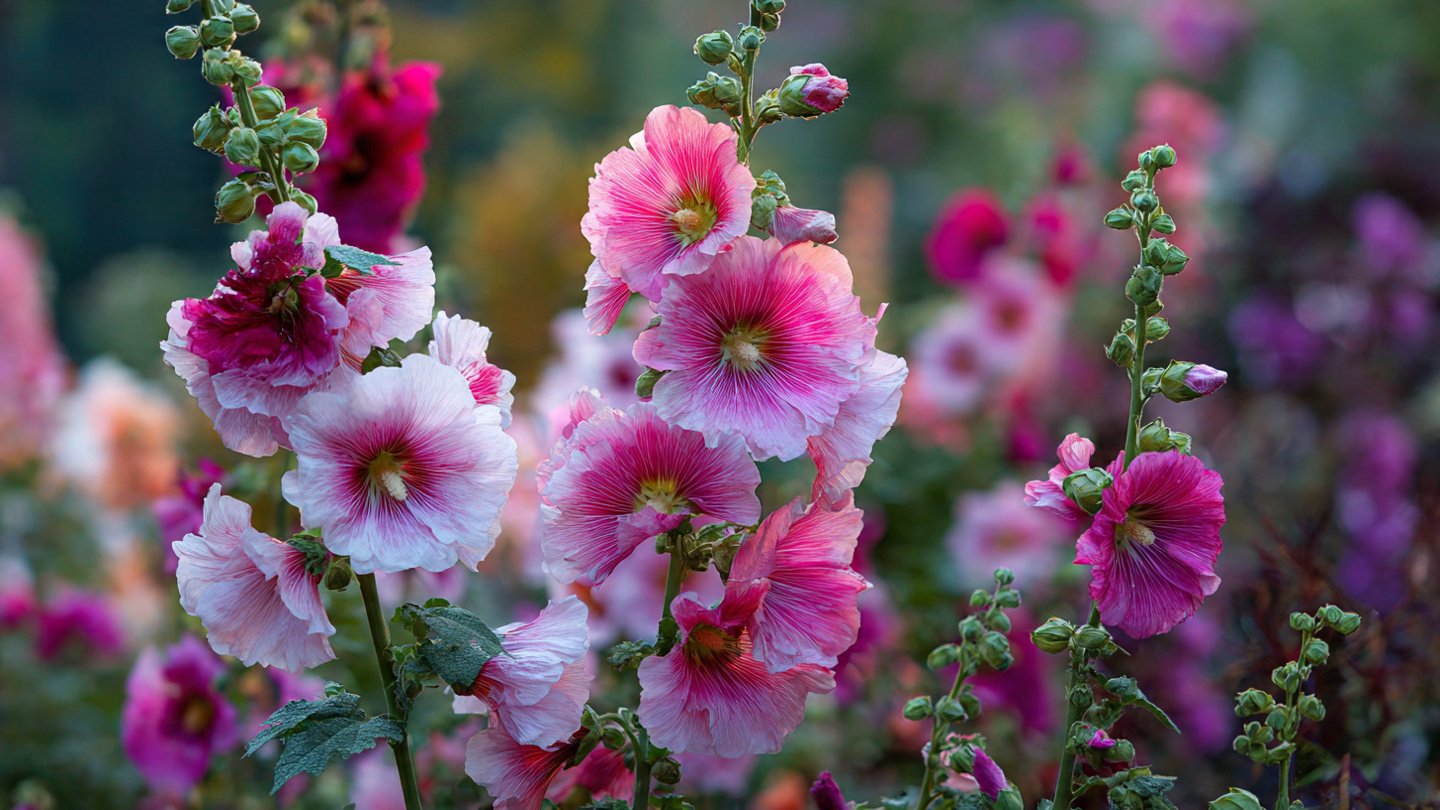
Gardens are more than just patches of greenery; they are living canvases where colors, shapes, and textures interact to create beauty. Among the many flowering plants that can add drama and charm, hollyhocks (Alcea rosea) stand out for their tall, stately presence. Planting a row of hollyhocks not only introduces bold color but also adds a vertical dimension to your garden, transforming it from ordinary to visually striking.
This article explores why hollyhocks are ideal for creating vertical elegance, how to plant and care for them, and design strategies to maximize their impact in your garden.
The Vertical Charm of Hollyhocks
Hollyhocks are biennial or short-lived perennials known for their towering flower spikes that can reach 6–8 feet in height. This makes them exceptional for adding vertical structure, especially in gardens dominated by low-growing plants.
- Eye-catching blooms: Large, cup-shaped flowers in shades of pink, red, yellow, white, and purple draw attention.
- Height variation: Their tall spikes create contrast when paired with shorter plants like lavender, daisies, or low-growing annuals.
- Seasonal impact: Blooming in midsummer, hollyhocks provide a dramatic focal point during peak garden season.
By planting a row, you create a natural vertical screen that adds both beauty and dimension.
Benefits of Planting a Row of Hollyhocks
Planting hollyhocks in a linear arrangement offers multiple advantages:
- Visual Focal Point: A row acts as a garden “backbone,” leading the eye upward and enhancing overall landscape design.
- Privacy Screening: Tall spikes can partially obscure fences or unsightly structures.
- Pollinator Attraction: Hollyhocks attract bees, butterflies, and hummingbirds, supporting biodiversity.
- Low Maintenance: Once established, they are hardy, drought-tolerant, and generally pest-resistant.
- Cottage Garden Appeal: Hollyhocks provide a nostalgic charm reminiscent of classic European and cottage-style gardens.
A well-placed row of hollyhocks can define boundaries, highlight garden pathways, or frame a central garden feature.
Choosing the Right Hollyhock Variety
Different varieties suit different garden styles:
- Classic biennials: These grow quickly in the first year and bloom in the second. They provide tall, straight flower spikes.
- Perennial hollyhocks: These reappear annually, though they may take longer to reach full height.
- Dwarf varieties: Ideal for smaller gardens, patios, or containers while still offering vertical color.
- Color varieties: Mix and match shades for a multi-colored row or select a single hue for a monochromatic, formal effect.
Selecting the right variety ensures your row achieves the desired height, bloom period, and visual impact.
Site Selection for Maximum Effect
Hollyhocks thrive when planted in optimal conditions:
- Sunlight: Full sun (at least 6 hours per day) is essential for tall, strong flower spikes.
- Soil: Well-drained, fertile soil enriched with compost ensures vigorous growth.
- Protection: While they are hardy, hollyhocks benefit from some wind protection to prevent tall spikes from toppling.
- Spacing: Plant 18–24 inches apart to allow airflow and prevent fungal diseases.
Careful site selection supports robust growth and spectacular blooms.
Preparing the Soil
Soil preparation is critical for healthy, tall hollyhocks:
- Clear weeds and debris from the row area.
- Loosen the soil to a depth of 12–18 inches to encourage deep root growth.
- Amend soil with compost or well-rotted manure to improve fertility and moisture retention.
- Check pH: Hollyhocks prefer slightly acidic to neutral soil (pH 6.0–7.0).
Healthy, nutrient-rich soil forms the foundation for towering, vibrant plants.
Planting a Row of Hollyhocks
Planting hollyhocks correctly ensures a strong, vertical display:
- Seed Starting: Begin seeds indoors 6–8 weeks before the last frost or sow directly outdoors after frost danger passes.
- Transplanting: Move seedlings when they are 4–6 inches tall and hardened off.
- Spacing: Maintain 18–24 inches between plants for airflow and stability.
- Support: Tall varieties may need stakes or trellises to prevent bending or breakage.
- Mulching: Apply a layer of mulch to retain soil moisture and suppress weeds.
Proper planting techniques guarantee a neat, uniform row that emphasizes vertical elegance.
Watering and Fertilization
Hollyhocks thrive with consistent care:
- Watering: Deep, infrequent watering encourages strong roots and prevents shallow growth.
- Fertilization: Apply balanced fertilizer in early spring and again when flower spikes begin to develop.
- Avoid overhead watering: Moist leaves can increase the risk of fungal infections like rust.
Maintaining soil moisture without waterlogging helps achieve maximum height and bloom size.
Controlling Pests and Diseases
Hollyhocks can be susceptible to a few common issues:
- Rust: A fungal disease that causes orange spots on leaves. Remove affected foliage and maintain spacing for airflow.
- Aphids and Japanese beetles: Hand-pick or use insecticidal soap.
- Slugs and snails: Especially harmful to young seedlings; apply barriers or natural repellents.
Routine inspection and preventive care keep your row healthy and visually stunning.
Design Tips for Stunning Vertical Rows
Planting hollyhocks in a row offers opportunities for creative design:
- Backdrops: Use rows along fences, walls, or hedges to create height contrast.
- Pathway lining: Hollyhocks can frame walkways or garden paths for a dramatic entrance.
- Mixed borders: Combine hollyhocks with shorter perennials like lavender, daisies, or hostas for layered visual depth.
- Monochrome vs. multicolor: A single color creates formal elegance; a mix of colors creates a cottage garden charm.
- Natural flow: Slightly stagger the row for a softer, more organic look.
Thoughtful design maximizes vertical impact and overall garden aesthetics.
Seasonal Care
Hollyhocks require minimal but timely care throughout the growing season:
- Spring: Fertilize and monitor seedlings.
- Summer: Deadhead spent flowers to encourage continuous blooming.
- Fall: Remove diseased or dead foliage to reduce fungal risks and prepare for winter.
- Winter: In cold climates, mulch heavily to protect roots from freezing.
Seasonal maintenance ensures long-term health and repeated visual impact year after year.
Benefits Beyond Aesthetics
Beyond height and color, hollyhocks offer practical advantages:
- Pollinator-friendly: Attract bees, butterflies, and hummingbirds to support your garden ecosystem.
- Screening and privacy: Tall spikes can partially obscure unsightly fences or structures.
- Soil enrichment: Their roots help aerate the soil, benefiting neighboring plants.
- Low long-term maintenance: Biennial or perennial varieties return year after year with minimal effort.
These benefits make hollyhocks a versatile and functional addition to any garden.
Final Thoughts
Planting a row of hollyhocks is a simple yet transformative strategy to add vertical elegance and visual drama to any garden. With their towering flower spikes, vibrant colors, and pollinator-friendly blooms, hollyhocks are not just decorative—they create a living framework that organizes, defines, and elevates your outdoor space.
By choosing the right varieties, preparing the soil, planting with proper spacing, and providing routine care, gardeners can enjoy a row of hollyhocks that not only blooms beautifully but also enhances garden structure and charm.
Whether lining a pathway, framing a fence, or forming a natural privacy screen, a row of hollyhocks is a timeless choice that combines aesthetics with functionality. Their bold vertical presence can transform an ordinary garden into a stunning display of color, height, and elegance, creating an unforgettable visual experience that will be admired season after season.