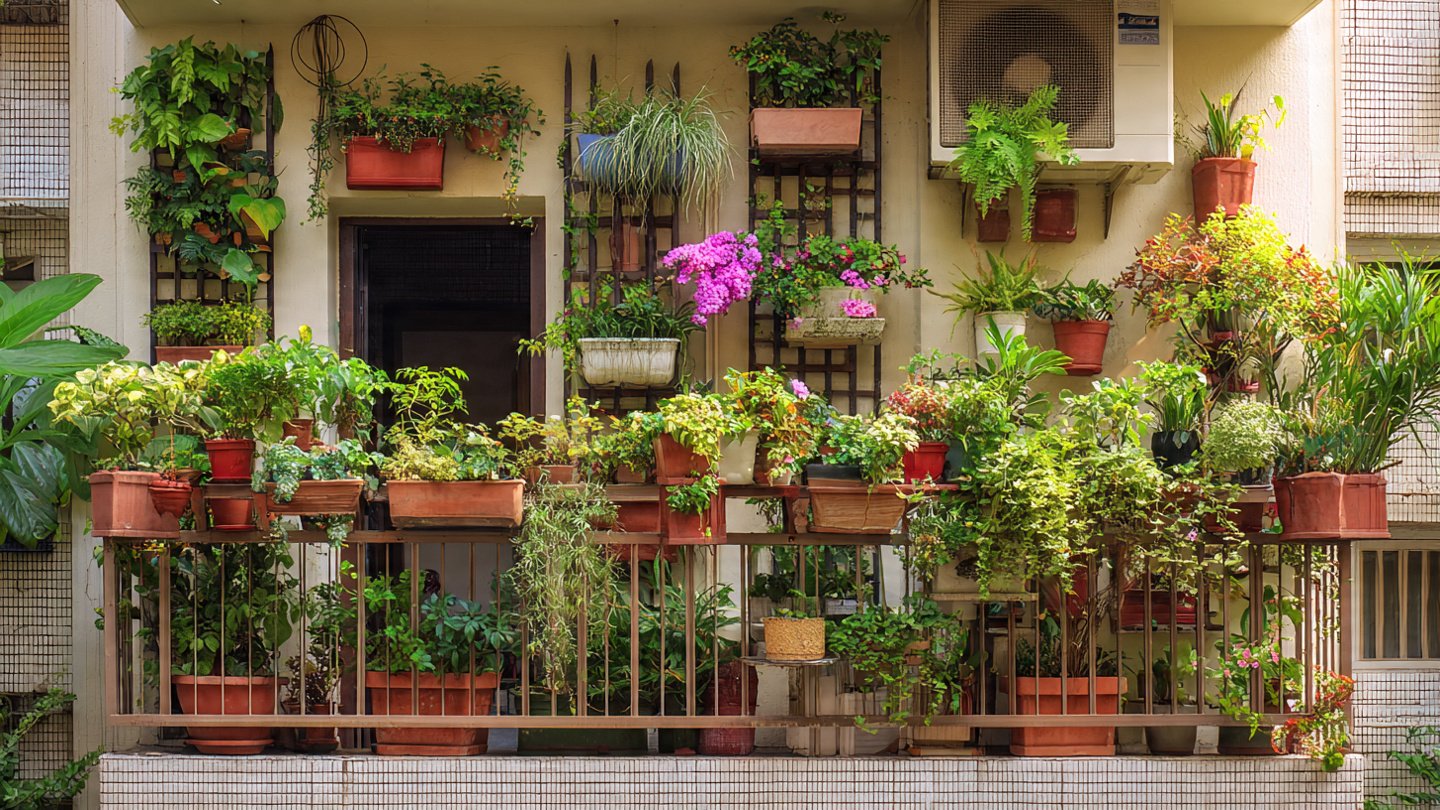
A lack of space is one of the most common challenges faced by balcony gardeners. When floor area is limited, it’s easy to feel restricted in what you can grow or how creative you can be. However, the secret to a thriving balcony garden isn’t more square footage—it’s smarter use of vertical space. By growing upward instead of outward, you can transform even the smallest balcony into a lush, productive, and visually striking garden. Vertical gardening not only maximizes space but also improves plant health, organization, and overall design.
Why Vertical Gardening Works So Well on Balconies
Balconies naturally lend themselves to vertical gardening because walls, railings, and corners often go unused. Vertical setups allow you to layer plants at different heights, creating depth and abundance without crowding the floor.
Growing vertically also improves airflow and light exposure, which can reduce disease and encourage healthier growth. In addition, vertical gardens are easier to manage, harvest, and maintain, especially in compact urban environments.
Start with Wall-Mounted Planters
One of the simplest ways to use vertical space is by installing wall-mounted planters. These can be individual pots, modular panels, or pocket-style fabric planters attached securely to balcony walls.
Wall planters are ideal for:
- Herbs like basil, mint, and parsley
- Leafy greens such as lettuce and spinach
- Trailing plants that soften hard surfaces
By grouping planters together, you can create a living wall that doubles as décor and food source.
Use Railings as Growing Zones
Balcony railings are often overlooked but offer valuable vertical real estate. Railing planters hook or clamp directly onto the railing, freeing up floor space while positioning plants at an ideal height for sunlight.
These planters work especially well for:
- Flowers that add color and fragrance
- Compact vegetables like cherry tomatoes
- Cascading plants that spill beautifully over edges
Make sure planters are securely fastened and balanced for safety.
Add Shelving Units for Layered Growth
Vertical shelving allows you to grow many plants in a small footprint. Tall, narrow shelves or ladder-style plant stands can hold multiple pots while maintaining a tidy appearance.
When arranging shelves:
- Place sun-loving plants on top levels
- Keep shade-tolerant plants lower
- Rotate plants occasionally for even growth
Shelves also make it easier to rearrange plants as seasons change.
Train Plants to Grow Upward
Climbing and vining plants are perfect for vertical gardening. With the help of trellises, wires, or netting, these plants naturally grow upward instead of spreading across the floor.
Great climbers for balcony gardens include:
- Beans and peas
- Cucumbers and small gourds
- Flowering vines
Vertical training not only saves space but also improves yield and keeps plants healthier by lifting them off the ground.
Hang Planters from the Ceiling
If your balcony has an overhead structure, hanging planters are a powerful way to expand your growing area. Hanging baskets draw the eye upward and add dimension to the space.
They are ideal for:
- Trailing plants
- Compact herbs
- Decorative foliage
Be mindful of weight limits and ensure hooks are properly anchored. Hanging planters also need consistent watering, as they tend to dry out faster.
Use Stackable and Tiered Containers
Stackable pots and tiered planters allow you to grow multiple plants in a vertical column. These systems are especially useful for strawberries, herbs, and shallow-rooted vegetables.
Benefits of stackable planters include:
- Efficient use of vertical space
- Easy rotation for sunlight exposure
- Neat, organized appearance
They’re a great option for renters, as they don’t require permanent installation.
Combine Storage and Planting
Multifunctional furniture is a smart solution for small balconies. Benches with built-in planters, shelving units with integrated pots, or vertical racks that combine tools and plants help maximize every inch.
This approach keeps your balcony organized while maintaining a clean, intentional look.
Choose the Right Plants for Vertical Success
Not all plants thrive in vertical systems. Choosing varieties suited to container growth and upward training is essential.
Look for plants that are:
- Compact or naturally upright
- Lightweight and shallow-rooted
- Adaptable to containers
Mixing edibles with ornamentals creates a balanced garden that is both functional and beautiful.
Pay Attention to Sunlight and Watering
Vertical gardens change how light and water are distributed. Upper plants often receive more sun and dry out faster, while lower plants may remain shaded and moist longer.
To manage this:
- Group plants with similar light needs
- Water from the top and let moisture trickle down
- Check moisture levels at different heights
Drip irrigation systems can be especially helpful for vertical setups.
Keep Design and Maintenance in Mind
While vertical gardens are visually impressive, they should also be practical. Leave enough space between planters for airflow and access. Make sure you can easily water, prune, and harvest without strain.
A well-planned vertical garden should feel inviting, not cluttered. Balance greenery with open space to keep your balcony comfortable and usable.
Conclusion
Maximizing vertical space is the key to unlocking the full potential of your balcony garden. By using walls, railings, shelves, and upward-growing plants, you can create a lush environment that feels expansive rather than confined. Vertical gardening allows you to grow more, improve plant health, and design a space that reflects your personal style. With thoughtful planning and creativity, even the smallest balcony can become a thriving green retreat.