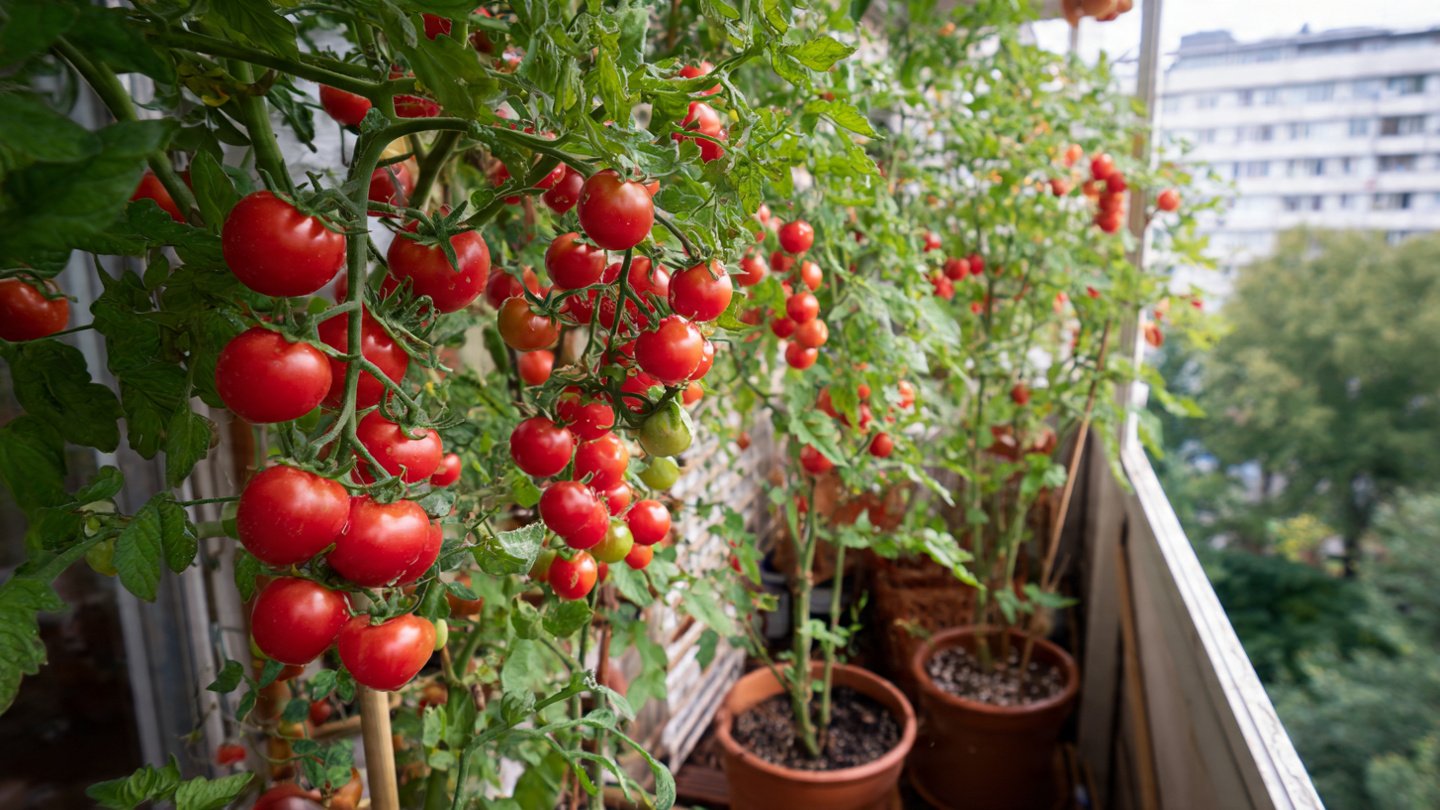
Tomatoes are one of the most popular and rewarding vegetables to grow at home. Their vibrant color, delicious flavor, and versatility in cooking make them a favorite among gardeners. But did you know you can successfully grow tomatoes on a balcony year-round? With the right setup, care, and techniques, balcony gardening can provide a continuous harvest of fresh tomatoes, all while enhancing your outdoor space with greenery and stunning visual appeal.
Balcony tomato gardening combines the joy of homegrown produce with urban convenience, transforming small spaces into productive, attractive gardens. This guide will show you how to grow tomatoes year-round on a balcony for healthy plants, abundant fruit, and a beautiful view.
Step 1: Selecting the Right Tomato Varieties
Choosing the right varieties is critical for successful balcony gardening:
- Compact or Dwarf Varieties: Ideal for small containers. Look for “bush” or determinate varieties like ‘Tiny Tim,’ ‘Patio Princess,’ or ‘Bush Early Girl.’
- Indeterminate Varieties: These vining tomatoes produce fruit continuously throughout the season. They require support structures such as stakes, cages, or trellises. Popular options include ‘Sweet Million,’ ‘Sungold,’ and ‘Celebrity.’
- Cherry or Grape Tomatoes: Perfect for balcony spaces, cherry tomatoes produce abundant fruit, are easier to manage, and provide a stunning cascade of color.
Selecting varieties suited for container growth ensures strong plants, consistent yields, and minimal maintenance.
Step 2: Choosing Containers and Setup
Container choice is key for balcony tomato gardening:
- Container Size: Use pots with at least 12–18 inches in diameter and deep enough to accommodate roots. Larger containers reduce stress and help retain moisture.
- Drainage: Ensure containers have drainage holes to prevent waterlogging and root rot. Add a layer of gravel or broken pottery at the bottom if needed.
- Materials: Plastic pots are lightweight and retain moisture, while clay pots allow air circulation but may dry out faster.
Pro Tip: Consider self-watering containers or reservoirs to maintain consistent soil moisture, especially during hot months.
Step 3: Soil Preparation
Tomatoes thrive in nutrient-rich, well-draining soil:
- Use a high-quality potting mix with organic matter. Avoid heavy garden soil, which can compact in containers.
- Mix in compost, worm castings, or slow-release fertilizer for additional nutrients.
- Ensure a slightly acidic pH of 6.0–6.8 for optimal nutrient uptake.
Healthy soil promotes strong root development and reduces susceptibility to disease.
Step 4: Providing Sunlight
Tomatoes need full sun to produce abundant fruit:
- Aim for 6–8 hours of direct sunlight per day. South- or west-facing balconies are ideal.
- In limited sunlight areas, consider reflective surfaces or placing containers near glass doors to maximize light.
- During winter months or low-light conditions, supplement with LED grow lights for 12–16 hours per day to maintain growth and fruiting.
Consistent sunlight is key to producing juicy, flavorful tomatoes.
Step 5: Watering and Irrigation
Balcony tomatoes in containers require consistent moisture:
- Frequency: Water deeply when the top inch of soil feels dry. During hot weather, containers may require daily watering.
- Technique: Water at the base of the plant to prevent wetting leaves, which can lead to fungal diseases.
- Self-Watering: Using a reservoir or wick system reduces daily maintenance and provides continuous moisture.
Proper watering ensures strong roots and reduces blossom drop, a common issue in container tomatoes.
Step 6: Fertilization
Tomatoes are heavy feeders, especially when grown in containers:
- Balanced Fertilizer: Use a fertilizer rich in nitrogen, phosphorus, and potassium (NPK) during early growth. Switch to a high-potassium fertilizer when flowering and fruiting.
- Liquid Fertilizer: Apply every 2–3 weeks during the growing season.
- Slow-Release Fertilizer: Mix into soil at planting time for continuous nutrition.
Regular fertilization supports strong growth, vibrant leaves, and sweet, juicy fruits.
Step 7: Supporting Your Plants
Indeterminate or vining tomatoes need support to prevent sprawling:
- Stakes: Drive a sturdy stake into the container and tie the main stem loosely with soft ties.
- Cages or Trellises: Metal cages or trellis systems provide vertical support and save space.
- Pruning: Remove side shoots (suckers) to direct energy toward fruiting and reduce overcrowding.
Support structures not only protect plants but also create a visually appealing vertical garden on your balcony.
Step 8: Managing Pests and Diseases
Container-grown tomatoes are relatively resistant but may still face pests and diseases:
- Aphids and Whiteflies: Use insecticidal soap or neem oil to control infestations.
- Fungal Diseases: Prevent issues like powdery mildew by watering at the soil level, ensuring good airflow, and avoiding overhead watering.
- Blossom-End Rot: A calcium deficiency often caused by inconsistent watering. Maintain even moisture and add calcium supplements if necessary.
Regular inspection and proactive care help maintain healthy plants year-round.
Step 9: Extending the Growing Season
To grow tomatoes year-round on a balcony, you need to extend the growing season:
- Greenhouse Covers: Use mini-greenhouses, cloches, or plastic tunnels to protect plants during cold months.
- Container Mobility: Move pots to sheltered areas, near walls, or indoors during frost.
- Variety Selection: Choose fast-growing and continuous-fruiting varieties to ensure ongoing harvest.
- Indoor Supplementation: During short daylight periods, provide artificial light to maintain flowering and fruiting.
With these techniques, it’s possible to harvest fresh tomatoes even in winter.
Step 10: Harvesting Tomatoes
Timely harvesting ensures maximum flavor and continuous production:
- Pick When Ripe: Tomatoes are ready when fully colored (red, yellow, orange, or pink, depending on the variety) and slightly soft to touch.
- Frequent Harvesting: Regular picking encourages the plant to produce more flowers and fruit.
- Harvesting Technique: Twist gently or use scissors to avoid damaging the stem.
A continuous harvest provides fresh tomatoes for months, transforming your balcony into a productive urban garden.
Step 11: Aesthetic and Design Tips
Growing tomatoes on a balcony can be both functional and visually appealing:
- Container Arrangements: Use matching pots or colorful containers to create a cohesive look.
- Vertical Gardens: Combine trellises, hanging pots, and wall-mounted containers for a lush, layered display.
- Companion Plants: Interplant with basil, marigold, or nasturtium to deter pests and enhance aesthetics.
- Seasonal Foliage: Mix tomatoes with ornamental plants or flowers to create year-round color and interest.
A well-designed balcony garden provides both fresh produce and stunning views.
Step 12: Troubleshooting Common Issues
Even with proper care, balcony tomatoes may encounter problems:
- Yellow Leaves: Often due to nutrient deficiency or overwatering. Adjust fertilizer and watering.
- Flower Drop: Caused by temperature extremes, inconsistent water, or lack of sunlight. Provide stable conditions.
- Leggy Growth: Indicates insufficient light. Move plants to sunnier spots or supplement with grow lights.
- Cracked Fruit: Overwatering after a dry spell causes skin cracking. Water evenly to prevent this.
Regular observation and prompt adjustments keep plants productive and healthy.
Step 13: Maximizing Yield in Small Spaces
Balcony gardeners can optimize space while growing tomatoes:
- Stacking Pots: Use tiered or hanging pots for vertical growth.
- Intercropping: Grow herbs or low-growing plants alongside tomatoes to utilize space efficiently.
- Succession Planting: Plant new seedlings every few weeks to maintain continuous harvests.
- Dwarf Varieties: Use compact varieties to fit multiple plants on small balconies.
Even limited balcony space can yield a surprising amount of fresh tomatoes with smart planning.
Conclusion
Growing tomatoes on a balcony year-round is a rewarding and practical endeavor. By choosing the right varieties, providing suitable containers, optimizing sunlight, water, and nutrients, and using vertical support systems, you can enjoy a continuous harvest of fresh, flavorful tomatoes while enhancing your balcony with lush greenery.
Balcony tomato gardening not only produces delicious food but also adds beauty, texture, and life to small outdoor spaces. With consistent care, patience, and the techniques outlined in this guide, your balcony can become both a productive urban farm and a stunning visual oasis.
Whether you’re a beginner gardener or an urban green thumb, growing tomatoes on your balcony allows you to savor the satisfaction of homegrown produce, create a beautiful space, and enjoy the vibrant colors and aromas of thriving plants all year round.