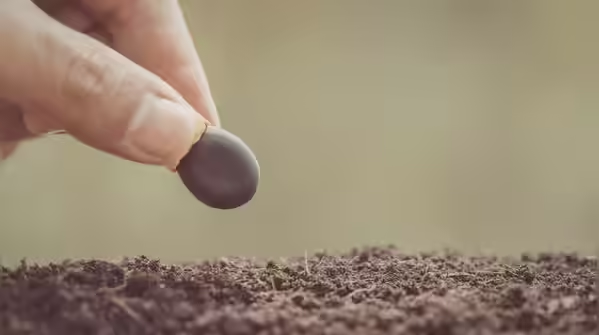
Gardening is often associated with sowing seeds, waiting patiently for germination, and nurturing seedlings into mature plants. But did you know that many plants don’t actually need seeds to grow? Nature has provided several fascinating ways for plants to reproduce without relying on seeds at all. This method, known as vegetative propagation, allows gardeners to grow new plants faster, more reliably, and often with better results.
If you’re looking for easy, low-cost ways to expand your garden, here are 10 common plants that don’t need seeds to grow — and how you can multiply them at home.
1. Potatoes
Potatoes are one of the easiest plants to grow without seeds. Instead of planting seeds, you use “seed potatoes,” which are simply small potatoes or pieces of potatoes with at least one “eye” (sprout).
Cut a potato into chunks, making sure each piece has an eye. Let the pieces dry for a day, then plant them in soil. In a few months, you’ll harvest multiple new potatoes from each piece.
2. Garlic
Garlic doesn’t require seeds either. Each clove of garlic can grow into a full bulb.
Separate a bulb into individual cloves and plant them pointy-side up in well-drained soil. With proper care, each clove will develop into a full garlic bulb underground. It’s simple, cost-effective, and highly productive.
3. Ginger
Ginger grows from rhizomes — thick underground stems. You can buy a fresh piece of ginger from the market and plant it directly in soil.
Choose a piece with visible buds or “eyes.” Plant it shallowly in warm soil and keep it moist. In a few weeks, green shoots will appear, and over time, new ginger rhizomes will form beneath the soil.
4. Mint
Mint spreads rapidly through underground runners and stem cuttings. You don’t need seeds at all.
Simply cut a healthy stem about 4–6 inches long, remove the lower leaves, and place it in water or moist soil. Roots will form within days. Once established, mint spreads quickly and can take over a garden bed if not contained.
5. Aloe Vera
Aloe vera reproduces by producing “pups,” which are small offshoots growing at the base of the mother plant.
When the pups are large enough, gently separate them and replant them in their own pots. This method ensures the new plants are identical to the parent and grow quickly without the need for seeds.
6. Strawberries
Strawberries multiply through runners — long stems that grow horizontally and form new plants at their tips.
When a runner touches soil, it develops roots and becomes a new plant. You can guide runners into small pots filled with soil and once rooted, cut them from the mother plant to grow independently.
7. Sweet Potatoes
Sweet potatoes grow from slips, which are sprouts that form on the tuber itself.
Place a sweet potato in water, partially submerged. After a few weeks, slips will grow from it. Once they reach several inches long, twist them off and place them in water until roots develop. Then transplant them into soil.
8. Banana Plants
Bananas don’t typically grow from seeds in home gardens. Instead, they reproduce through suckers that grow from the base of the main plant.
These suckers can be carefully separated and replanted. This ensures the new banana plant is genetically identical to the parent and produces similar fruit quality.
9. Snake Plant (Sansevieria)
Snake plants are extremely easy to propagate from leaf cuttings or division.
Cut a healthy leaf into sections and place them in soil. After some time, roots and new shoots will emerge. Alternatively, divide the root ball when repotting to create multiple plants instantly.
10. Lemongrass
Lemongrass can be grown from store-bought stalks. Place the stalks in water with the base submerged. Within days, roots will begin to form.
Once roots are strong, transplant the stalks into soil. Lemongrass grows vigorously and can be harvested multiple times throughout the year.
Why Grow Plants Without Seeds?
Growing plants without seeds offers several advantages:
Faster Results
Vegetative propagation skips the germination phase, allowing plants to establish more quickly.
Genetic Consistency
New plants are clones of the parent plant. This means consistent flavor, size, and quality — especially important for fruits and vegetables.
Higher Success Rate
Seed germination can sometimes fail due to poor quality, improper conditions, or disease. Using cuttings, tubers, or runners generally provides more reliable results.
Cost-Effective Gardening
You can multiply plants you already own or even use store-bought produce to start new plants, reducing gardening costs significantly.
Tips for Successful Seed-Free Propagation
To get the best results when growing plants without seeds, keep these tips in mind:
- Use healthy parent plants to avoid spreading disease.
- Ensure proper drainage in pots and garden beds.
- Keep soil moist but not waterlogged.
- Use clean, sharp tools when cutting stems or dividing plants.
- Provide appropriate sunlight based on the plant’s needs.
With the right care, many of these plants will not only grow successfully but continue multiplying year after year.
The Power of Natural Reproduction
Nature has designed plants with remarkable survival strategies. Tubers, rhizomes, runners, bulbs, suckers, and cuttings are all methods that allow plants to thrive without relying solely on seeds. For gardeners, this opens up exciting possibilities.
You don’t need expensive seed packets or complicated equipment. A single potato, a piece of ginger, or a sprig of mint can transform into a thriving plant with minimal effort.
Whether you’re a beginner gardener or someone looking to expand your garden efficiently, these 10 common plants prove that growing food and greenery can be simple, affordable, and incredibly rewarding — no seeds required.